


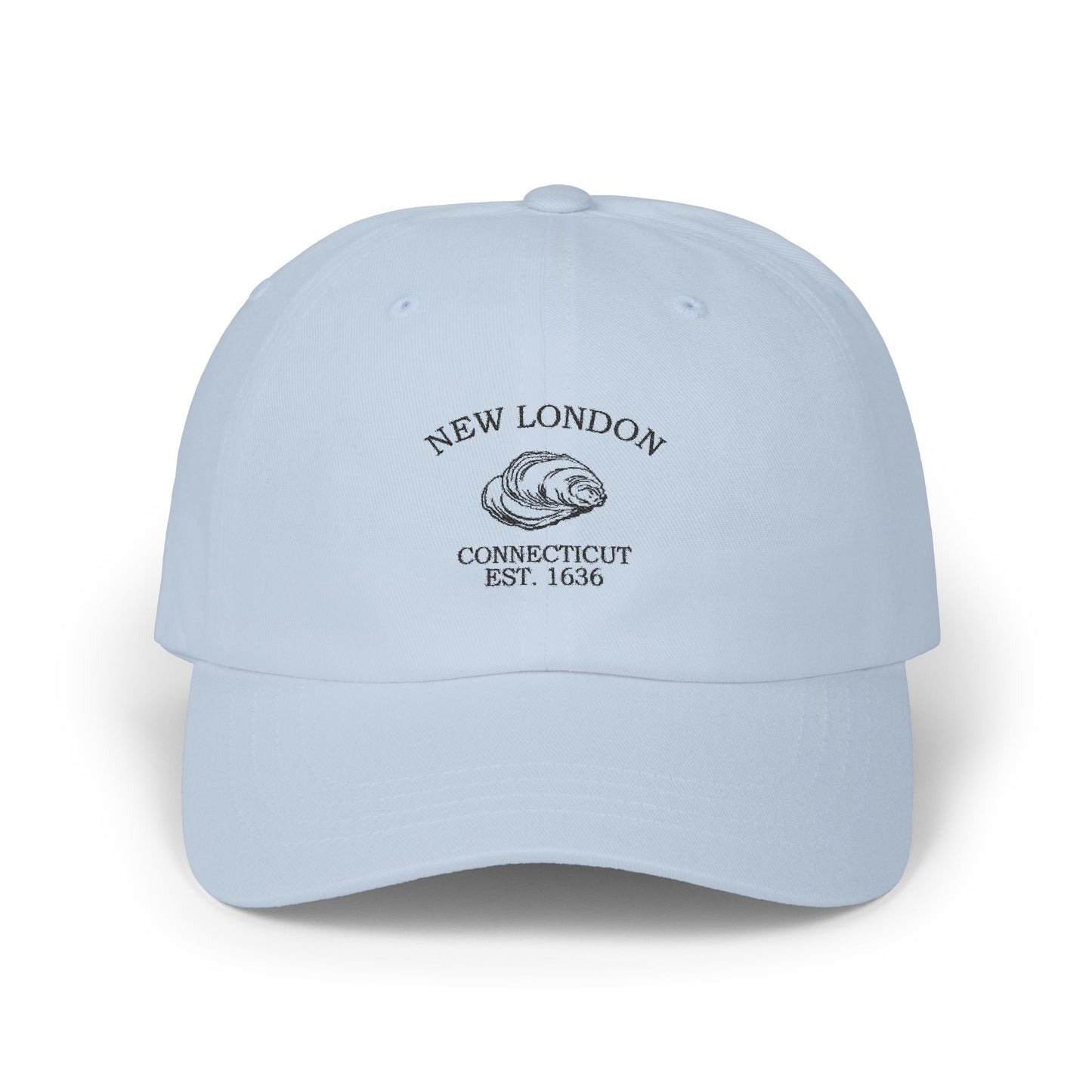
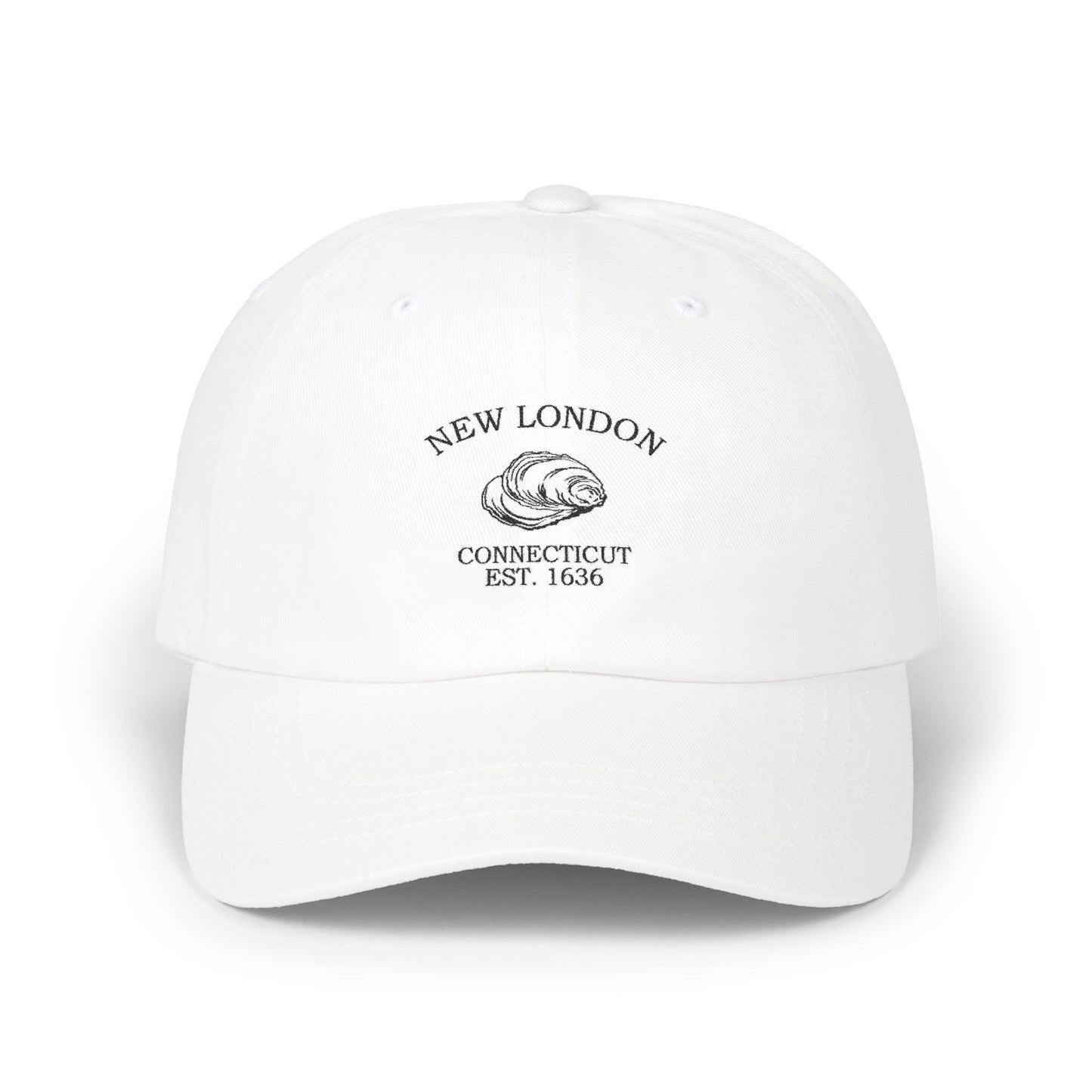
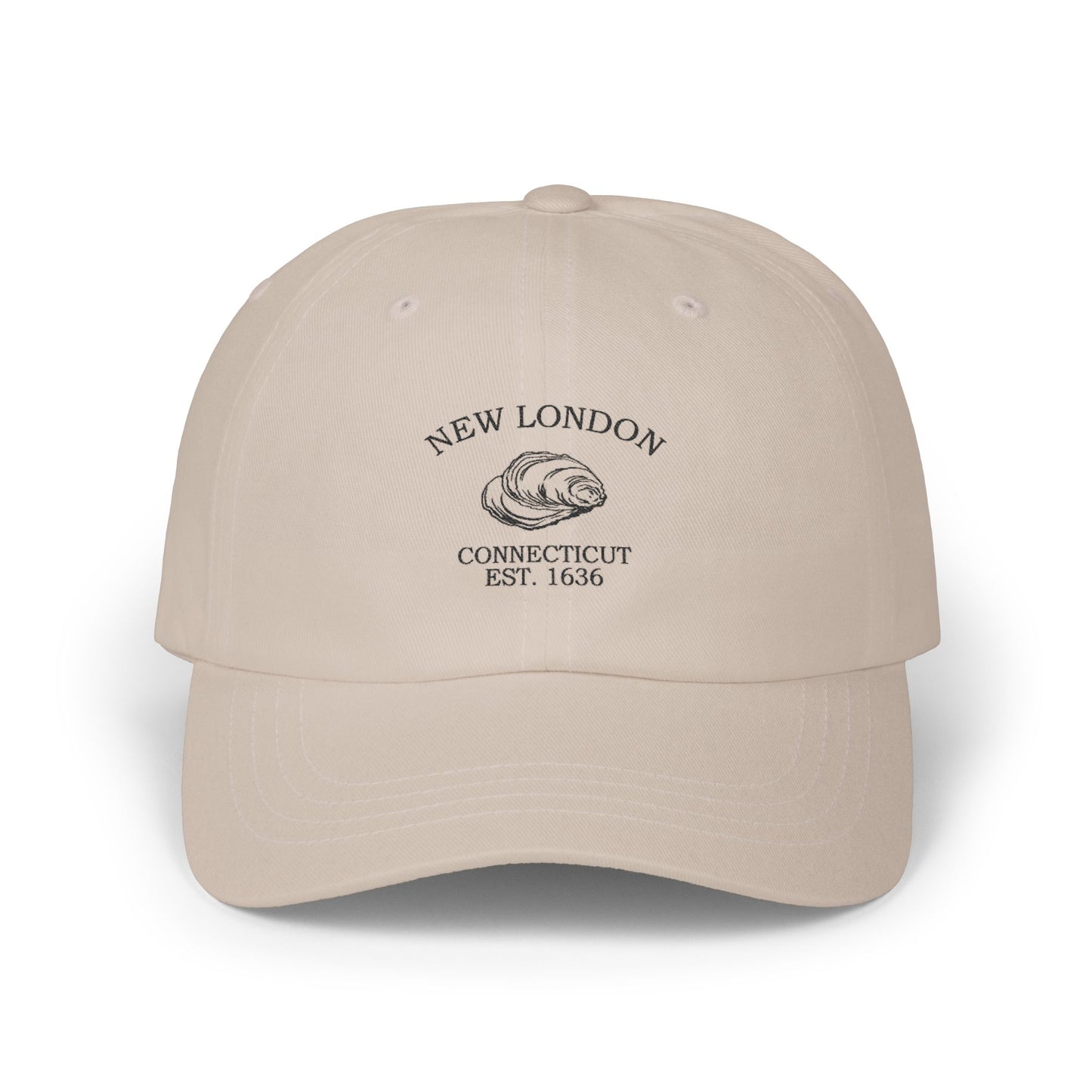
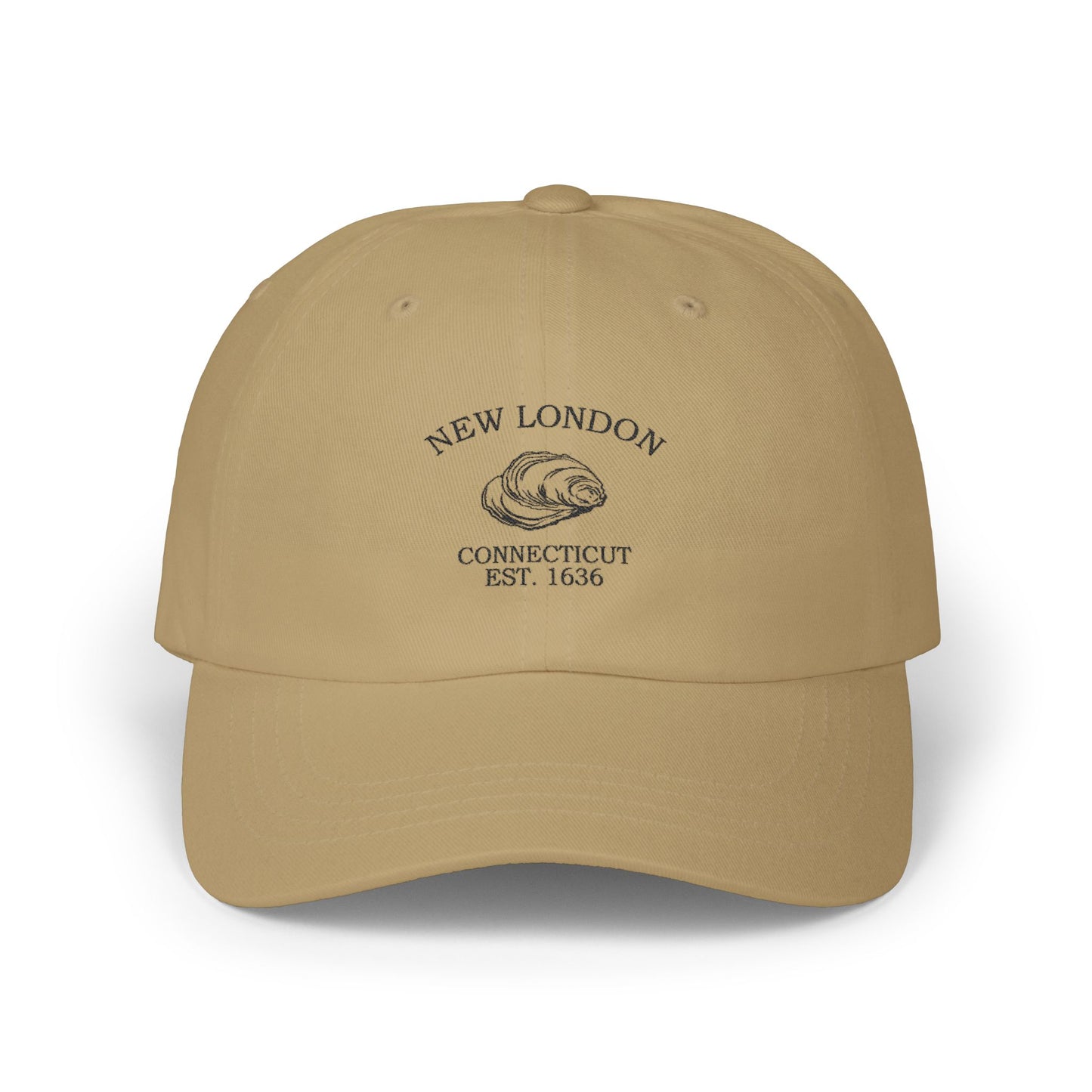
The Whaling City on the Thames — a deep-water port that once sent more whaleships to sea than almost anywhere, and today trains the officers of the U.S. Coast Guard. New London sits at the mouth of the Thames River where it opens into Long Island Sound, on one of the deepest harbors on the Atlantic coast. The Pequot lived and fished on this water long before John Winthrop the Younger founded the town in 1646; by the mid-1800s it had grown into the second-busiest whaling port in the world, and in the next century it became the home of the U.S. Coast Guard Academy and its tall ship, the Eagle. Whaling wealth, Revolutionary fire, and the Coast Guard — this page tells the story.
As whaling faded, the harbor found new work. The Coast Guard's officer school — afloat since 1876 — moved ashore to Fort Trumbull in 1910, was renamed the U.S. Coast Guard Academy in 1915, and in 1932 built its permanent campus on land New London citizens gave up the Thames. Since 1946 the academy's training barque Eagle has sailed from New London: a 295-foot square-rigger built in Germany in 1936 and taken as a war reparation, today the only active square-rigger in U.S. service. The city kept a literary fame, too — the playwright Eugene O'Neill spent his boyhood summers at the cottage on Pequot Avenue he later set on the stage, down to the moan of the harbor foghorn that runs all through Long Day's Journey Into Night.
Why People Visit New London Connecticut
- Visit the U.S. Coast Guard Academy and, when she's in port, the barque Eagle.
- Tour Fort Trumbull State Park, the granite fort with harbor views and coastal-defense exhibits.
- See New London Harbor Light — the oldest lighthouse in Connecticut — and the offshore New London Ledge Light.
- Walk Whale Oil Row and the historic downtown around Bank Street and the 1833 Custom House.
- Spend a summer day at Ocean Beach Park, or catch a show at the Garde Arts Center.
- Ride the Cross Sound Ferry across to Orient Point, or sail for Block Island.
