


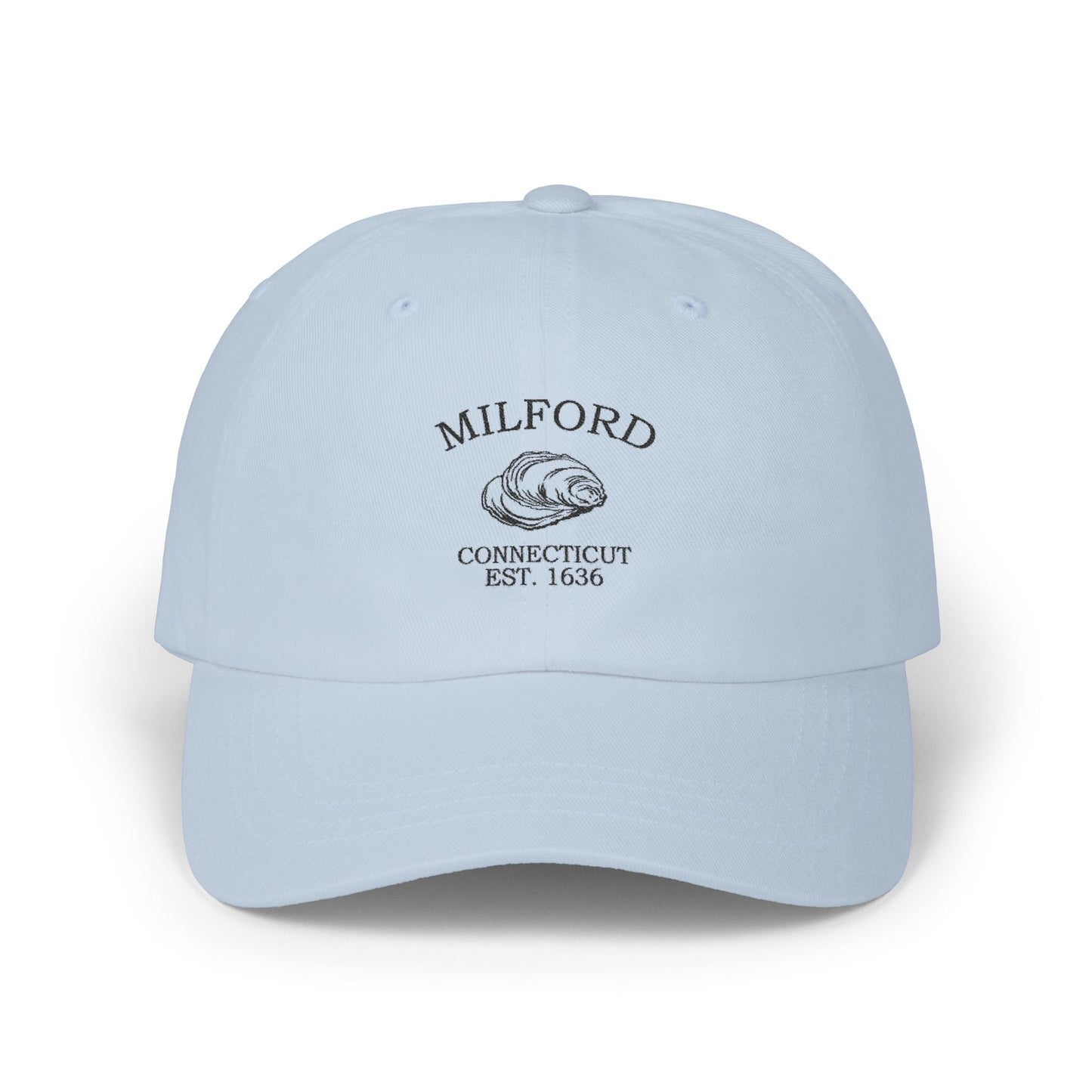
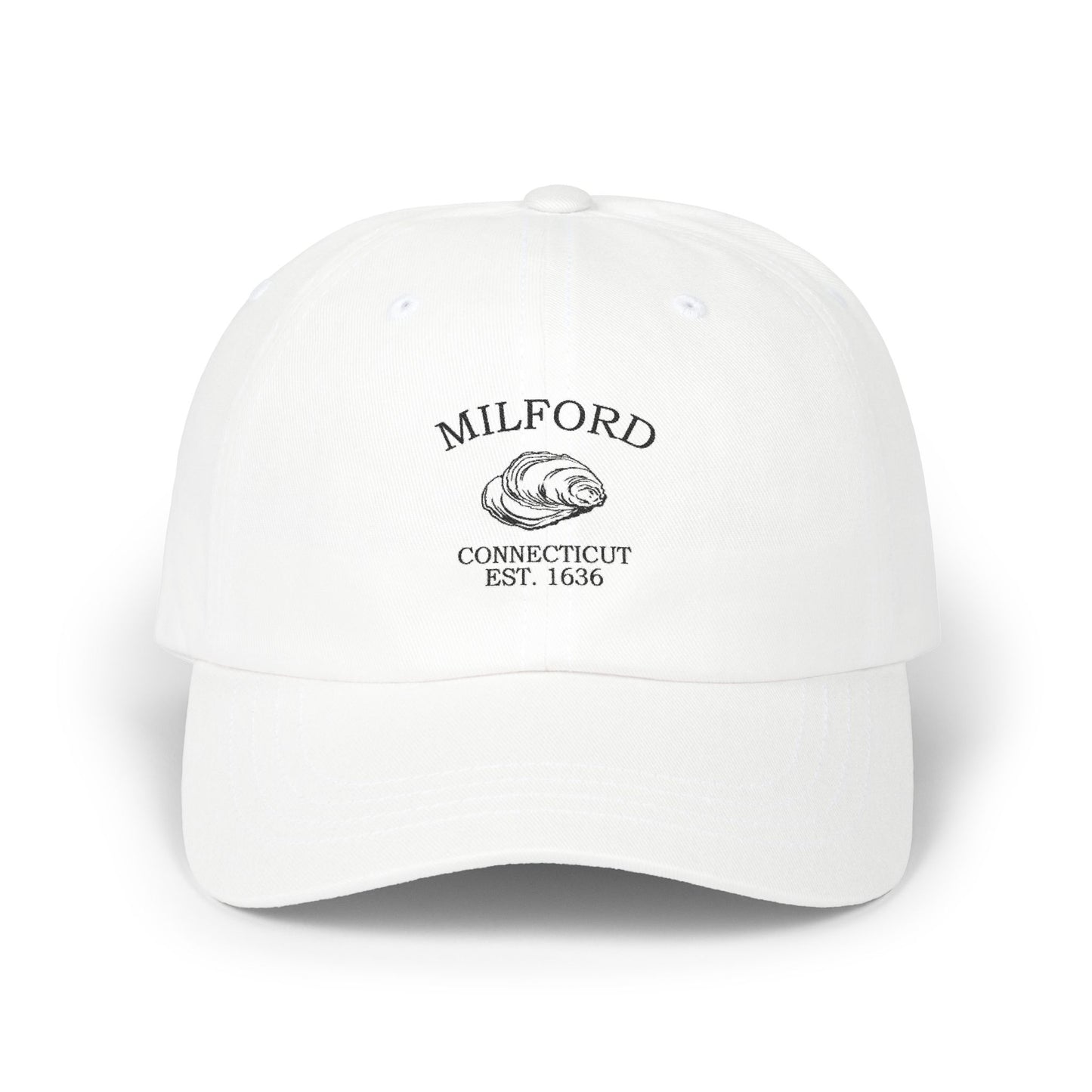
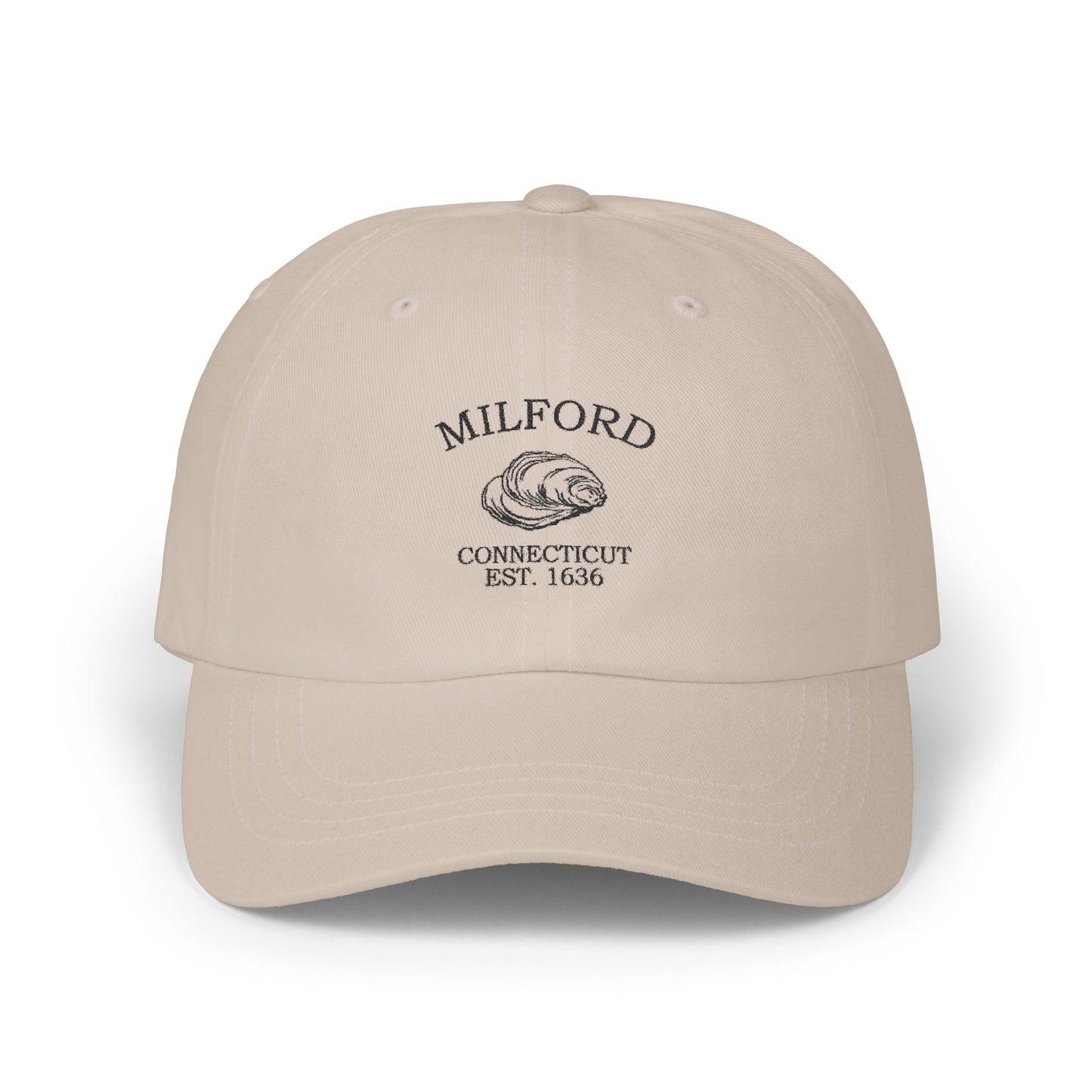
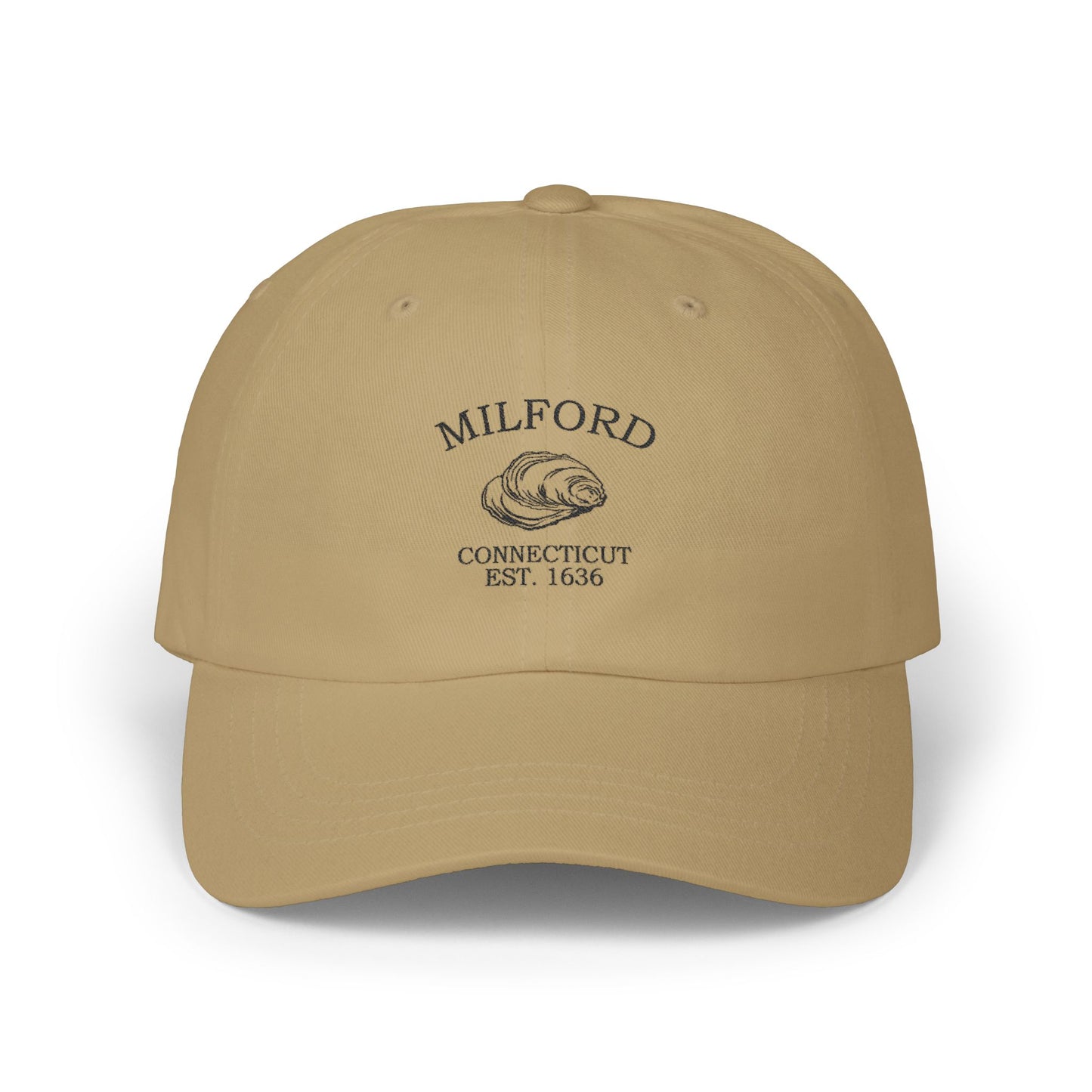
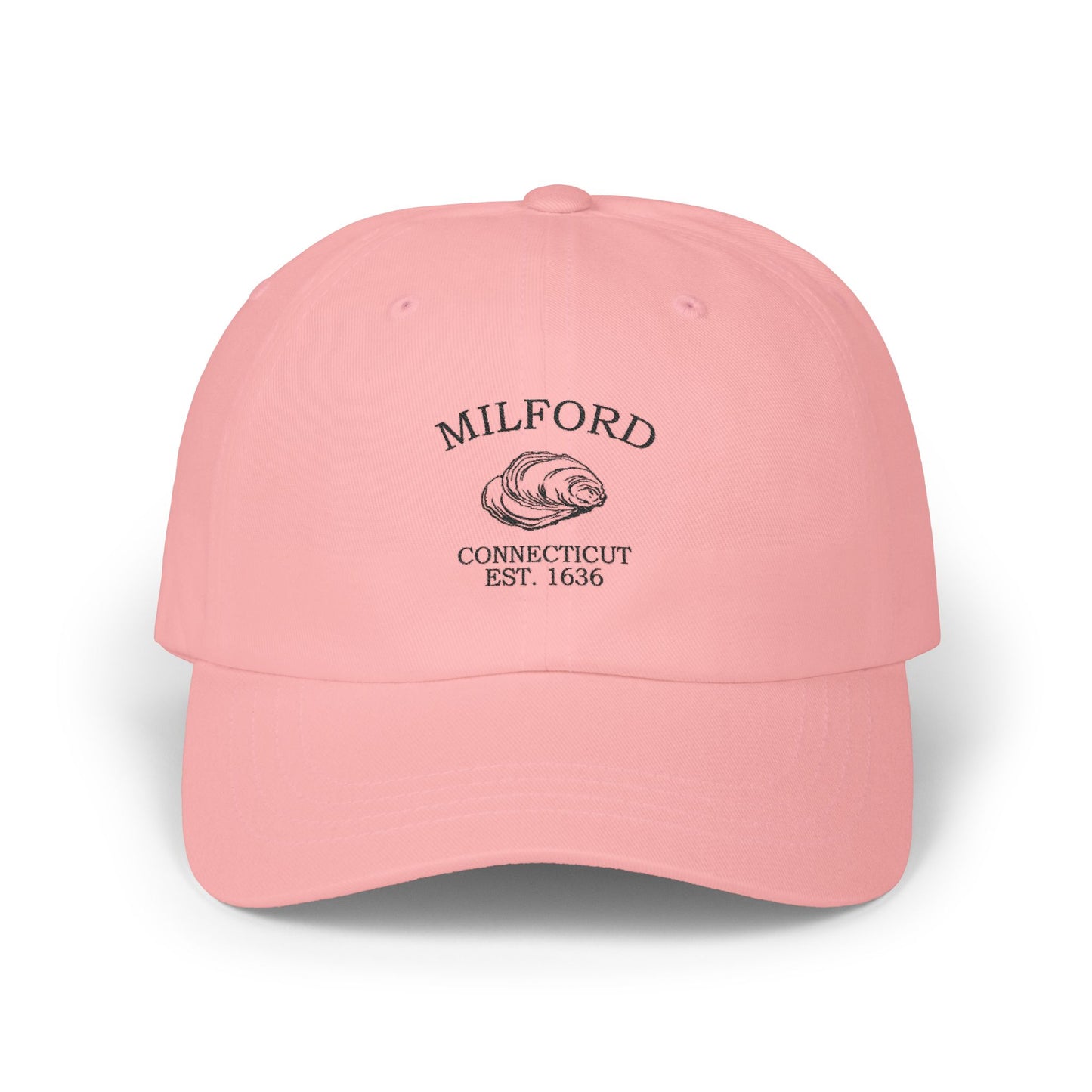
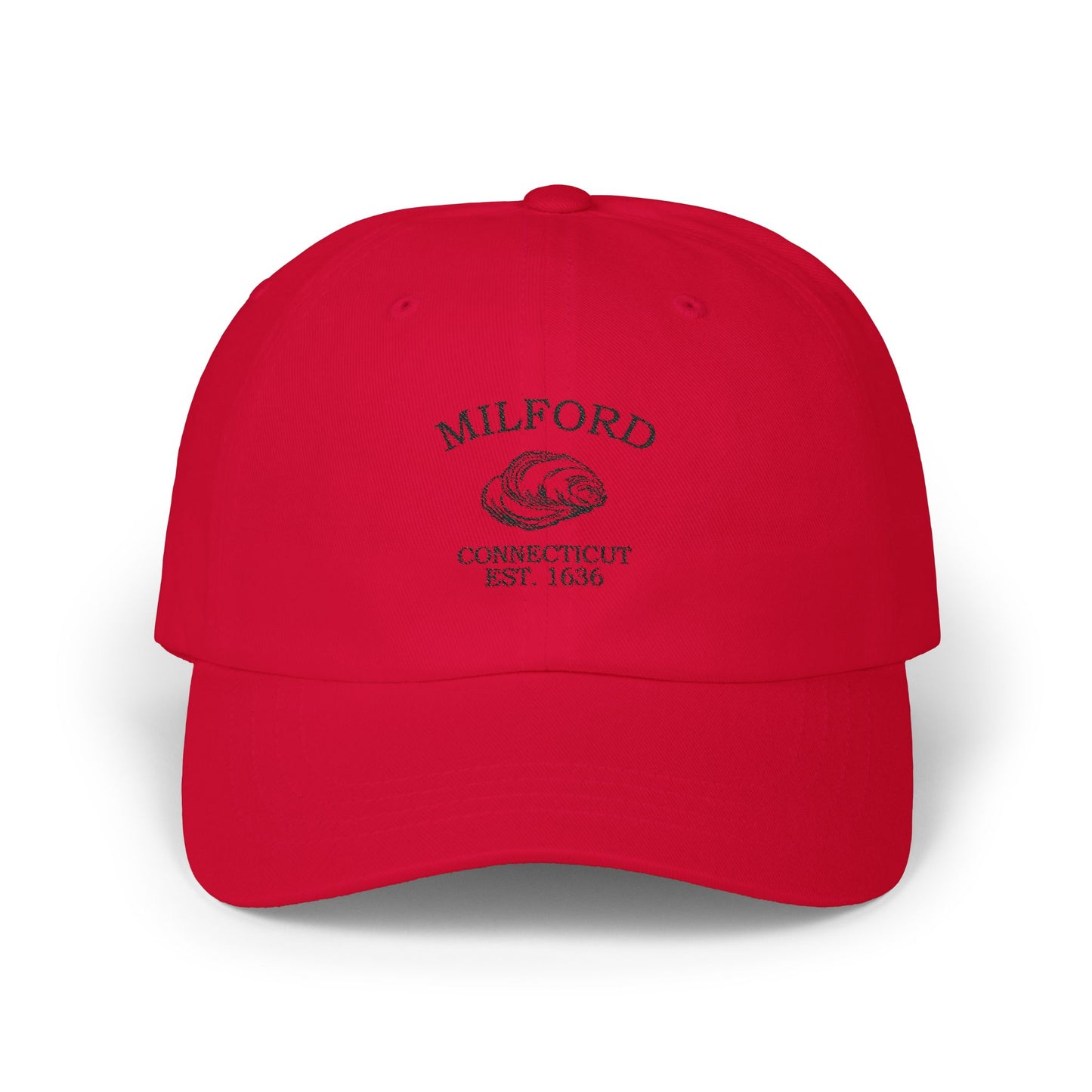
Our Milford logo carries Connecticut's oyster above ‘Connecticut — Est. 1636,’ the shared retro emblem of our Connecticut towns; the oyster stands for the Long Island Sound shellfishing that built so many of them, and 1636 marks the founding of the colony. Rendered in black-and-white, like an old crate label, it ties Milford to every other Connecticut town we make. What makes this one Milford is the town behind the shell — the long Green, the island offshore, and the oyster boats on the Sound.
A mile off Silver Sands Beach sits the town's most famous riddle: Charles Island, which the Paugusset called Poquahaug. At low tide a natural sandbar — a tombolo — rises out of the Sound and you can walk to it. The best-loved Milford legend says that in 1699 Captain Kidd, on his way to arrest in Boston, buried treasure there, iron chests of gold said to lie beneath the rocks and never found. The island is now a state-protected bird sanctuary, its woods a nesting rookery of herons and egrets, closed to visitors through the spring and summer — so the legend is best enjoyed from the beach, and the crossing only with the tide chart in hand.
Why People Visit Milford
Milford balances a historic green, a legendary island, and miles of easy shoreline. Visitors enjoy simple seaside walks, boardwalks, and small cultural stops between the beaches and the harbor. It is peaceful, family-friendly, and close to nature, with year-round appeal in its parks, paths, and public spaces. History and everyday coastal life sit side by side here, from the long Green and the colonial downtown to the oyster boats and the boardwalk beyond.
