


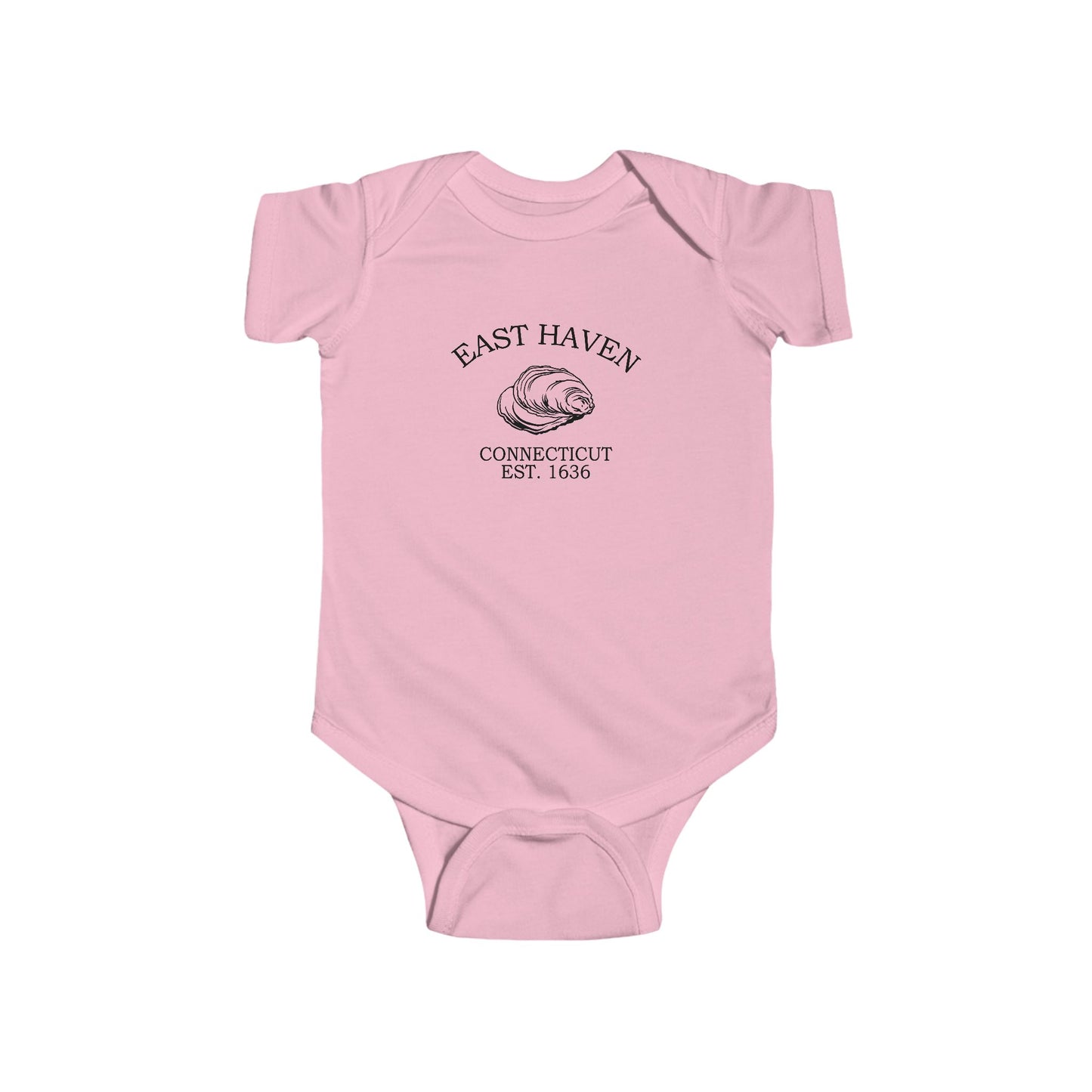
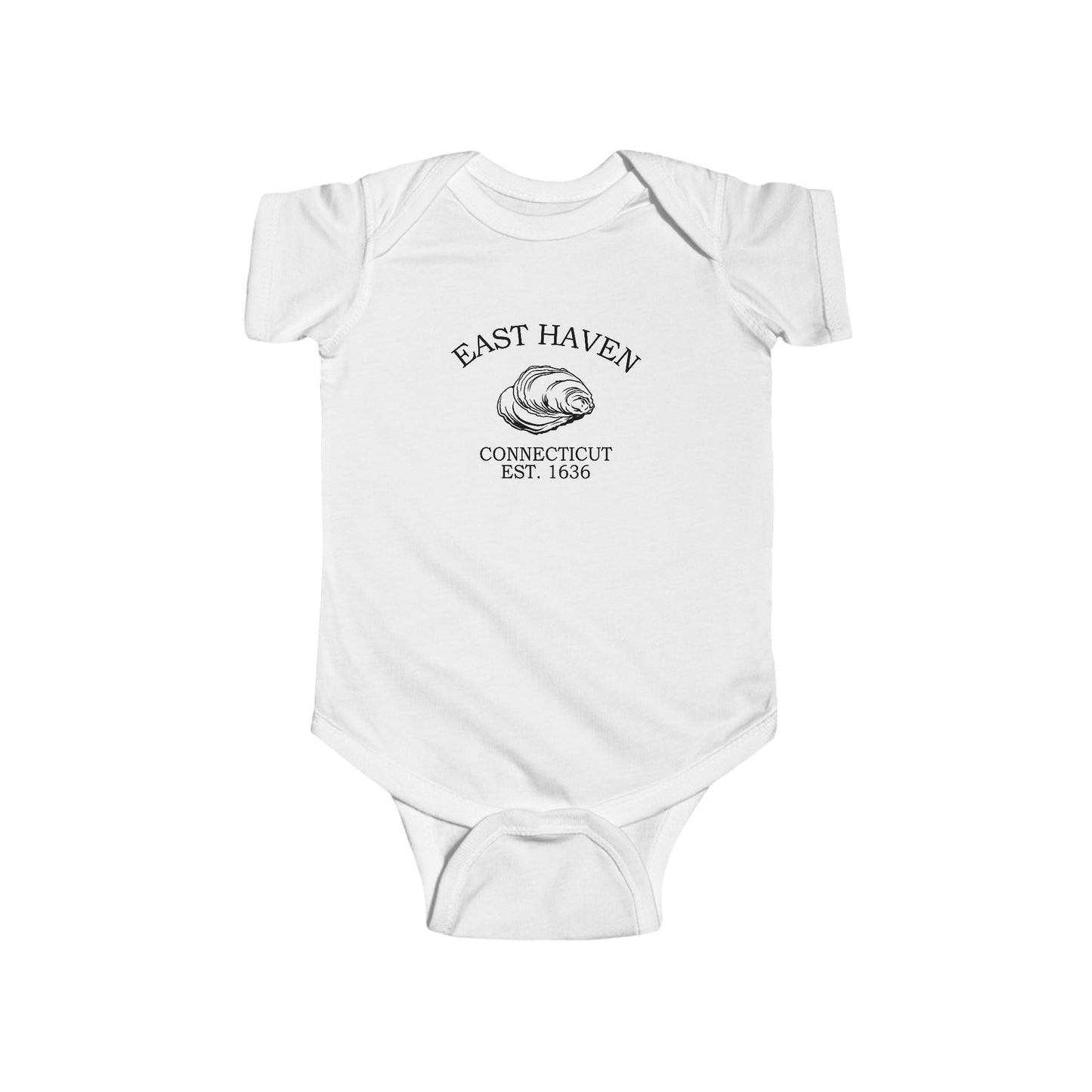
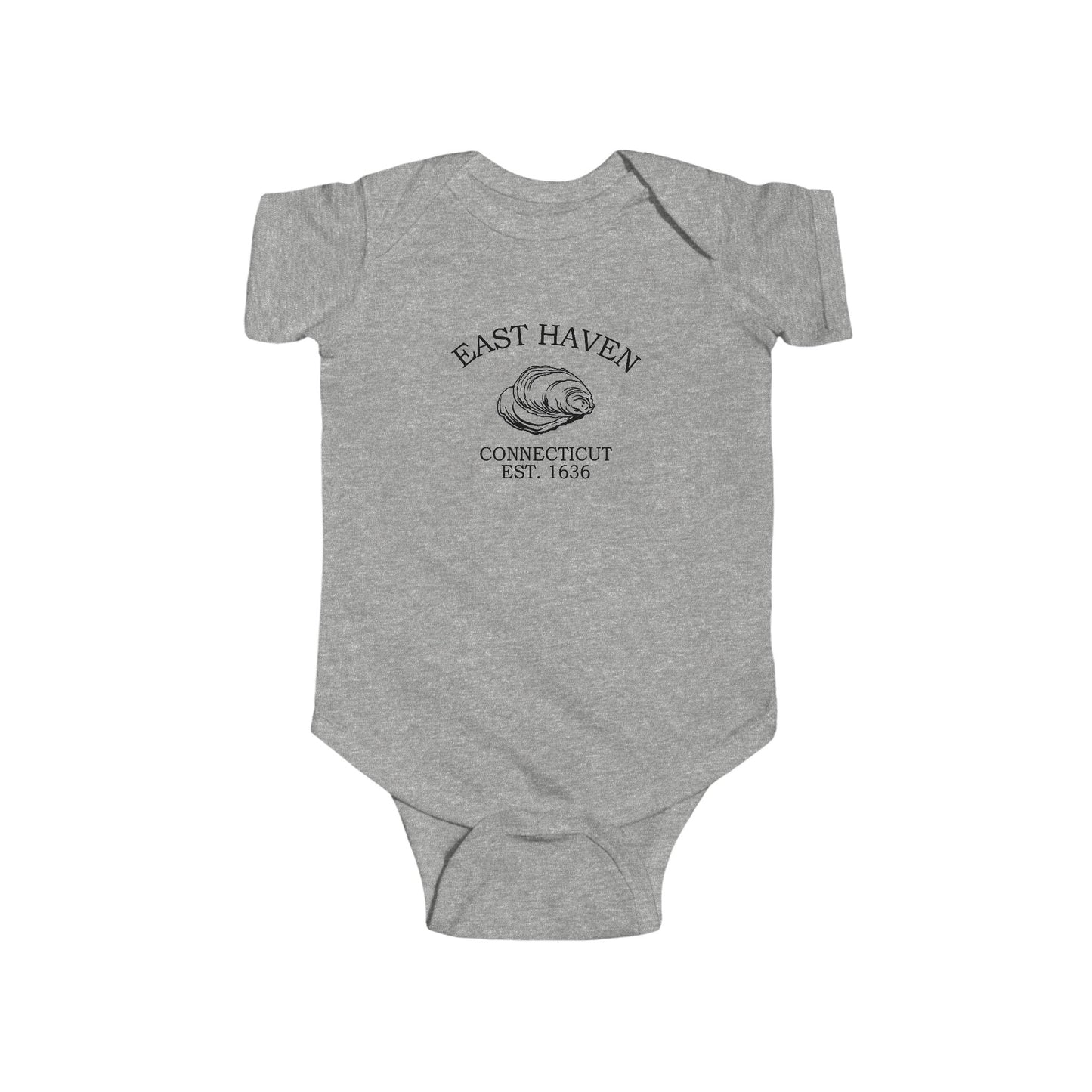
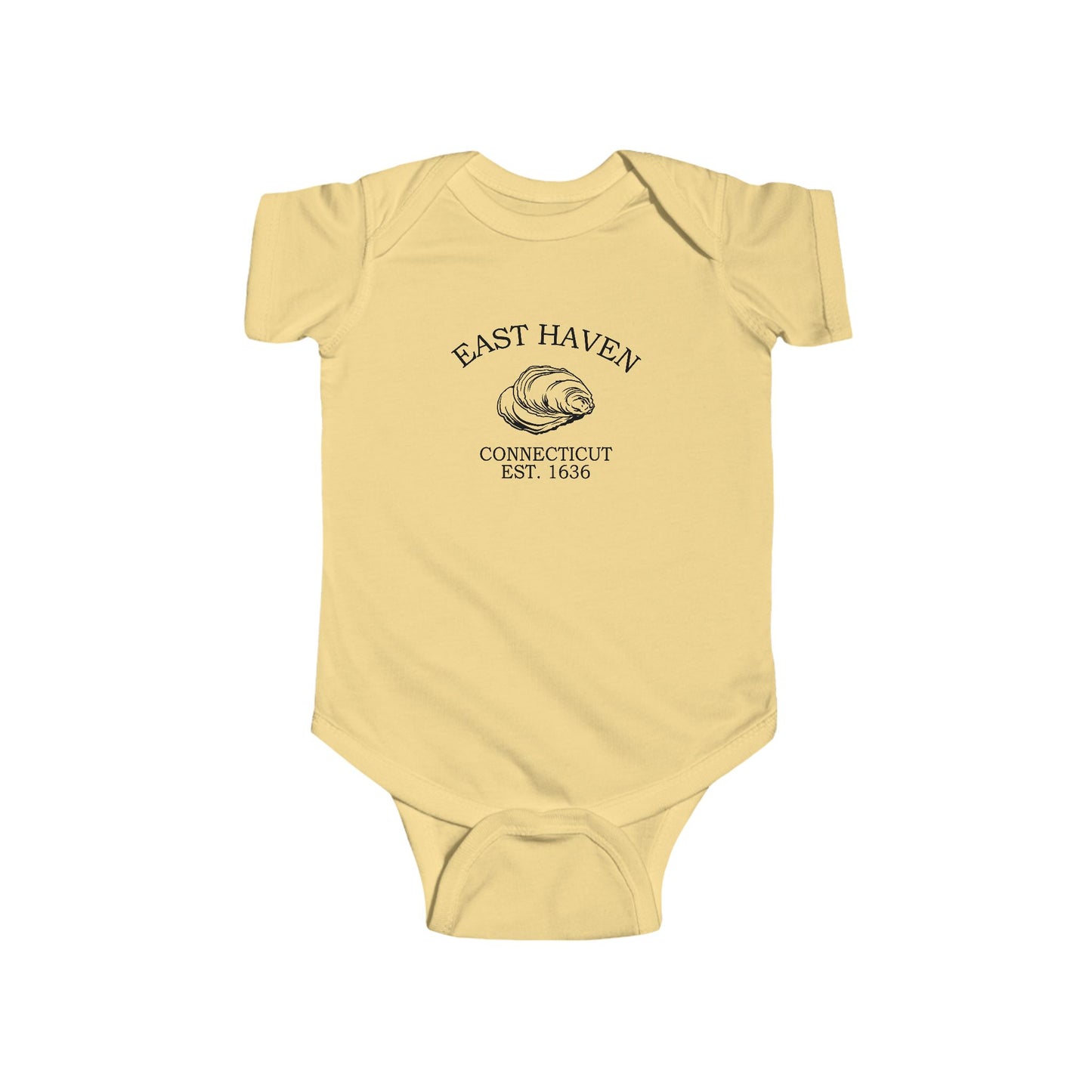
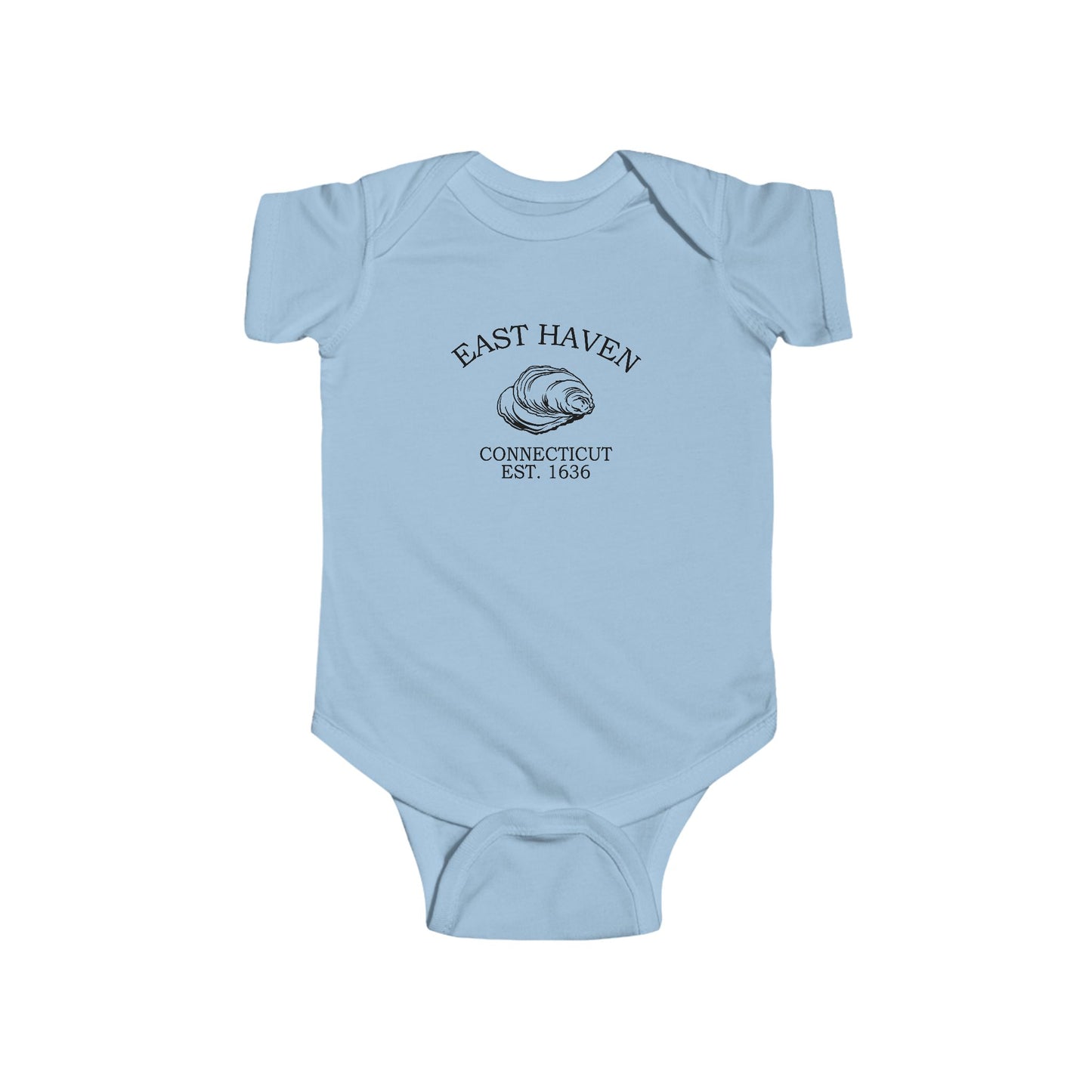
Our East Haven logo carries the Connecticut shoreline shell above "Connecticut — Est. 1636," the shared retro emblem of our Connecticut towns; the shell stands for the oystering and salt-marsh coast East Haven grew up on, and 1636 marks the founding of the Connecticut Colony itself, not the town — East Haven's own story runs from East Farms in 1638 to its own town charter in 1785. Rendered in worn black-and-white, like a stamp on an oyster crate or a coastal sign, it ties East Haven to every other Connecticut town we make. What makes this one East Haven is the story behind it — the first iron, the stone church, and the oldest trolley line in America.
What's with Iron Works Village? Before it was East Haven, it was Iron Works Village — and that name is the key to the whole town. In 1655, on the shore of a pond fed by Lake Saltonstall, colonists fired up Connecticut's very first iron works, smelting bog iron just a few years after the New Haven Colony took root. It was only the third ironworks in all of New England. The furnace gave the settlement its first identity and its first industry, and though the fires went cold long ago, the village it built grew into the shoreline town that still sits at the east edge of New Haven Harbor.
Why People Visit East Haven
Visitors come to East Haven for an unhurried slice of the Connecticut shore: a ride on a hundred-year-old trolley, a stroll past one of New England's oldest stone churches, and an afternoon on a quiet Sound-side beach. Salt marshes and shoreline trails sit a few minutes from the Town Green, and New Haven's museums and harbor are right next door. Equal parts colonial heritage and easy coastal living, East Haven rewards anyone drawn to the working shoreline of Long Island Sound.
