


In the later nineteenth century, sugar plantations reshaped the district and drew waves of immigrant labor — Japanese, Chinese, Filipino, Portuguese, and others — whose families stayed and built the layered, multicultural Hilo of today. You can read that heritage all over town: in the mix of churches and temples, in the family names, in a plate lunch or a bag of malasadas or the poke and mochi sold along Kamehameha Avenue — the loco moco itself was invented on this island — and above all on the bayfront, where Queen Liliʻuokalani gave the land for a park that became an Edo-style Japanese garden, built between 1917 and 1919 as a tribute to the first Japanese immigrants who worked the cane. It is widely called the largest garden of its kind outside Japan, and it is free and open every day. When the plantations faded in the twentieth century, that community remained the heart of the place.
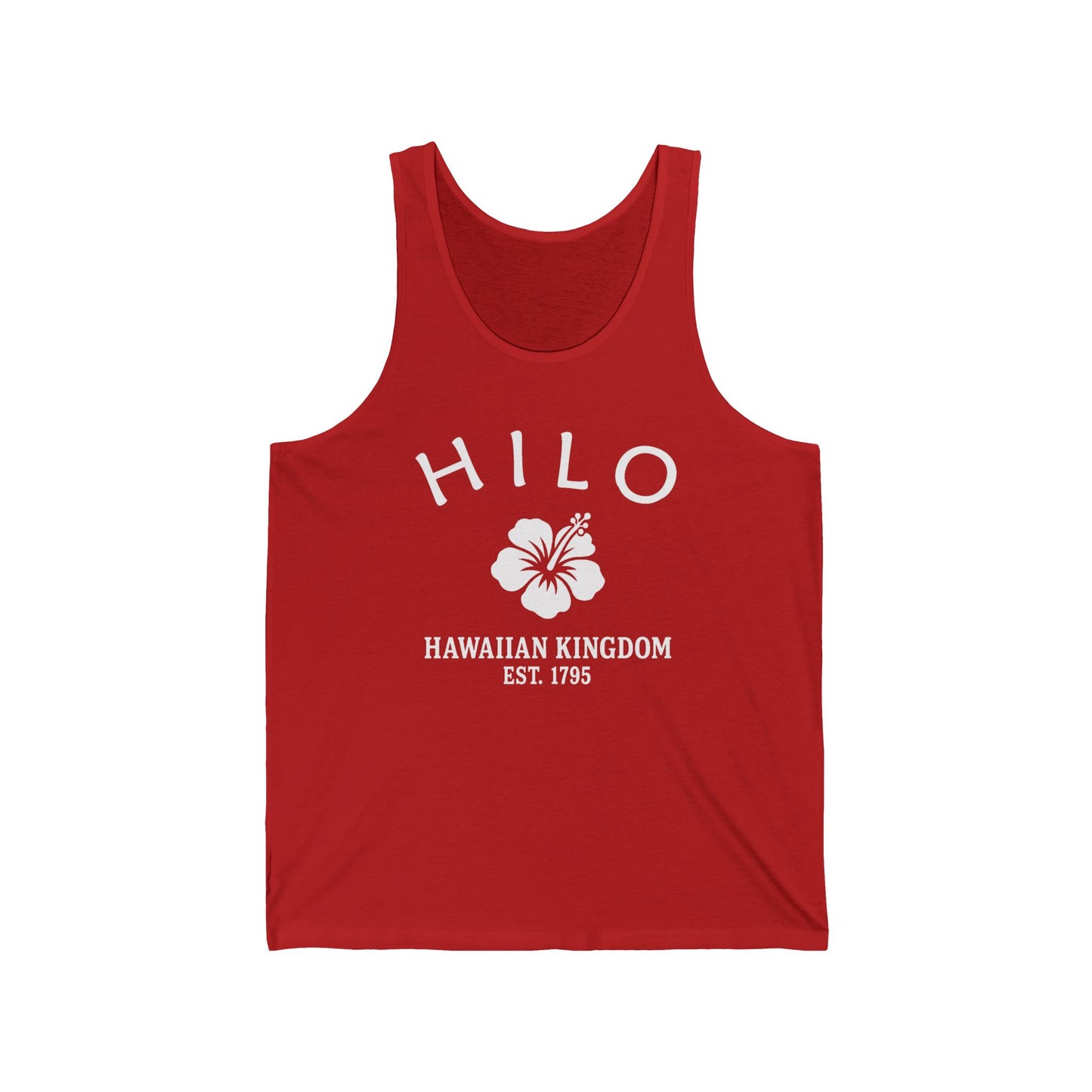
Today Hilo is the bayfront cultural capital of Hawaiʻi Island — a rain-green town of waterfalls, gardens, and hula, looking out across its crescent bay to Mauna Kea. Its story runs from a Native Hawaiian homeland on the bay through a plantation port and the hard lessons of the sea to the warm, multicultural town it is now. Our Hilo designs gather that identity into wearable form — the hibiscus-and-1795 emblem, the bay, and the falls. Hilo, Hawaiʻi: rain, rainbows, and aloha.
Why People Visit Hilo
Hilo offers the most authentic, culturally rich side of Hawaiʻi Island — waterfalls, gardens, markets, and deep Hawaiian heritage, all in a relaxed bayfront town. Visitors come for the rainforest scenery and the easy access to volcanoes and coast, and stay for the unhurried, welcoming feel of a real town rather than a resort strip. From the morning rainbows at Waiānuenue to the gardens along the bay, it rewards a slow pace. It is green, genuine, and beautiful in every season on the bay.
