


What's with Aunty Edith? Hilo's biggest stage carries her name. Edith Kanakaʻole was born on Hawaiʻi Island in 1913, founded the hālau Hālau o Kekuhi in 1953, and spent the 1970s teaching — at Hawaiʻi Community College and then at the University of Hawaiʻi at Hilo — where she built courses in Hawaiian language, chant, genealogy, ethnobotany and Polynesian history, and helped shape the first Hawaiian-language program for public school students. She was a composer too, and her album Hiʻipoi I Ka ʻĀina Aloha, “Cherish the Beloved Land,” won a Nā Hōkū Hanohano award; one of its songs, “Ka Uluwehi O Ke Kai,” is still sung across the islands. Hilo named its multi-purpose stadium for her, and the university named a hall. In 2023 the United States Mint honored her on a quarter in the American Women Quarters Program, her portrait flowing into the island landscape beside the words “E hō mai ka ʻike” — granting the wisdom — from a chant she composed.
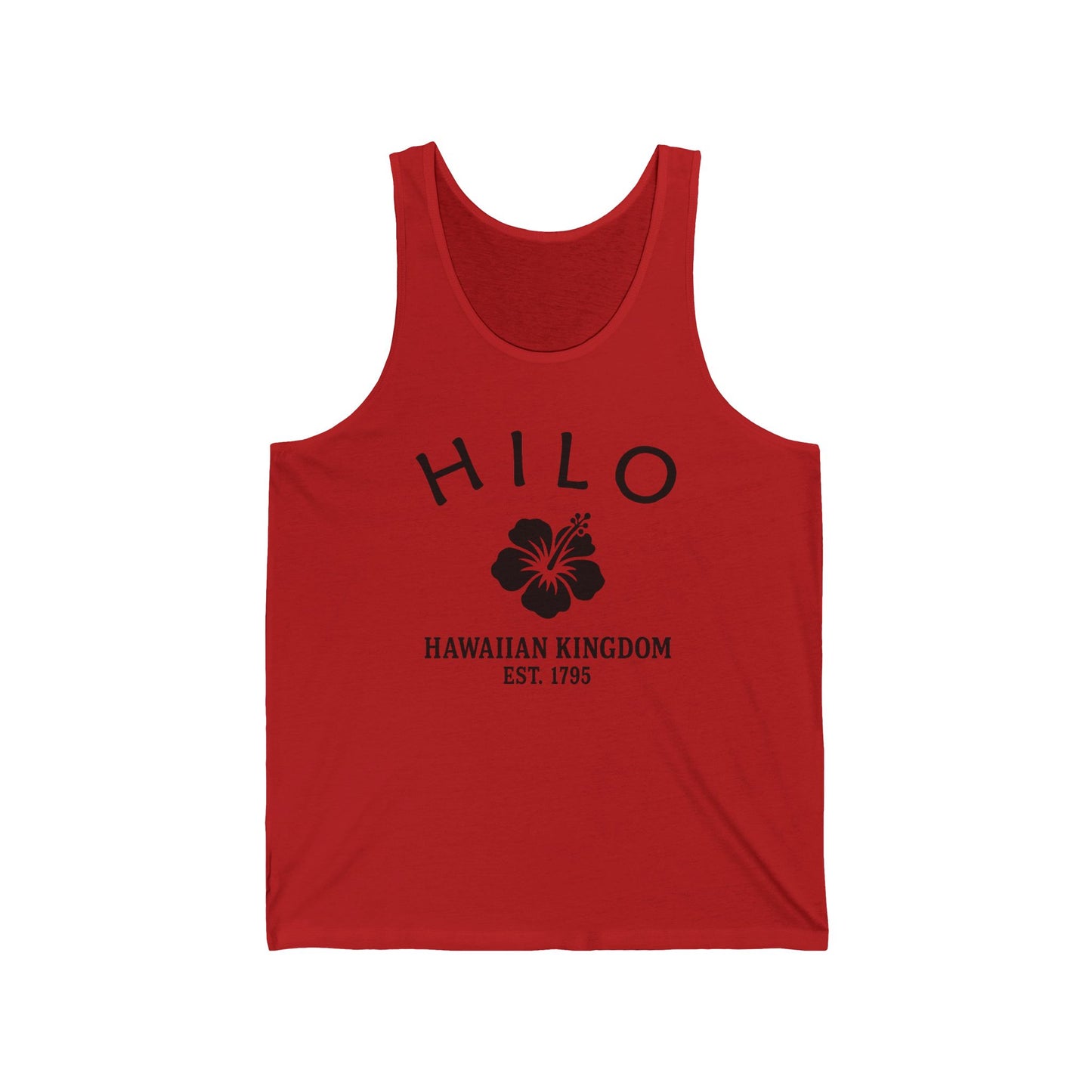
Our Hilo logo carries the same emblem every Merlin Classics Hawaiʻi place wears — the hibiscus, above “Hawaiian Kingdom · Est. 1795,” the year of unification under Kamehameha, printed in a worn, hand-pressed black and white. The hibiscus is the islands' mark, the through-line that ties Hilo to every other Hawaiʻi place we make — a nod to the aloha that defines them. What makes this one Hilo is everything around it: the bay, Rainbow Falls on the Wailuku, and the rain-green mountains behind the town.
Why People Visit Hilo
Hilo offers the most authentic, culturally rich side of Hawaiʻi Island — waterfalls, gardens, markets, and deep Hawaiian heritage, all in a relaxed bayfront town. Visitors come for the rainforest scenery and the easy access to volcanoes and coast, and stay for the unhurried, welcoming feel of a real town rather than a resort strip. From the morning rainbows at Waiānuenue to the gardens along the bay, it rewards a slow pace. It is green, genuine, and beautiful in every season on the bay.
