


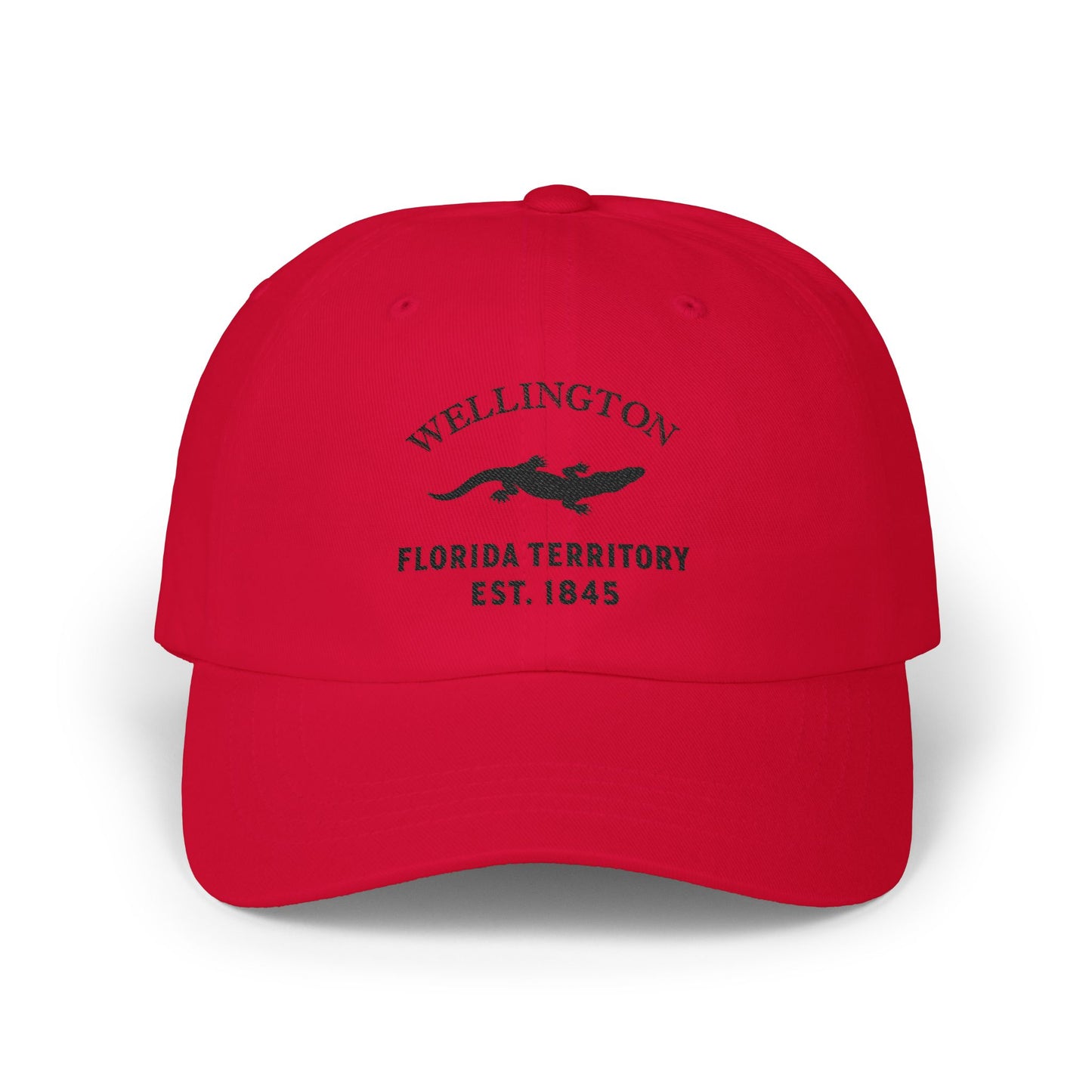
Our Wellington retro logo uses a Florida alligator motif, representing toughness, adaptability, and connection to Florida’s wild heritage. The alligator reflects both literal wildlife in the reclaimed swamps and symbolic resilience against storms. The "EST. 1845" date marks Florida statehood — Florida was admitted to the Union as the twenty-seventh state on March 3, 1845. Its black-and-white styling resembles crate labels or woodcut stamps, authentic and retro rather than glossy. The motif bridges Wellington’s dual identity: reclaimed marshland turned village, and equestrian capital rooted in resilience. On merchandise, it feels vintage and rugged, honoring Wellington’s layered story while celebrating its Florida heritage of toughness and adaptability.
Wellington grew rapidly after incorporation, but its mid-century roots remained clear. The 1960s saw ranches, farms, and suburban neighborhoods developing side by side. Citrus groves dotted the land, while new schools, shops, and equestrian facilities anchored the community. Hurricanes periodically set back progress, yet each storm was met with rebuilding and renewed optimism. By mid-century, Wellington became known for its equestrian focus, attracting riders and trainers from across the nation. Its timeline highlights Florida’s dual identity: communities built on drained marshland, expanding suburban life while remaining forever shaped by the state’s unpredictable natural environment.
Why People Visit Wellington Florida
Wellington is the Winter Equestrian Capital of the World and one of South Florida's most distinctive towns: a place built on the reclaimed swampland of a Harvard aviator's Flying Cow Ranch, the one-time world's largest strawberry patch, now home to tens of thousands of horses every winter. It blends horse-country culture with Everglades-edge wildlife preserves and wetland parks — show jumping, dressage, and polo on one side, boardwalks and birdwatching towers on the other. From the C.O.W. ranch and the strawberry fields to the bridle trails and the polo grounds, history and everyday culture sit side by side. Strawberry patch to horse country. The winter capital of the riding world.
