


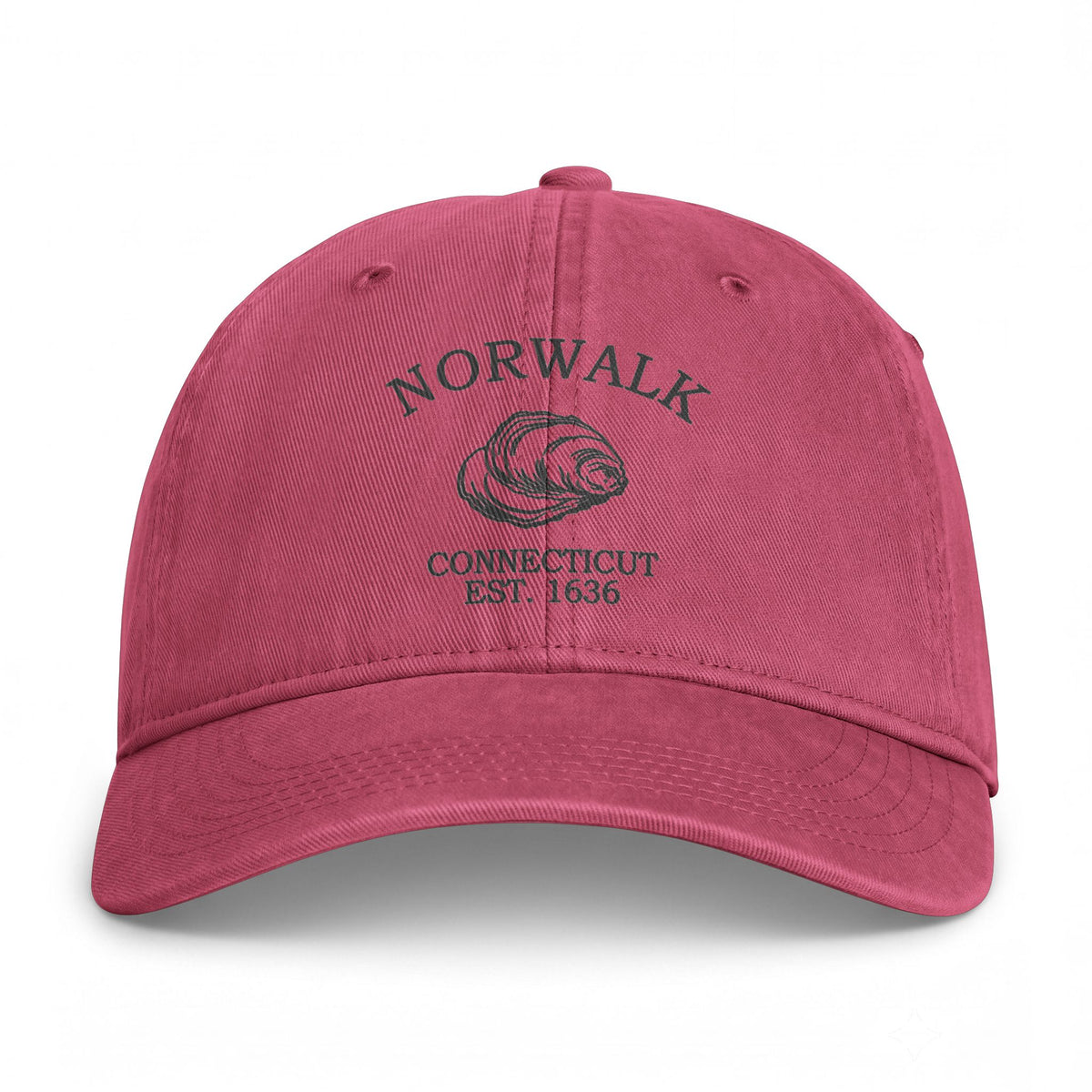
Norwalk was settled on February 26, 1640, when Roger Ludlow — the same lawyer-founder who laid out Fairfield — and Captain Daniel Patrick purchased land along the river from Chief Mahackemo of the Norwaake people, an Algonquian-speaking community that had fished these waters and worked these shell beds for generations; like most colonial land deals of its era, it was an exchange weighted toward the newcomers, and that is an honest part of this story. The town’s name carries theirs — Norwaake, later folk-explained as “North walk” — and their descendants remain part of Connecticut today. Norwalk incorporated as a town on September 11, 1651.
South Norwalk — first known as Old Well, for the 1738 well where sailing ships filled their casks, then a city in its own right from 1870 until the 1913 consolidation — spent the twentieth century as hard-working brick and lost industry, then came back to life: the SoNo district’s nineteenth-century blocks were reborn as a waterfront destination in the 1980s, the Maritime Aquarium opened on the river in 1988, and Metro-North carries the city’s commuters to New York. Norwalk has stayed what it always was — a city that works for a living, with a harbor at the middle of it.
Why People Visit Norwalk Connecticut
Norwalk offers an authentic working harbor, one of America's earliest Gilded Age mansions, a major aquarium, an annual oyster festival, an offshore island ferry to an 1868 lighthouse, and a nineteenth-century industrial waterfront reborn as a historic district. Visitors come for the SoNo galleries and restaurants, the Maritime Aquarium with its harbor seals and Sound-habitat exhibits, the Lockwood-Mathews Mansion and its preserved Second Empire interiors, the September Oyster Festival, the Sheffield Island ferry, and the simple shoreline pleasures of Calf Pasture Beach. It is a Connecticut shoreline city built on the harbor, the hat, and the oyster, with all three still visible if you know where to look.
