


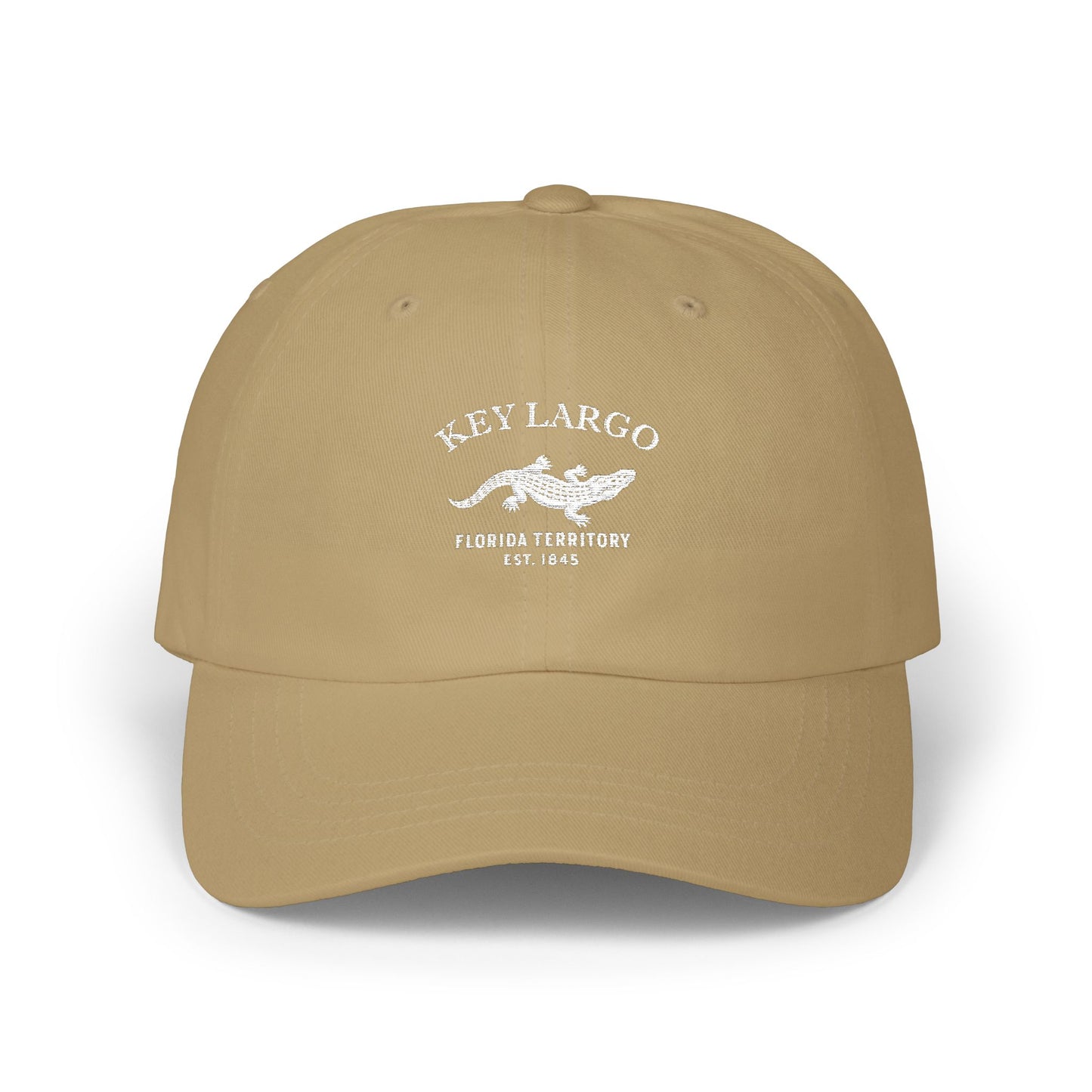


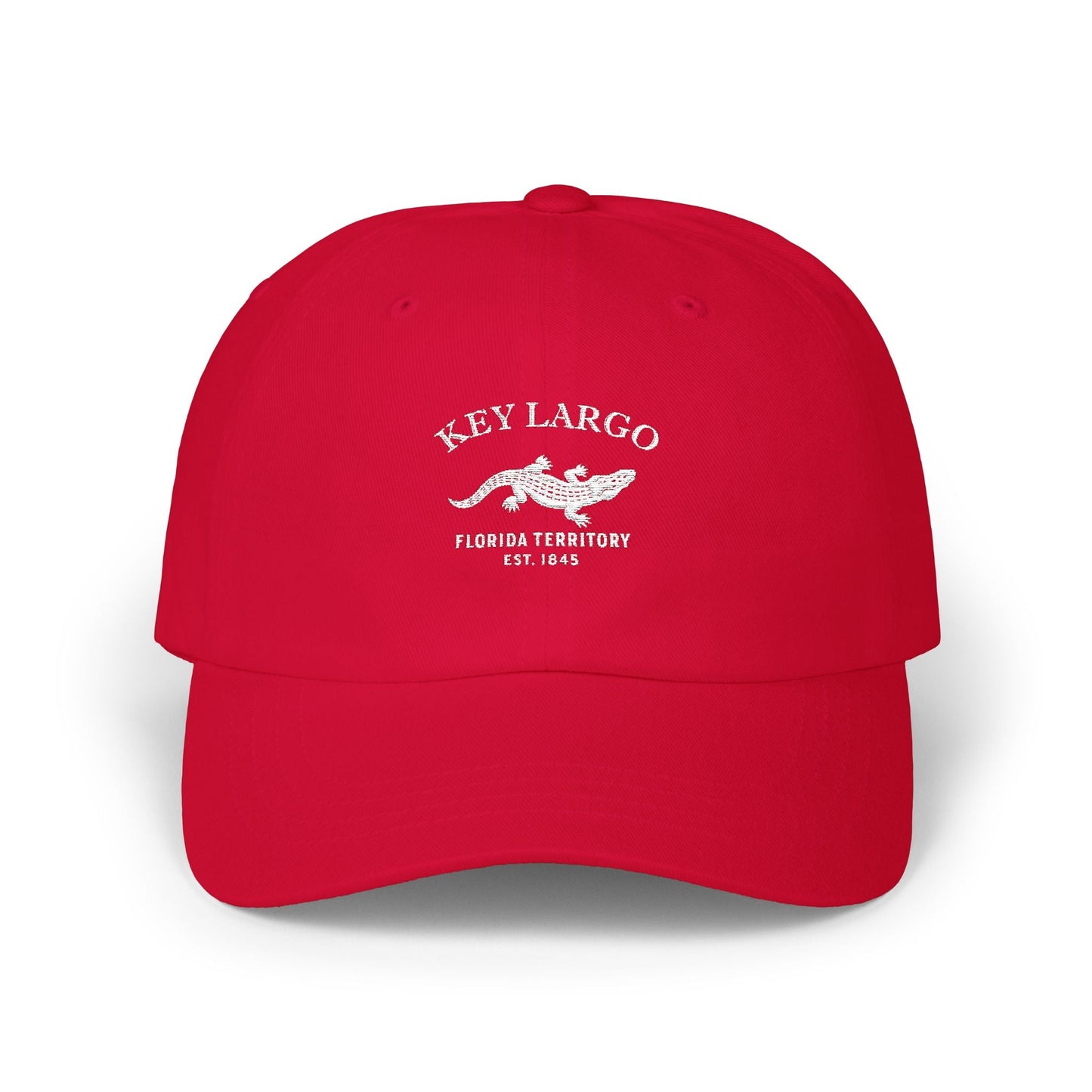
Our Key Largo retro logo uses a Florida alligator motif, symbolizing toughness, survival, and resilience. The alligator reflects storm-tested strength, and the "EST. 1845" date marks Florida statehood — Florida was admitted to the Union as the twenty-seventh state on March 3, 1845. Its black-and-white styling is retro, resembling crate labels and woodcut prints. The motif bridges Key Largo’s dual identity: frontier fishing village and modern reef-and-resort destination. On merchandise, it conveys authenticity and resilience, retro vintage in tone. The alligator emblem honors Key Largo’s layered identity, making it a vintage symbol of Florida heritage. Retro in style, it reflects toughness, optimism, and pride, suited for Florida’s coastal identity.
The 1930s Overseas Highway transformed Key Largo, connecting it to the mainland. By the 1950s and 1960s, suburban cottages, resorts, and tourism reshaped its economy. Hurricanes continued to test resilience, but rebuilding followed. Its timeline reflects adaptability: isolated fishing village turned suburban resort hub. Mid-century decades emphasized optimism, leisure, and suburban pride. The town’s growth highlighted Florida’s broader transformation, balancing natural hardship with suburban expansion. Key Largo became a cultural anchor, demonstrating endurance and optimism, with heritage and suburban identity preserved alongside modern development and coastal resilience.
Why People Visit Key Largo Florida
Key Largo is the Diving Capital of the World and the first of the Keys: the gateway island where the Overseas Highway begins, home of the first undersea park in the United States, the Christ of the Abyss beneath the reef, the only living coral barrier reef in the continental United States, the historic African Queen steamboat, and the great tropical hardwood hammock of Dagny Johnson. It blends marine parks with quiet waterfront paths — relaxed, sunny, and built around the water. From the 1639 Cayo Largo charts to the Rock Harbor pineapple fields to mile marker 102.5, history and reef sit side by side. First of the Keys. Diving capital. Where the long bright string of islands begins.
