


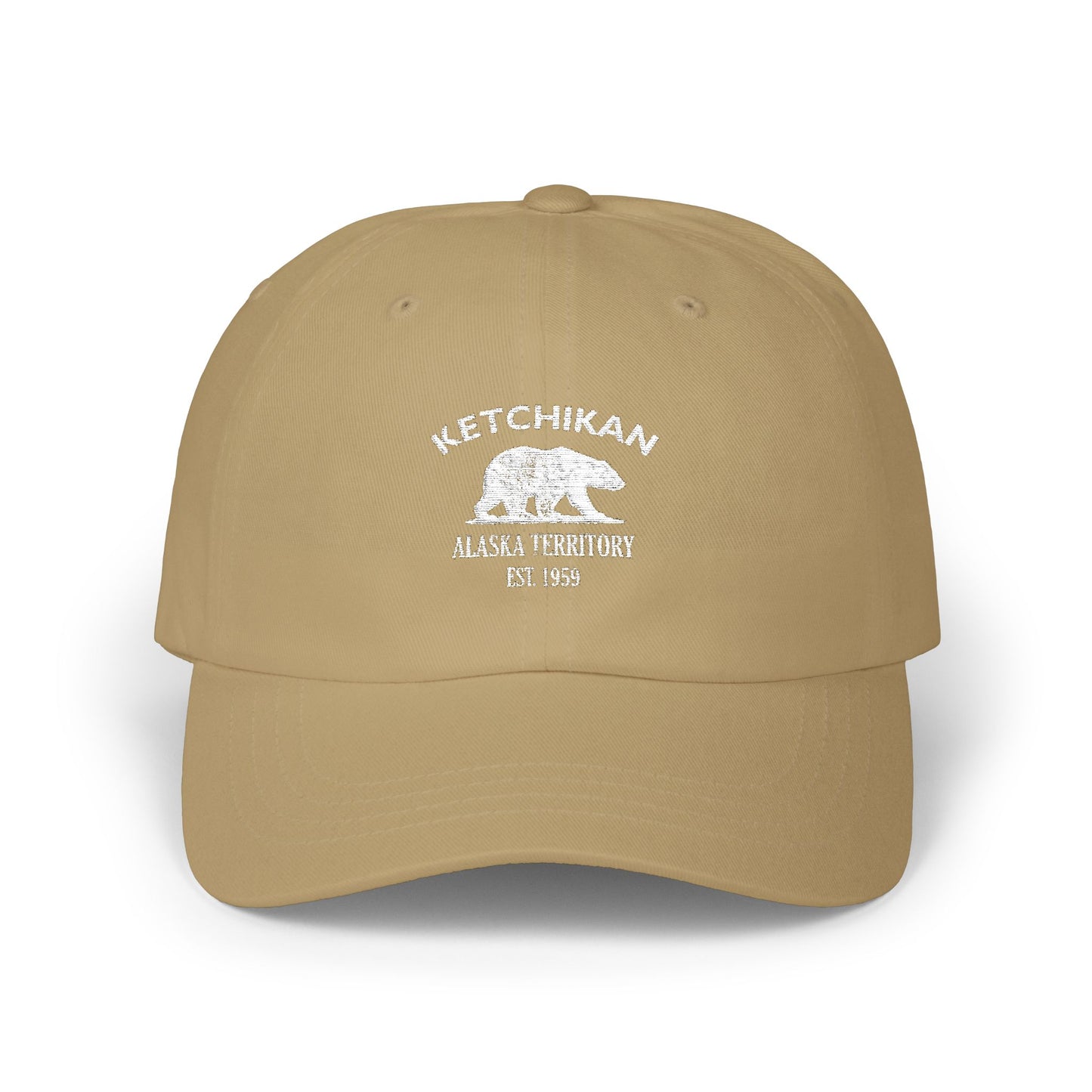
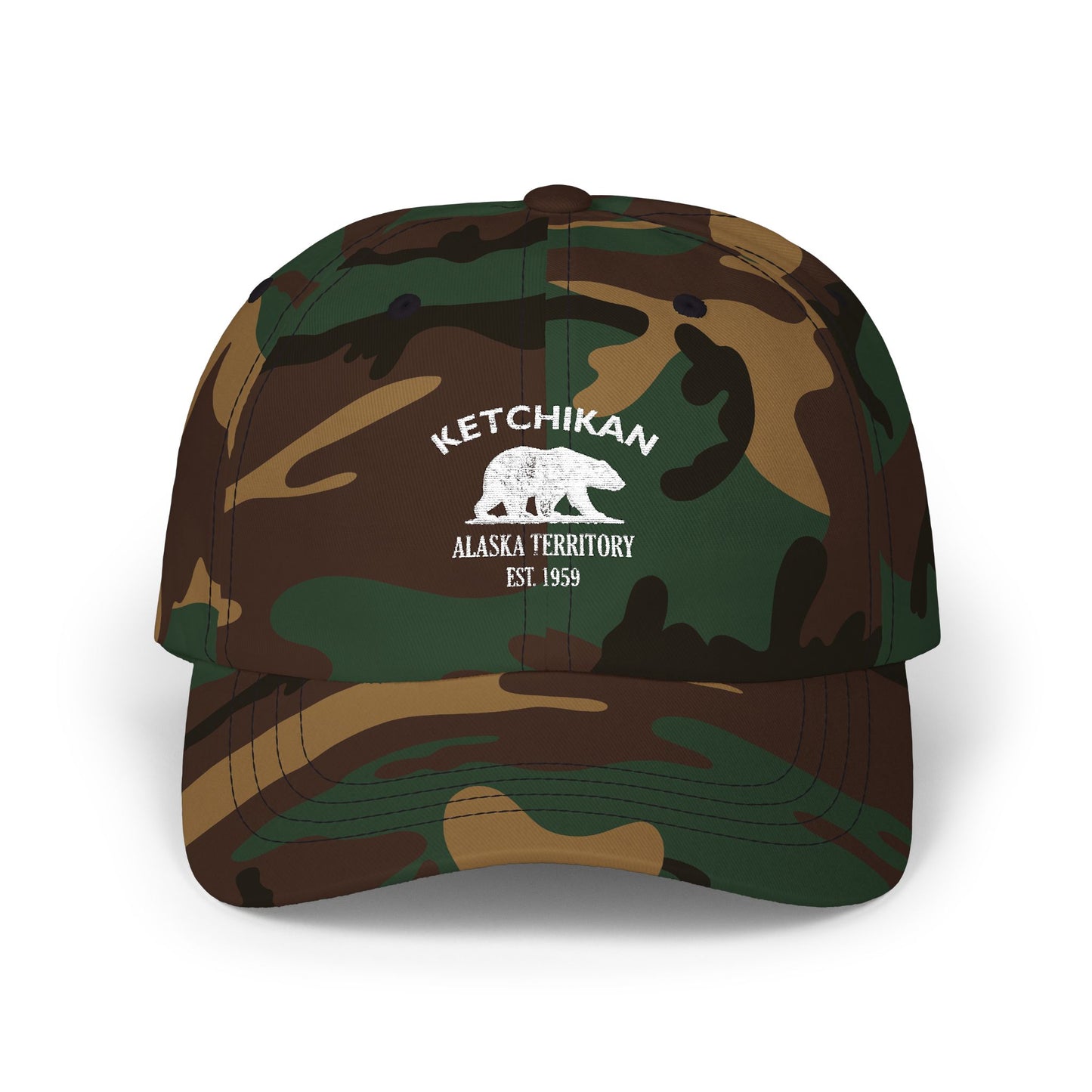
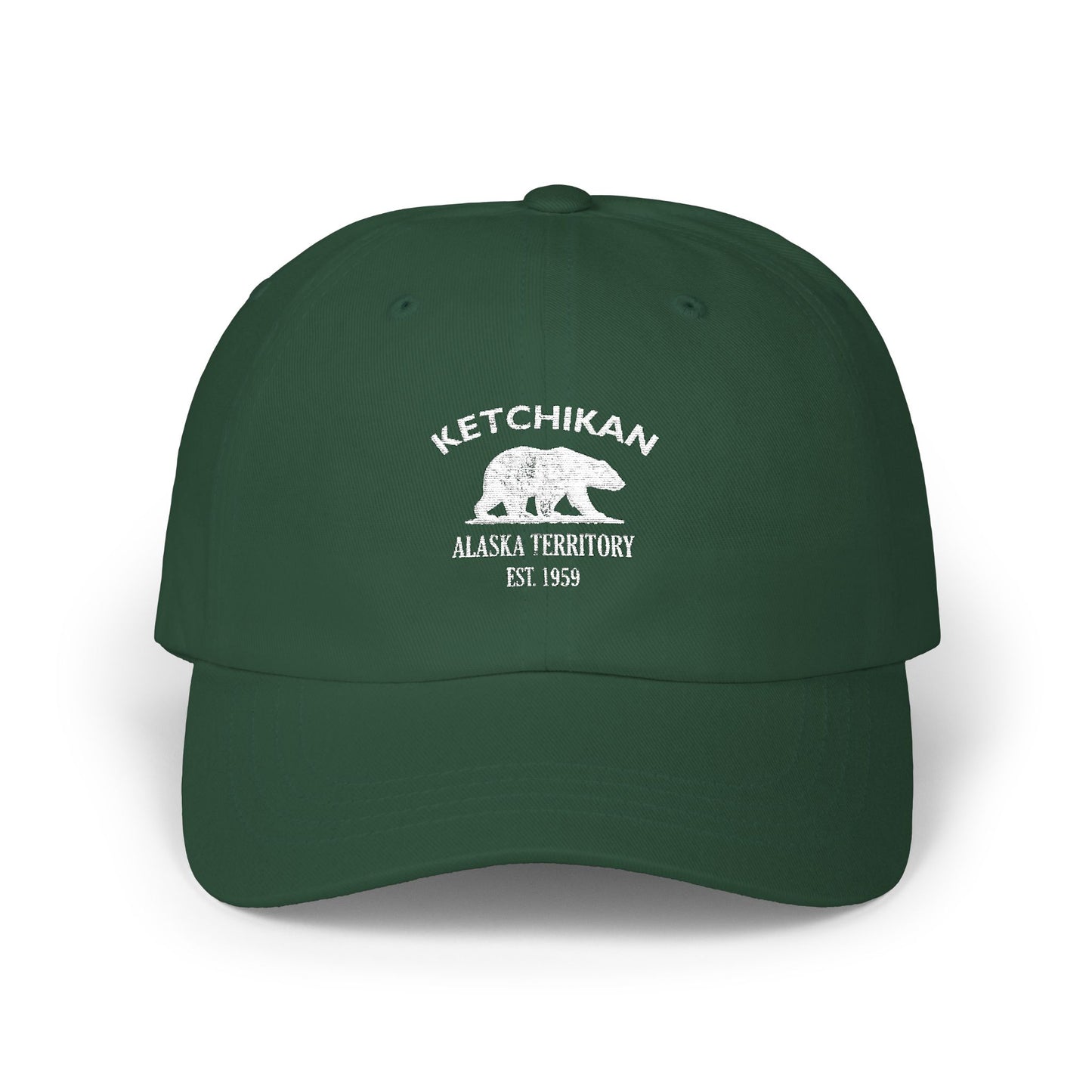
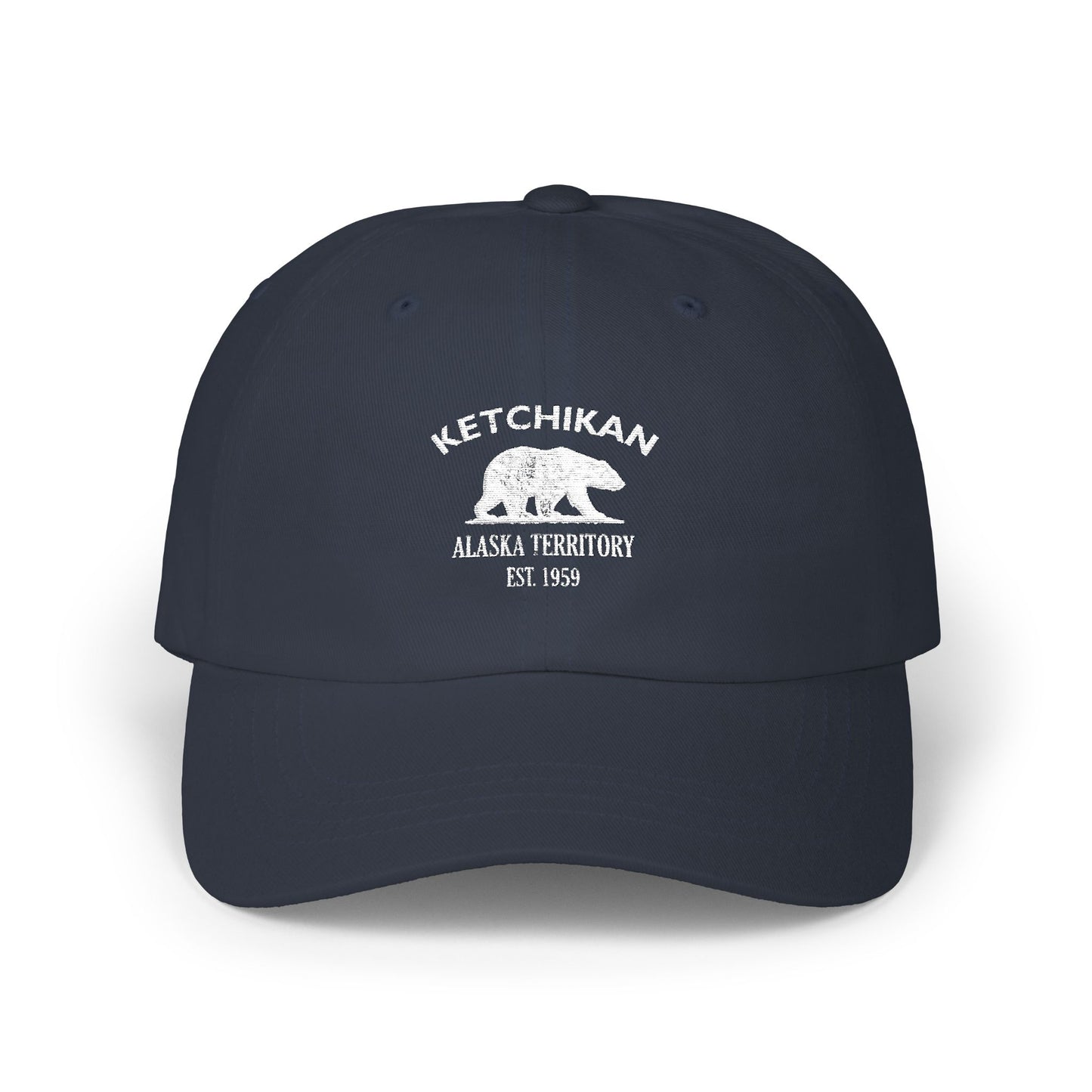
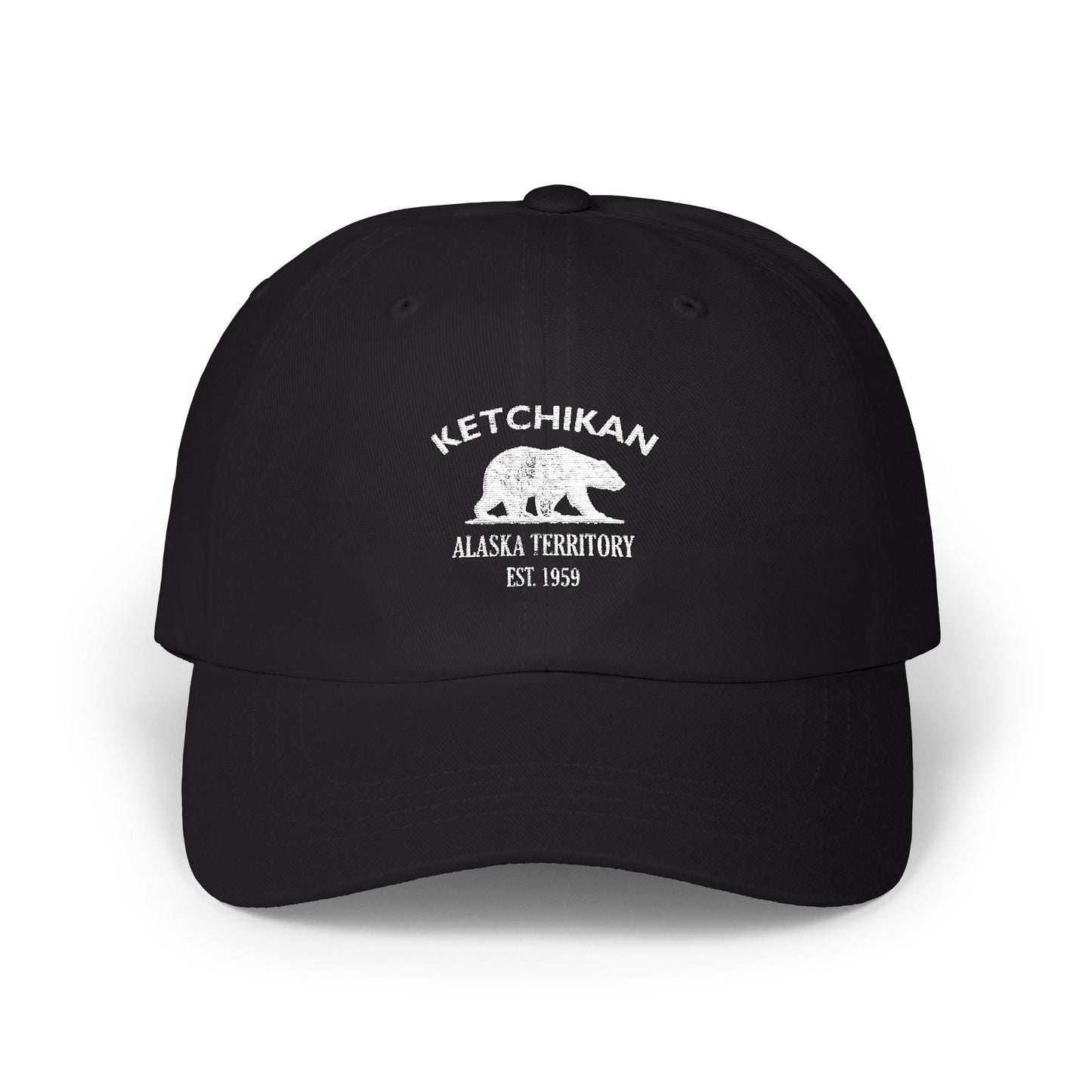
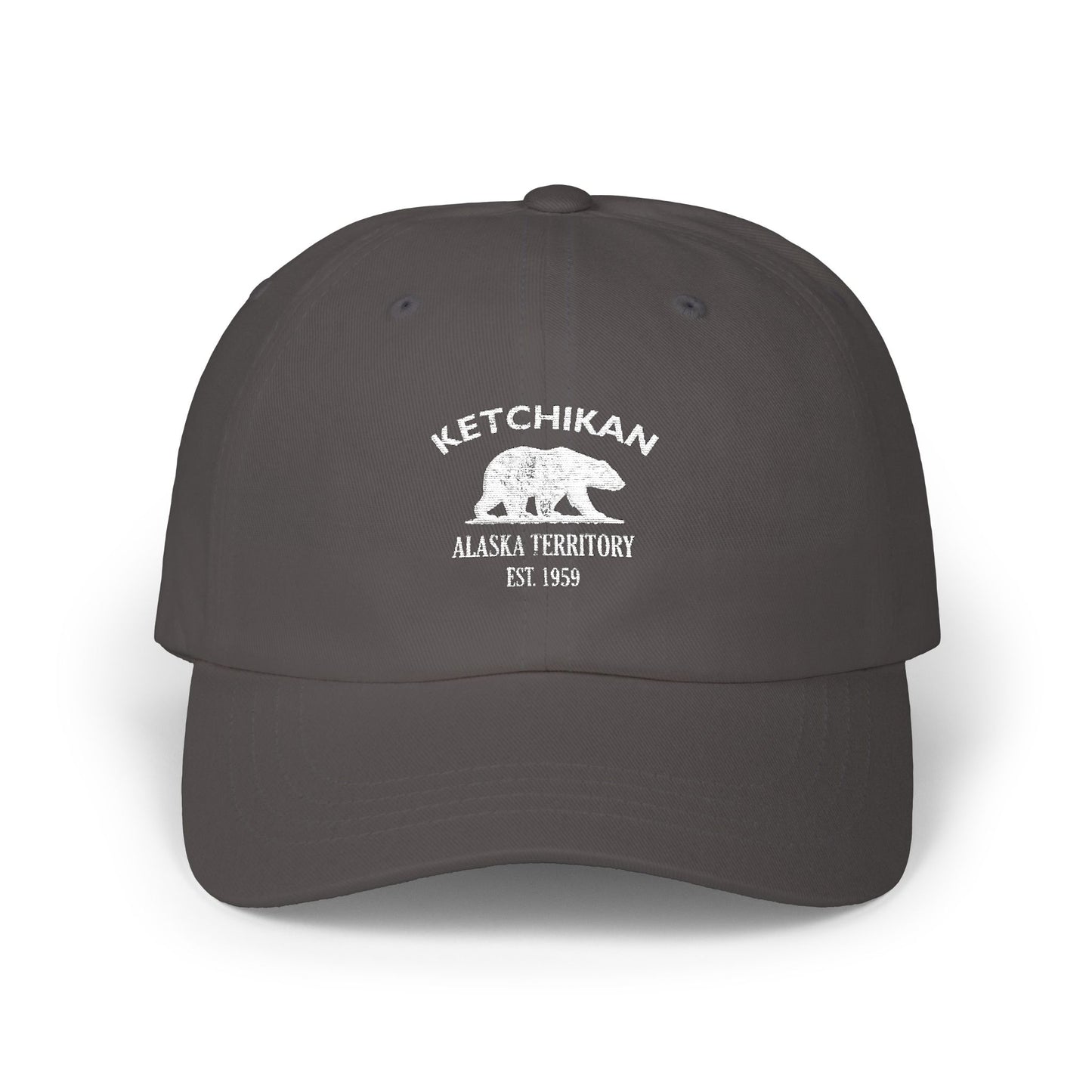
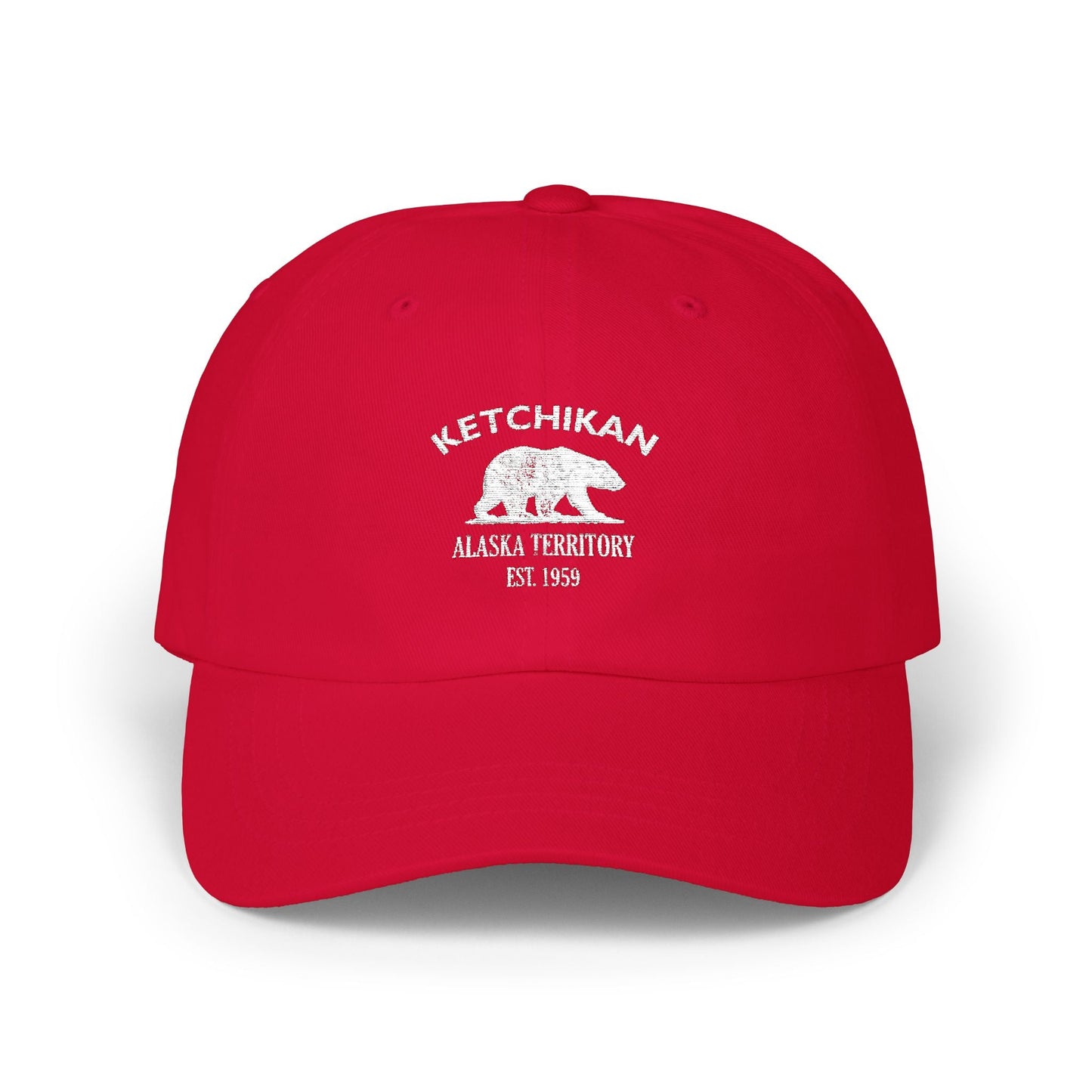
Our Ketchikan retro logo uses Alaska's distressed bear motif, symbolizing wilderness toughness, resilience, and cultural pride. The bear reflects Indigenous reverence and frontier endurance, while "1959" ties the design to Alaska's statehood. Its black-and-white styling is rugged and retro, resembling crate labels, logging brands, and outfitter stamps. The motif bridges Ketchikan's dual identity: Native heritage and salmon capital. On merchandise, it conveys authenticity, endurance, and pride, retro vintage in tone. The bear emblem honors Ketchikan's layered identity, making it a vintage symbol of Alaska's story. Retro in style, it reflects survival, heritage, and authenticity.
By the early twentieth century, Ketchikan thrived as "the Salmon Capital of the World," supported by canneries lining its waterfront. Logging camps and pulp mills added industrial strength. The 1950s and 1960s brought suburban neighborhoods, schools, and modest tourism, with ferries and early cruise ships docking. Its timeline reflects Alaska's adaptability: frontier fishing hub evolving into a suburban and tourist community. Ketchikan's mid-century decades highlighted resilience, community pride, and economic continuity. Despite booms and busts, Ketchikan endured, balancing Indigenous heritage, fishing traditions, and suburban optimism, reflecting Alaska's broader resilience in wilderness and industry.
Why People Visit Ketchikan Alaska
Ketchikan offers Alaska's First City and the earliest extant incorporated city status (August 25, 1900), the Salmon Capital of the World credential rooted in the Ketchikan Creek cannery era of the early twentieth century, the National Historic Landmark District downtown with its Creek Street boardwalk-on-pilings red-light history of 1903-1954, the world's largest collection of standing totem poles across four distinct totem destinations, the Tongass National Forest rainforest backdrop (the largest national forest in the United States, headquartered in town), Misty Fjords National Monument 40 miles east, the 3,001-foot Deer Mountain backdrop, the Tongass Tlingit cultural continuity along Ketchikan Creek, and the rain-soaked Inside Passage identity that makes the town look like nothing else in America. It is Alaska's First City — and the first port of call for more than a million cruise visitors a summer heading north from the Lower 48.
