


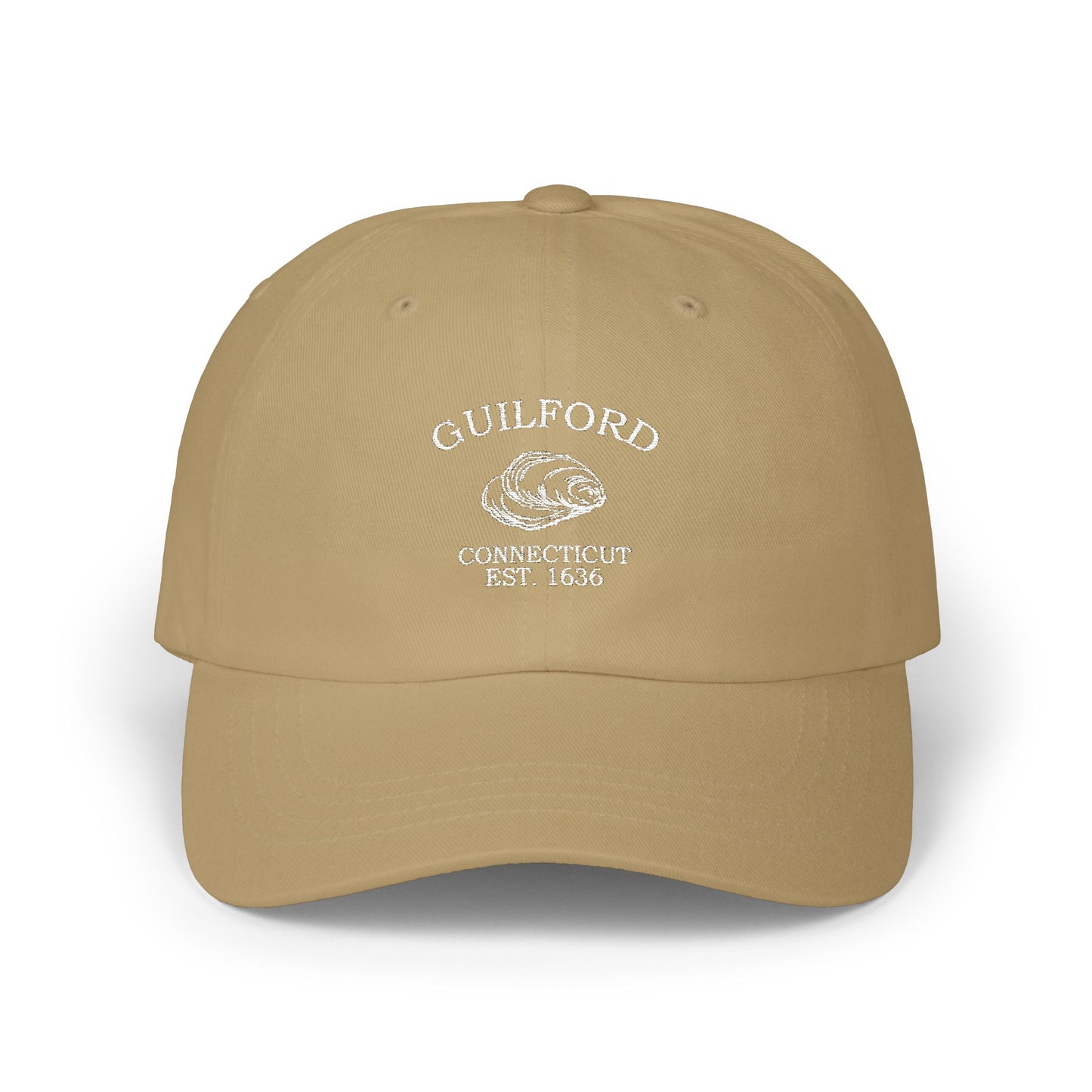
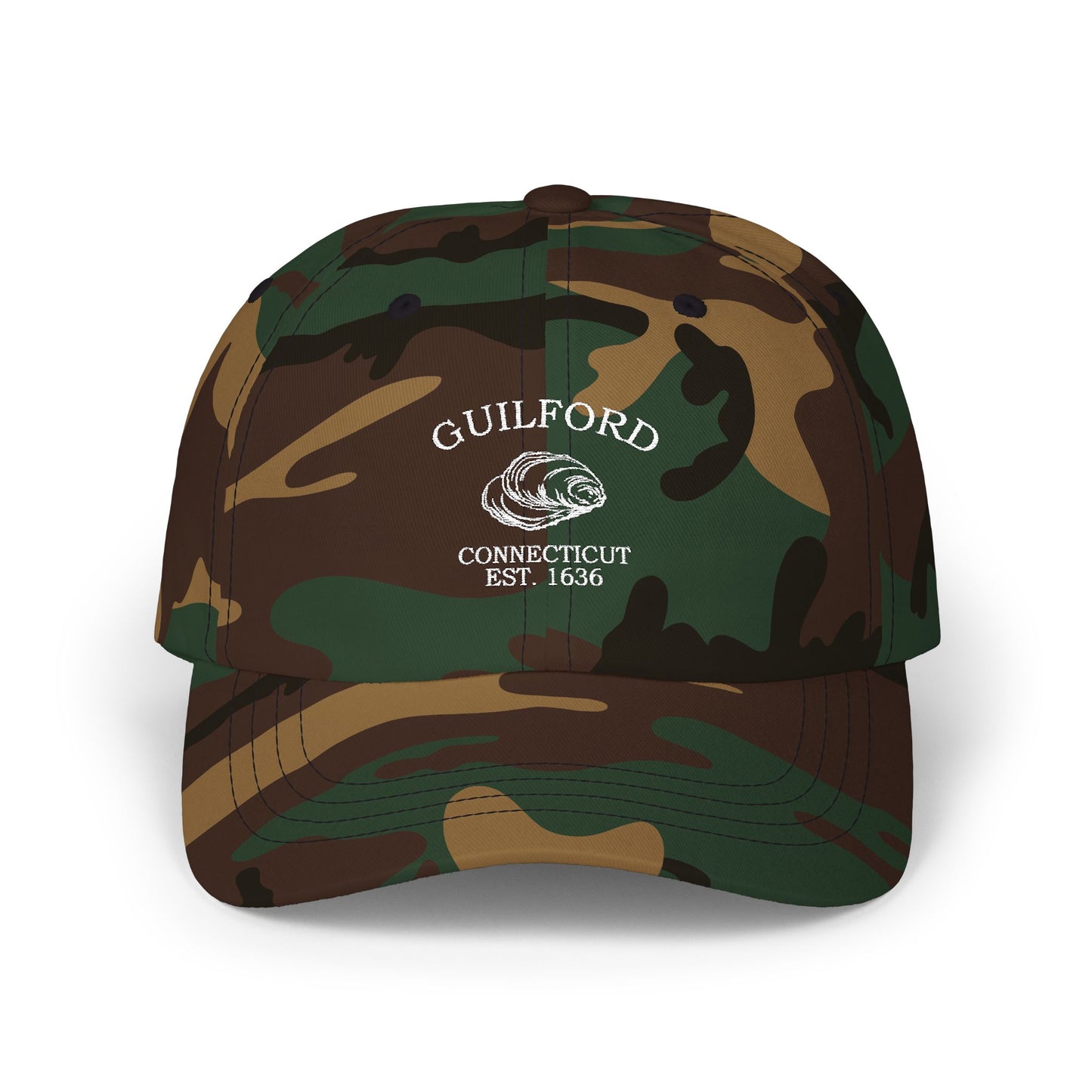
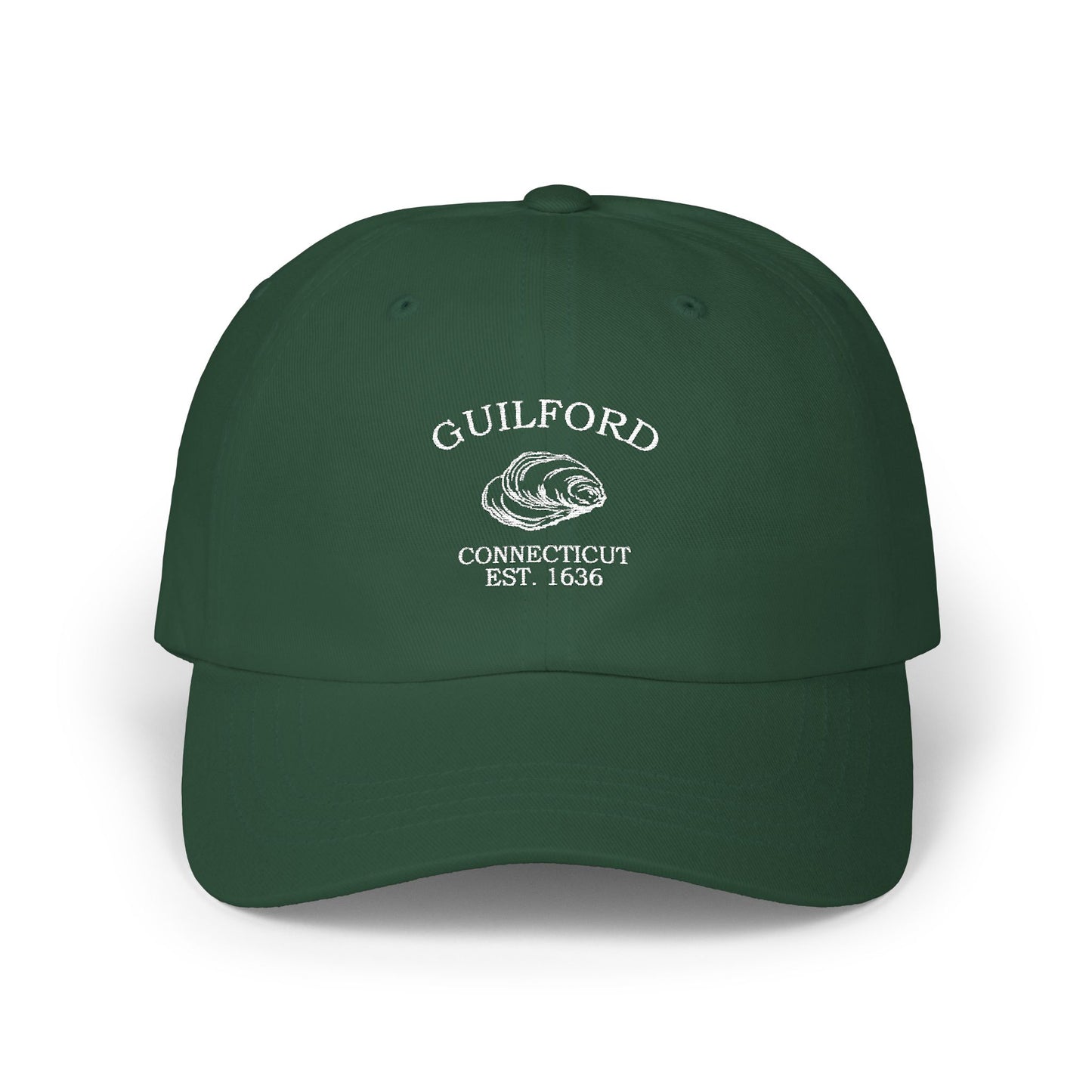
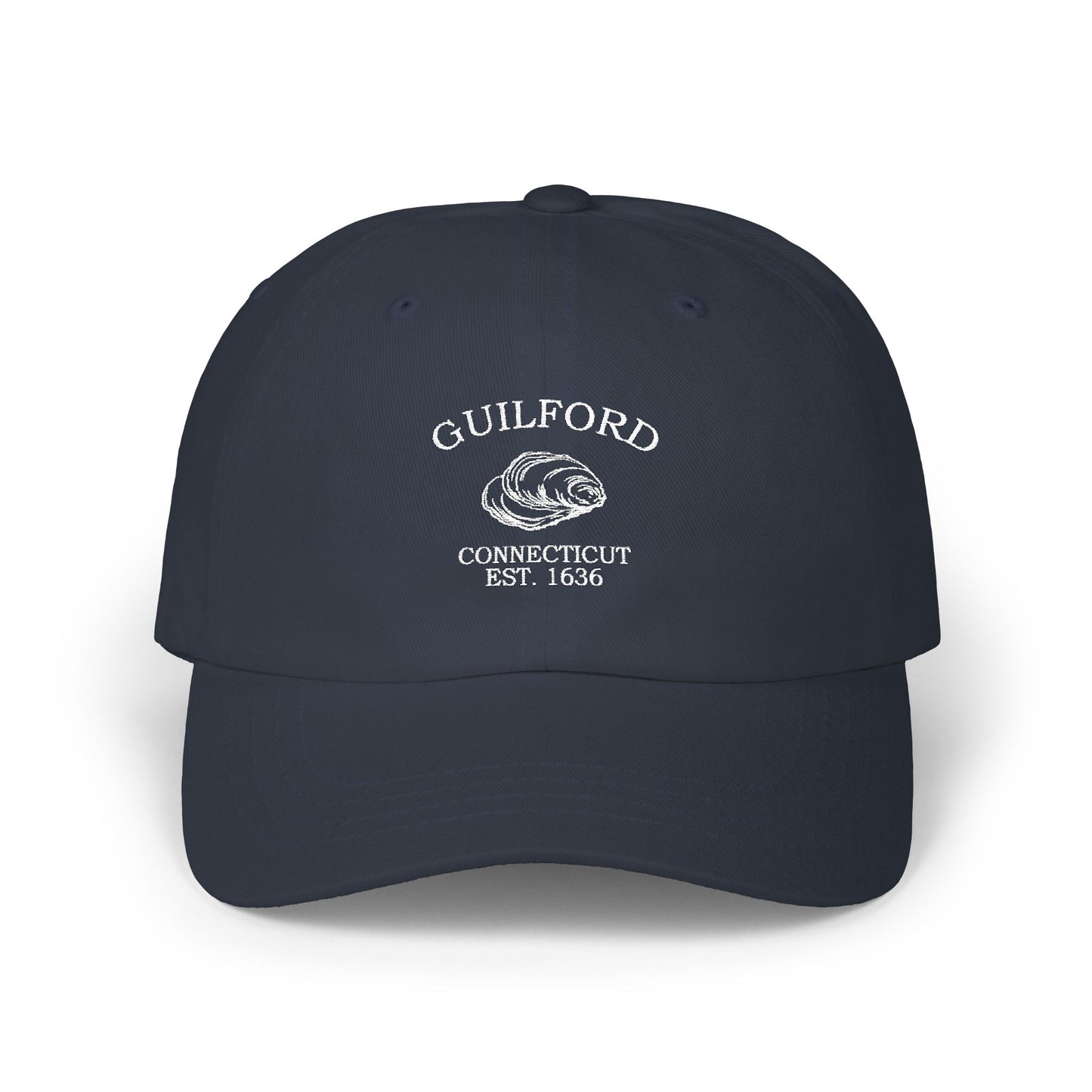
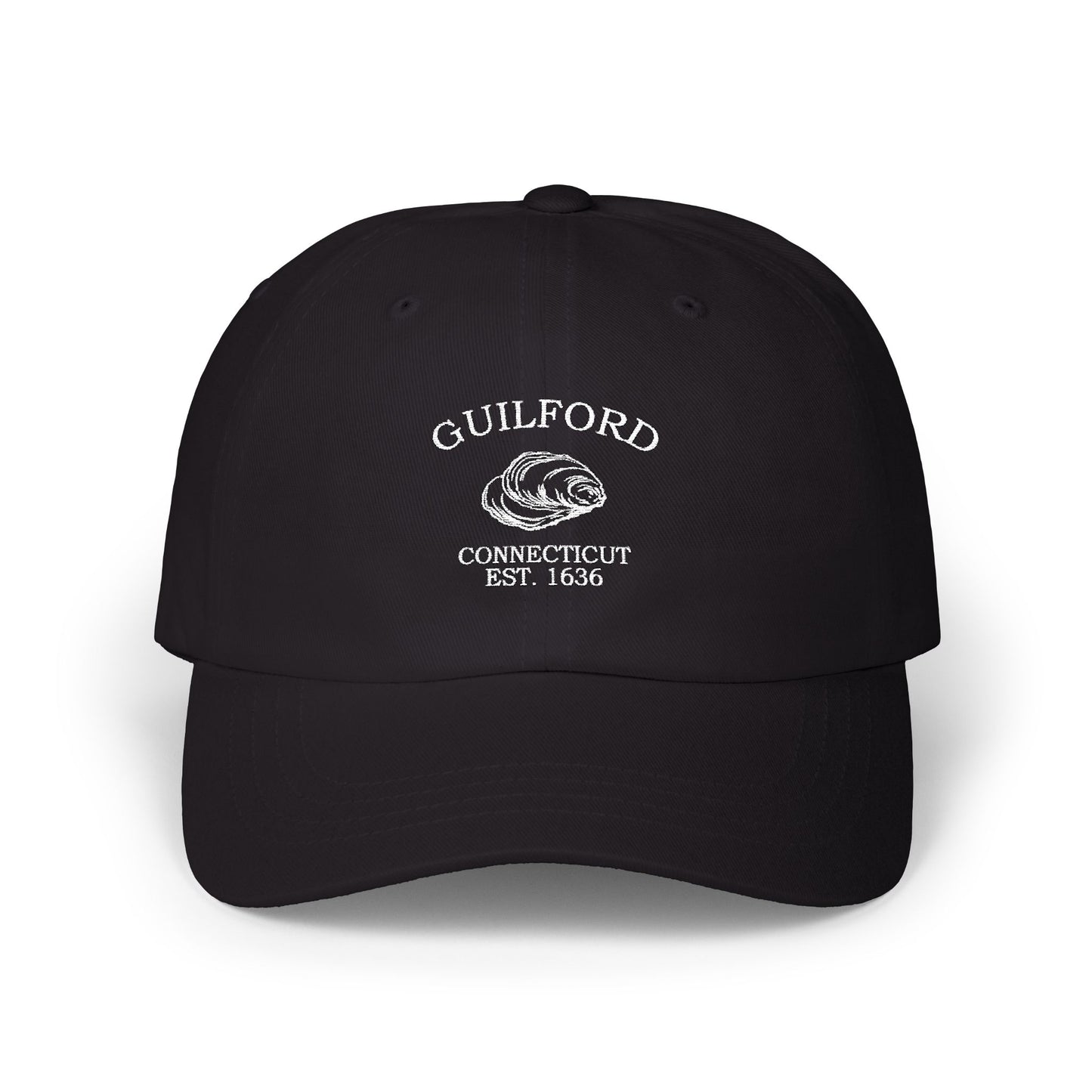
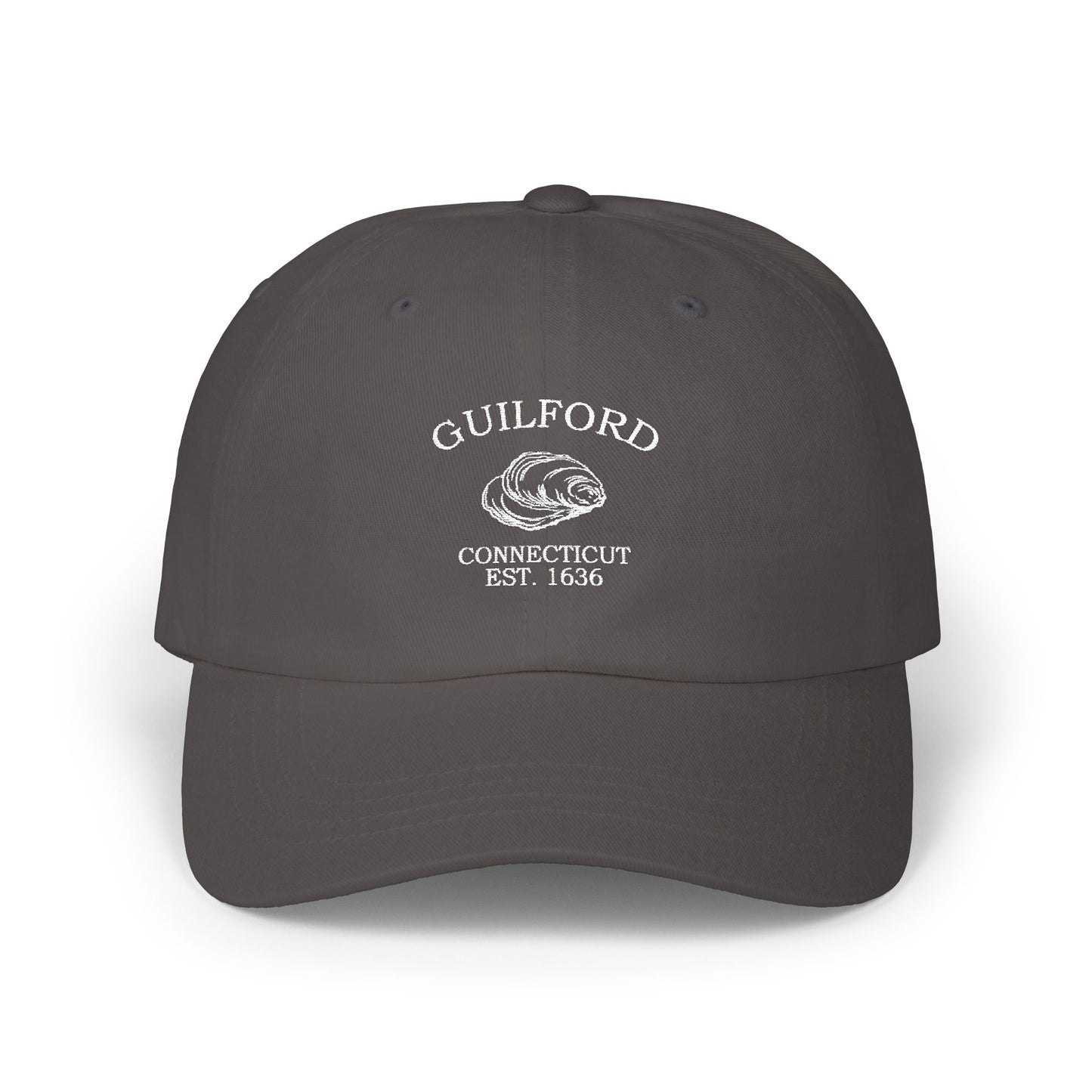
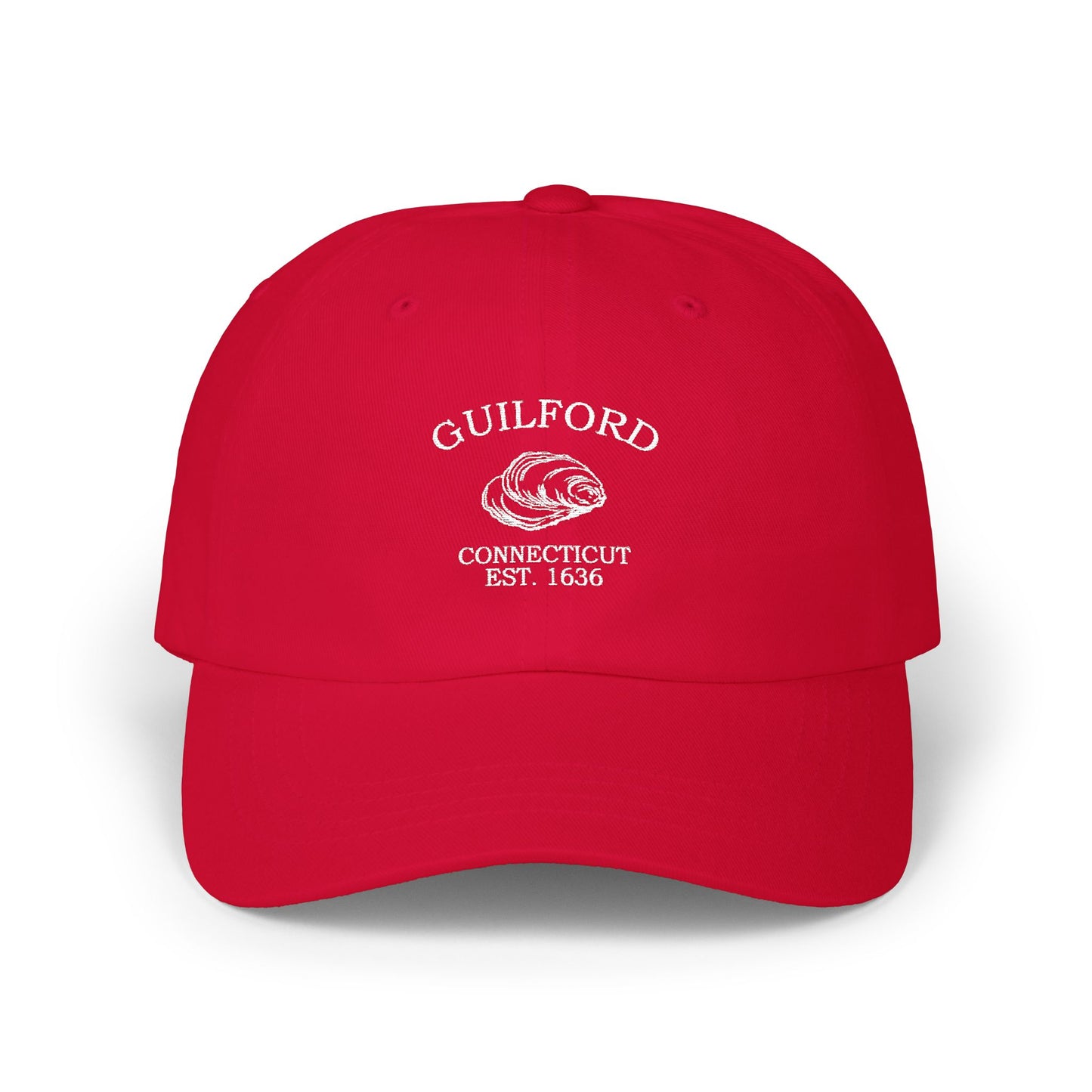
Our Guilford retro logo uses Connecticut's clam shell motif, the brand-wide shellfish emblem of every Merlin Classics CT shoreline town, symbolizing shoreline abundance and resilience. The clam reflects heritage, while "1636" ties the design to the Connecticut Colony's founding era — Guilford itself was settled three years later in 1639, but the colony-wide "1636" date is the brand-pattern anchor across our Connecticut towns. Its black-and-white styling is retro, resembling oyster crate labels and coastal signage. The motif bridges Guilford's dual identity: colonial farming and shoreline town and modern shoreline community. On merchandise it conveys authenticity, resilience, and pride, retro in tone. The clam shell emblem honors Guilford's layered story, making it a vintage symbol of Connecticut shoreline tradition.
Guilford grew as an agricultural hub, producing crops, timber, and livestock. Shipbuilding and quarrying expanded its economy in the eighteenth and nineteenth centuries — by the 1880s the Stony Creek granite quarries along the Guilford-Branford line were shipping pink-grey stone to major construction projects across the country, including the 1886 pedestal of the Statue of Liberty and the base of Grant's Tomb in New York. Faulkner's Light went up on the island three miles offshore in 1802. By the twentieth century, suburban growth reshaped Guilford, with neighborhoods and schools expanding in the 1950s and 1960s. The town maintained its historic character, preserving colonial homes and the town green. Its timeline reflects Connecticut's dual story: colonial heritage adapting to suburban growth. Guilford's mid-century decades highlighted pride in tradition while embracing suburban expansion, making it a community that balanced continuity and adaptation while maintaining resilience across centuries.
Why People Visit Guilford Connecticut
Guilford offers the oldest stone house in New England, one of the largest village greens in the country, four historic-house museums in walking distance of each other, an offshore lighthouse, forty miles of inland hiking, century-and-a-half-old family orchards, and a continuously running September fair. Visitors come for the Whitfield House, the green, the Hyland and Griswold houses, the Stony Creek granite story and its connection to the Statue of Liberty, the apple and peach seasons at the orchards, the fair, and the simple shoreline pleasure of a village that has been holding its center since 1639. It is old, intact, and very Connecticut.
