



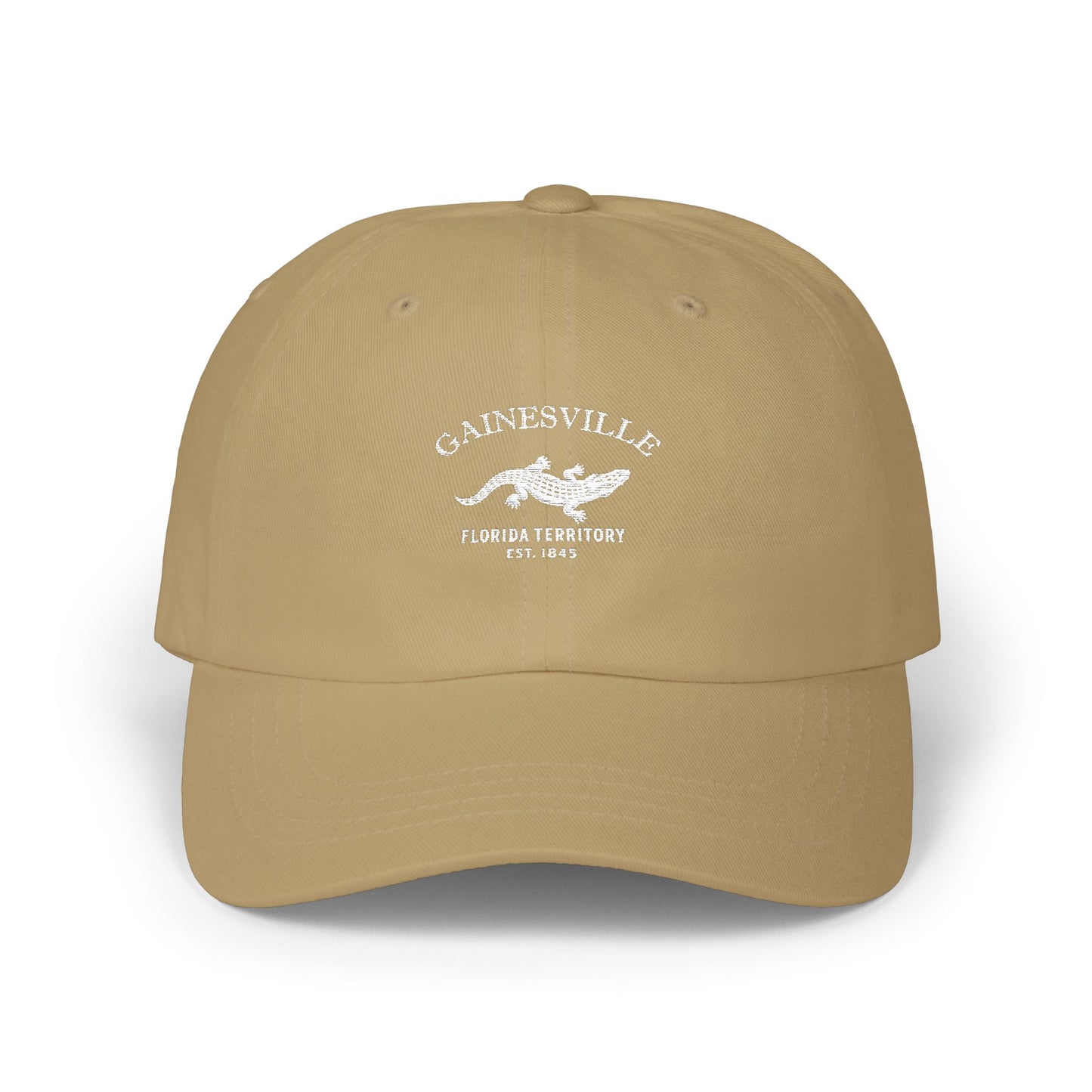
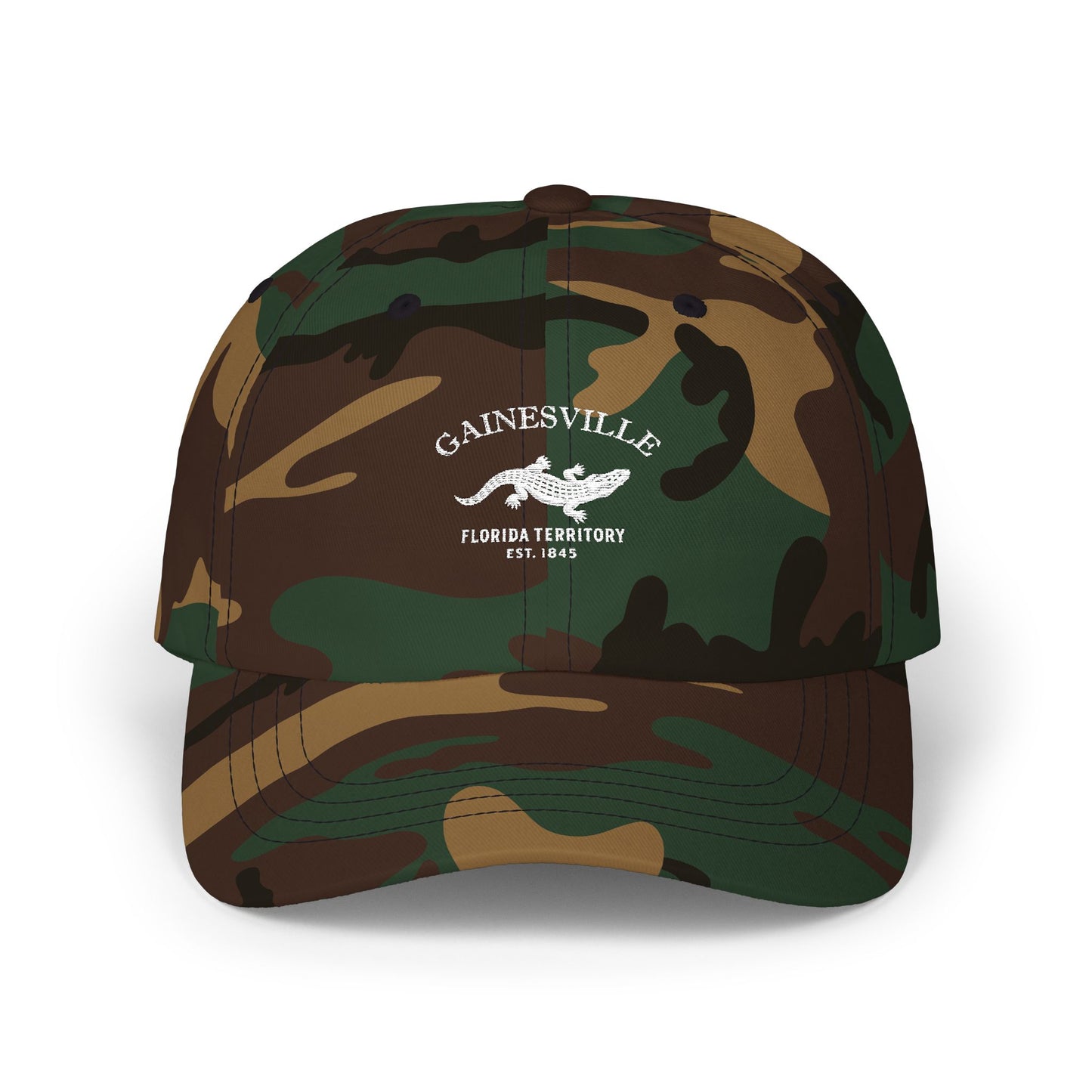


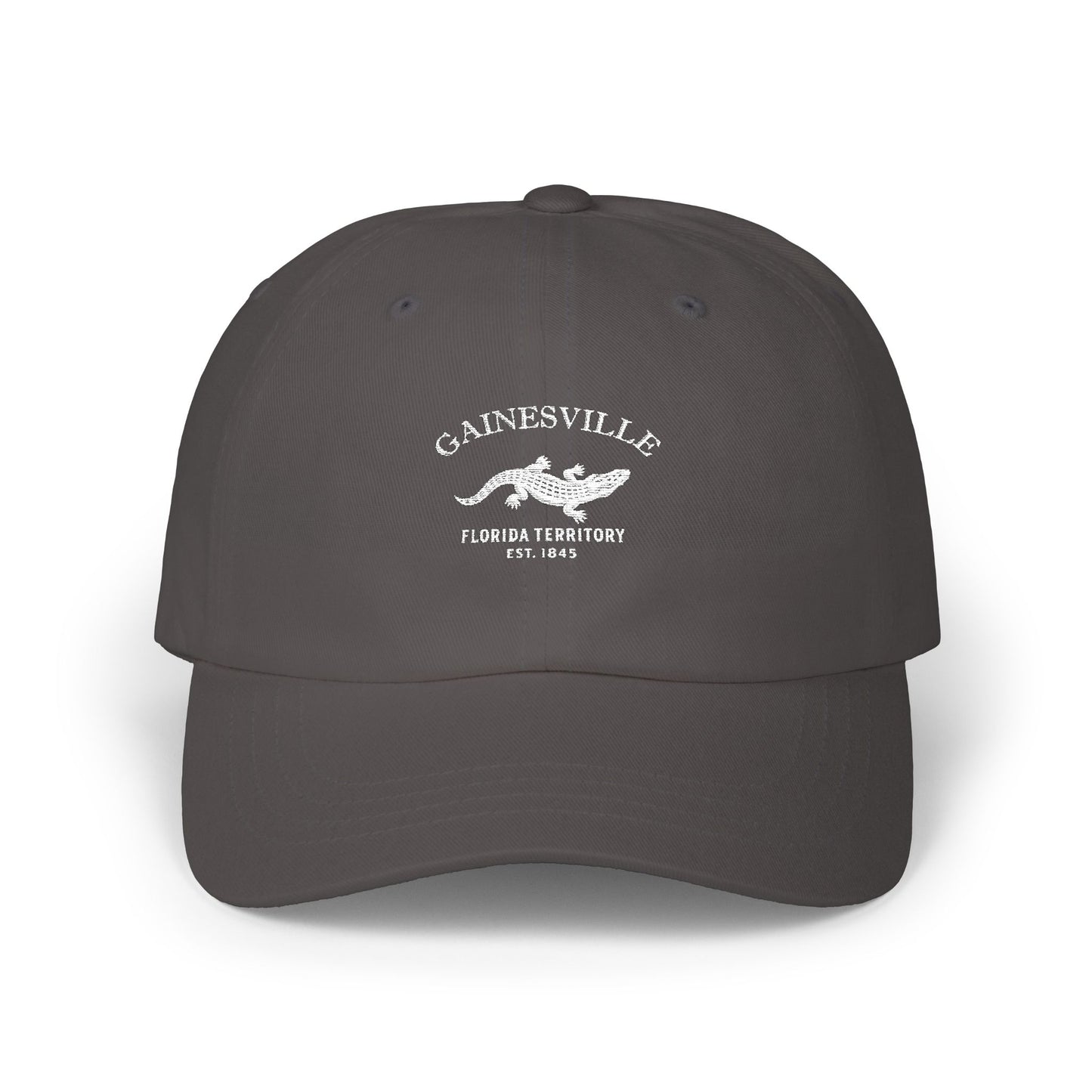
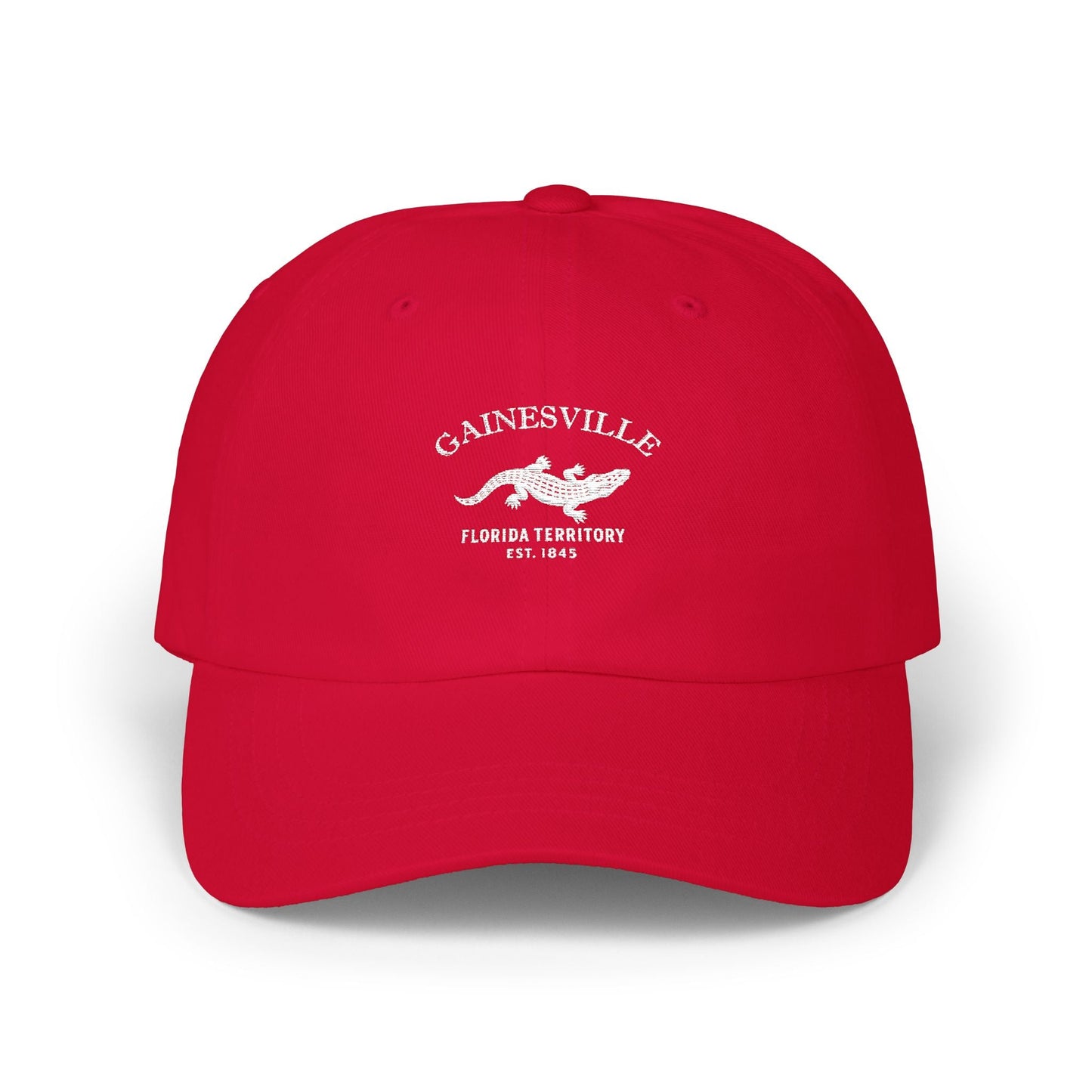
Today Gainesville is both a bustling college town and a community rooted in heritage. Its identity stretches from university life to Paynes Prairie, the Duckpond, downtown's Hippodrome marquee, and the surrounding springs and sinkhole country. Our designs honor this layered history, bridging academic pride with Florida's pioneer spirit. They invite you to explore the Gainesville collection, carrying forward a story of endurance, learning, and heritage. Gainesville remains a place where small-town warmth meets collegiate energy, retro in tone yet enduring in meaning, a vintage emblem for Florida's heartland.
A herd of wild bison grazing a savanna in Florida — an hour after you've walked out of a research lab. That is Gainesville: a college town in Alachua County wrapped around a 23,000-acre wet prairie where free-roaming "cracker" horses still run, alligators sun on the La Chua Trail, and the whole landscape drains underground through a single hole in the ground called the Alachua Sink. Just up the road, the earth simply falls away into Devil's Millhopper, a 120-foot, 500-foot-wide bowl of a sinkhole with a rainforest microclimate and small waterfalls trickling down its walls. This is North-Central Florida — not the beach Florida, not the theme-park Florida, but the slow, sky-wide, live-oak-and-Spanish-moss Florida — and Gainesville is its capital city, set on a low ridge of sandy pinewoods in the middle of karst spring country.
Why People Visit Gainesville Florida
Gainesville blends wild Florida and a working college town. Visitors come for the prairie and the springs, the sinkhole country, the historic district's porches and oaks, and a downtown anchored by the Hippodrome's marquee. It is shaded, walkable, and rooted in place — North-Central Florida at its most genuine, with the real Florida outside the city limits and a century of college-town culture inside them.
