


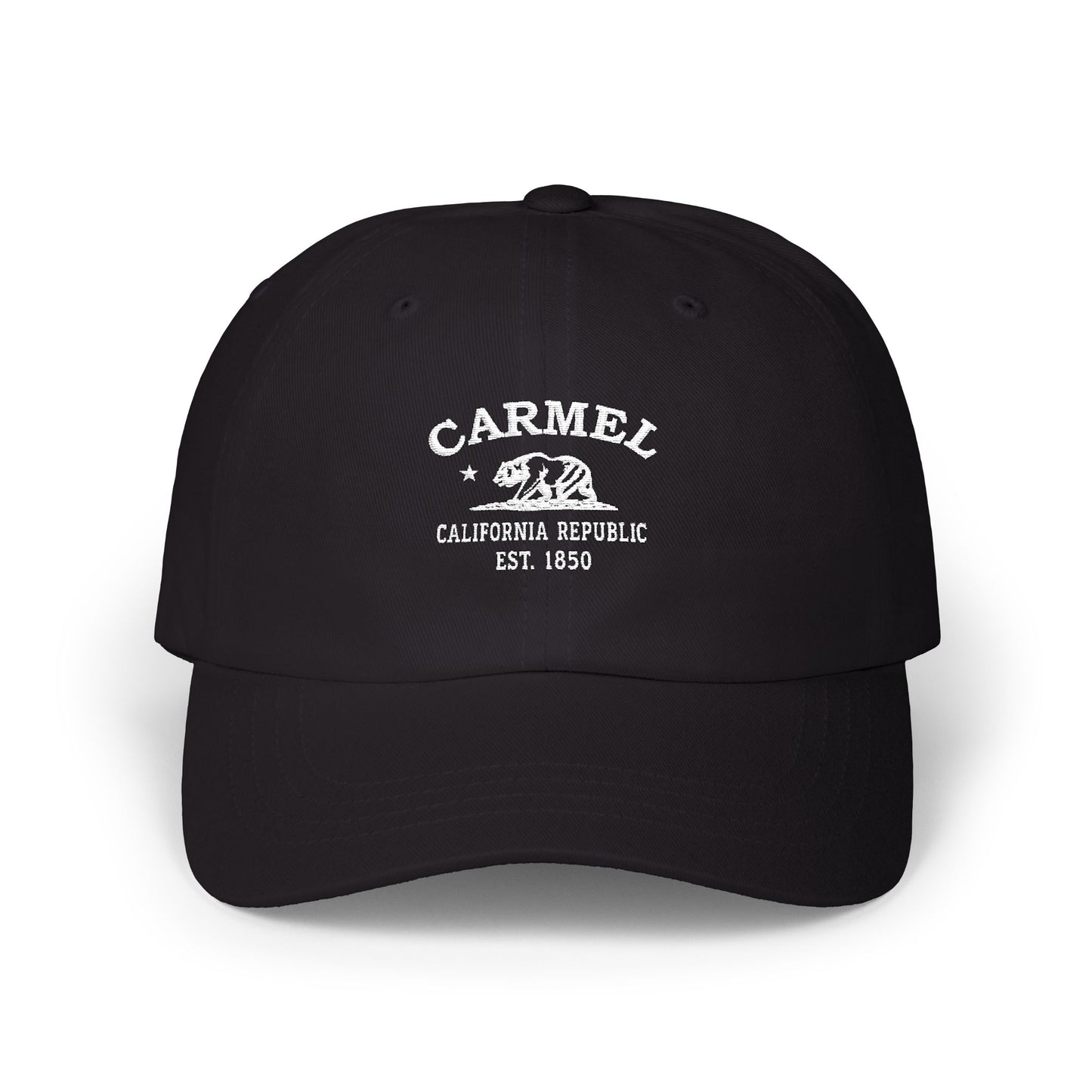
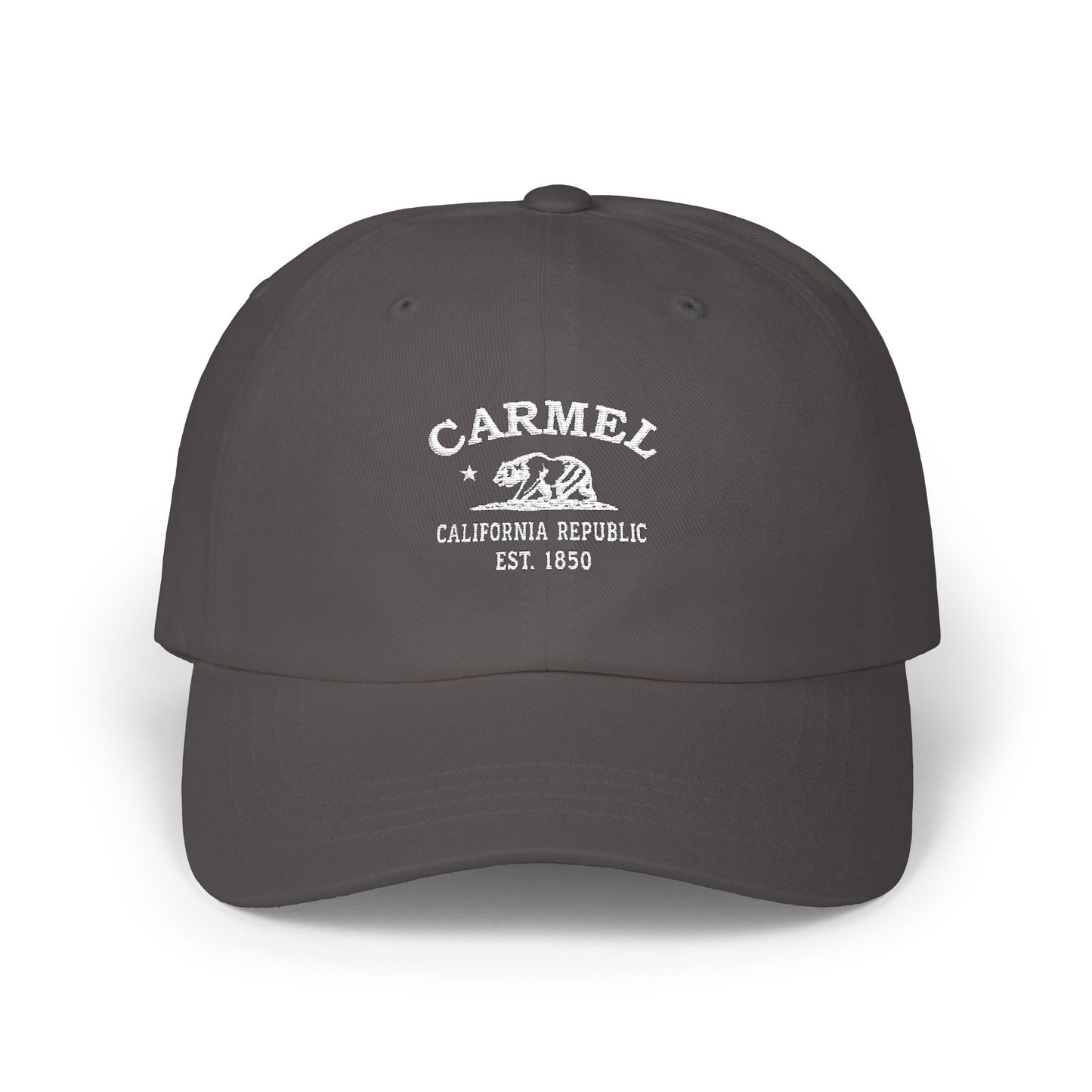
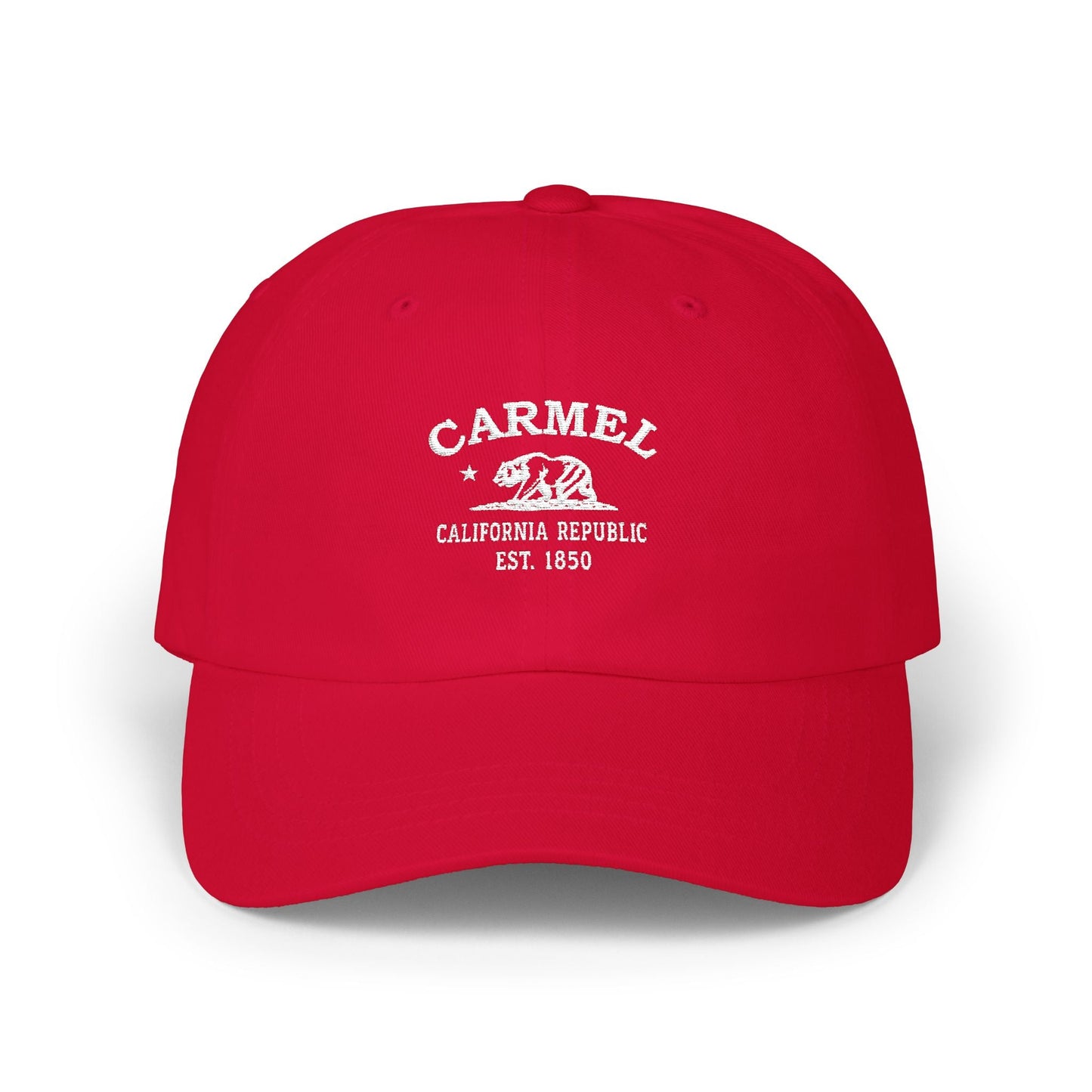
Today Carmel-by-the-Sea is celebrated as one of America's most charming small towns — a coastal village of galleries, gardens, and storybook cottages, anchored by Serra's 1770 mission, Jeffers' hand-built tower, and a beach the color of bone china. Our Carmel designs gather that identity into wearable form: the village in the forest, the Tudor eaves, the cypress and the surf. Explore the collection and carry a little of Carmel's fairytale coast wherever you go.
Carmel's lore lives in its rooflines and its routes. Residents will tell you the cottages were built "by eye," each one a little different, and that the lanes were laid to follow the trees rather than the trees cleared to follow a grid. Stories cling to the mission bells, to the poets who came for a summer and never left, to the actors and artists who served as mayors across the decades. Fact and folklore braid together the way the cypress braids with the fog — a town that has always known it was a stage set for the imagination, and has tended that role with care for over a hundred years.
Why People Visit Carmel-by-the-Sea
Carmel offers artful streets beside a protected coast. Visitors come for the storybook architecture, the mission, the coastal reserves, and the simple pleasure of strolling a walkable, dog-friendly village. It is refined, peaceful, and endlessly photogenic, with a year-round mild climate. History and everyday village culture sit side by side here in a way few towns can match.
