


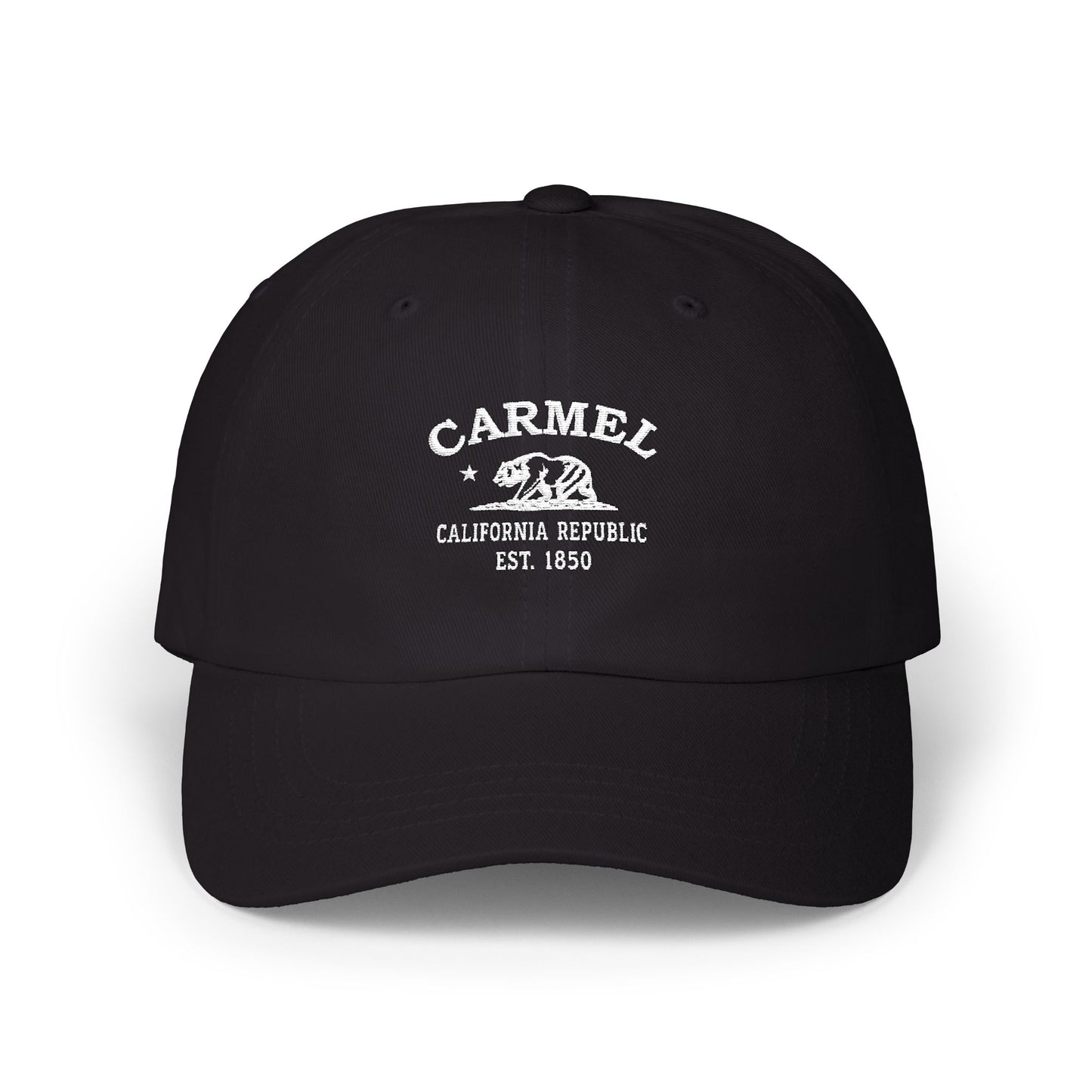
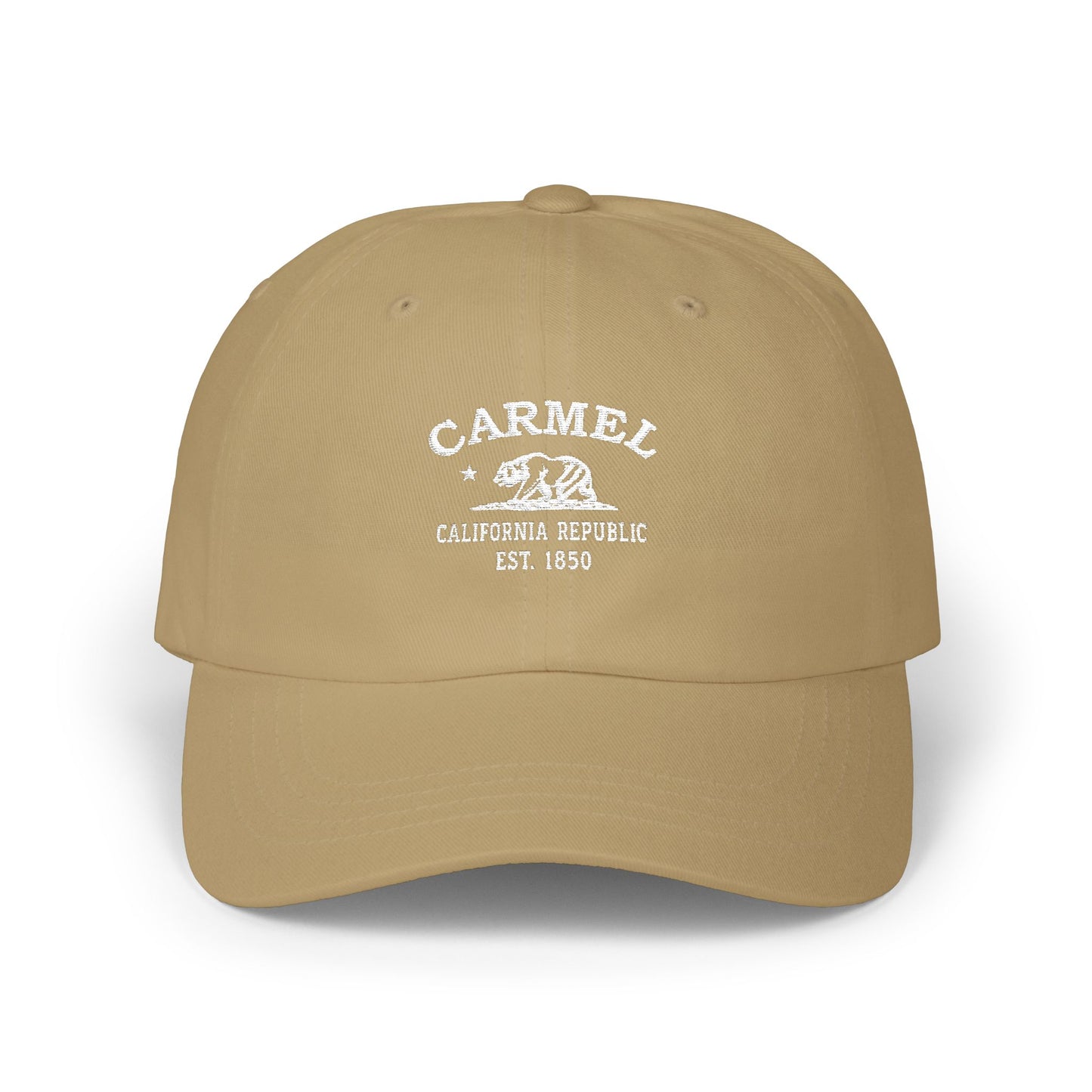
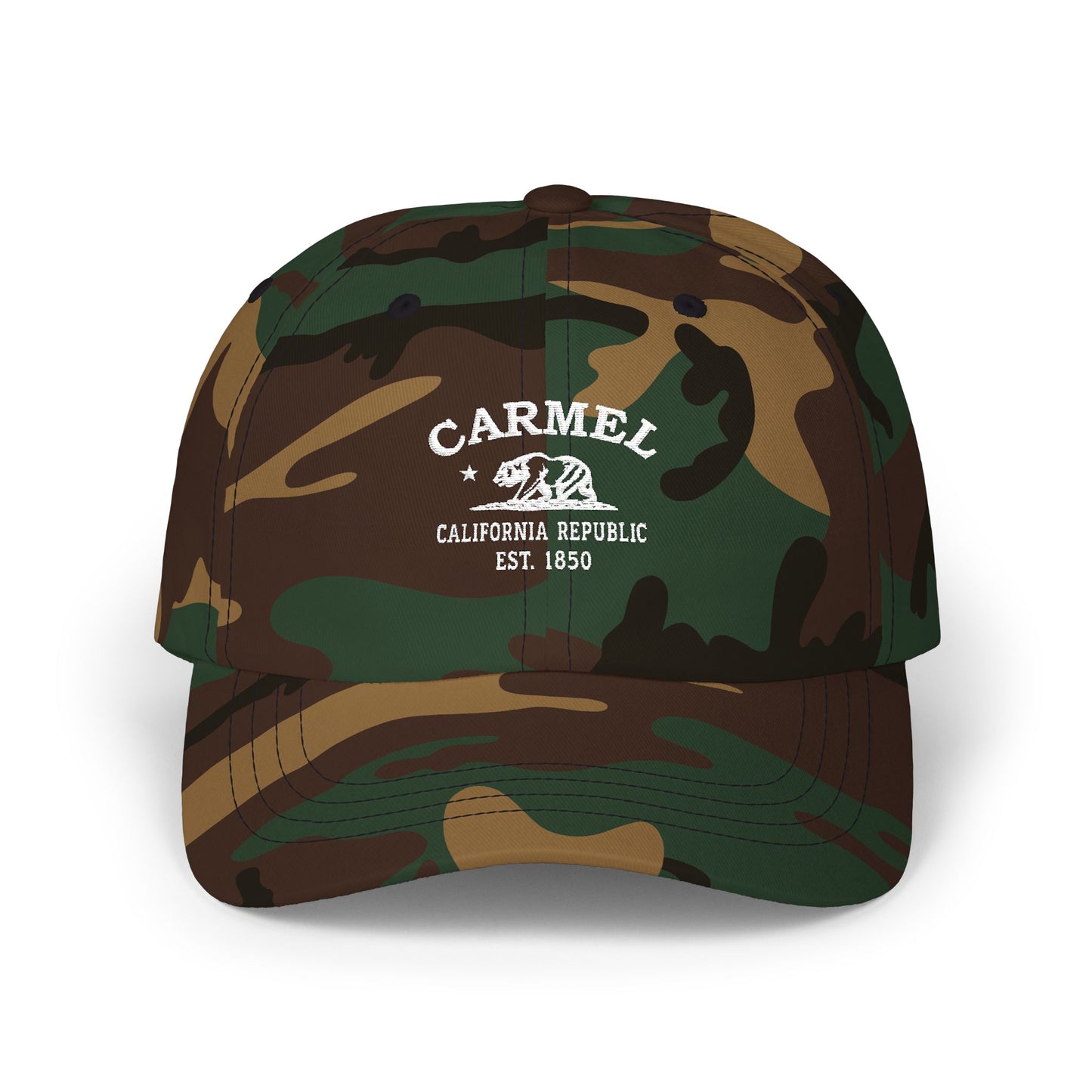
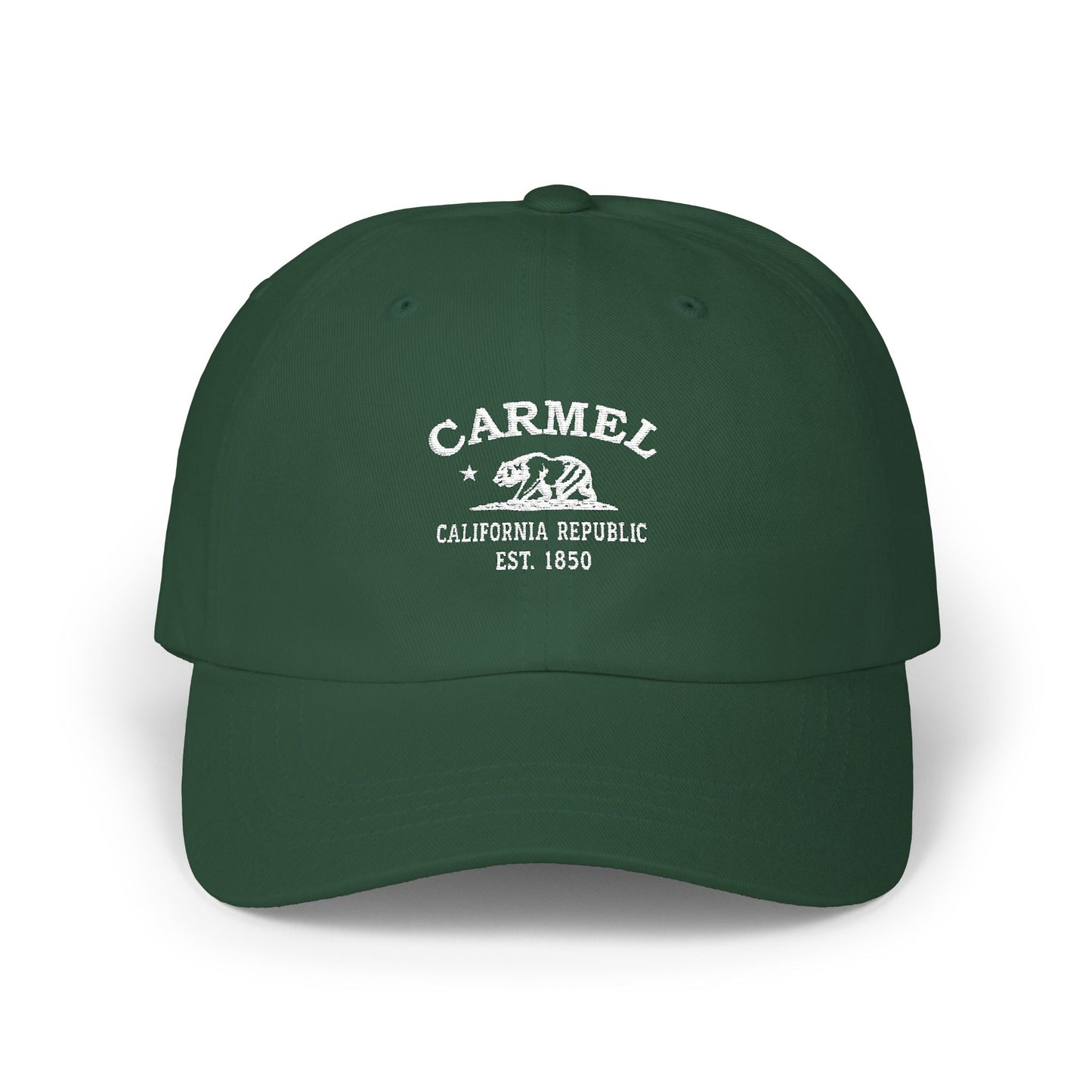
Today Carmel-by-the-Sea is celebrated as one of America's most charming small towns — a coastal village of galleries, gardens, and storybook cottages, anchored by Serra's 1770 mission, Jeffers' hand-built tower, and a beach the color of bone china. Our Carmel designs gather that identity into wearable form: the village in the forest, the Tudor eaves, the cypress and the surf. Explore the collection and carry a little of Carmel's fairytale coast wherever you go.
A one-square-mile fairytale tucked under the cypress — a hundred years of artists who came for the light and never left. Carmel-by-the-Sea, California sits on the Monterey Peninsula at the south end of Monterey Bay, a "village in a forest overlooking a white sand beach," in the words of its own founders, with no streetlights, no house numbers, and no home mail delivery to this day. Beyond the village edge, Carmel Beach curves in pale sand to turquoise water, its cypress wind-bent into wide fans, and Point Lobos guards the granite coast just south. A hundred years on, Carmel-by-the-Sea is still the storybook California coast — bohemian, salt-aired, dog-friendly, and impossibly pretty.
Why People Visit Carmel-by-the-Sea
Carmel offers artful streets beside a protected coast. Visitors come for the storybook architecture, the mission, the coastal reserves, and the simple pleasure of strolling a walkable, dog-friendly village. It is refined, peaceful, and endlessly photogenic, with a year-round mild climate. History and everyday village culture sit side by side here in a way few towns can match.
