







A one-square-mile fairytale tucked under the cypress — a hundred years of artists who came for the light and never left. Carmel-by-the-Sea, California sits on the Monterey Peninsula at the south end of Monterey Bay, a "village in a forest overlooking a white sand beach," in the words of its own founders, with no streetlights, no house numbers, and no home mail delivery to this day. Beyond the village edge, Carmel Beach curves in pale sand to turquoise water, its cypress wind-bent into wide fans, and Point Lobos guards the granite coast just south. A hundred years on, Carmel-by-the-Sea is still the storybook California coast — bohemian, salt-aired, dog-friendly, and impossibly pretty.
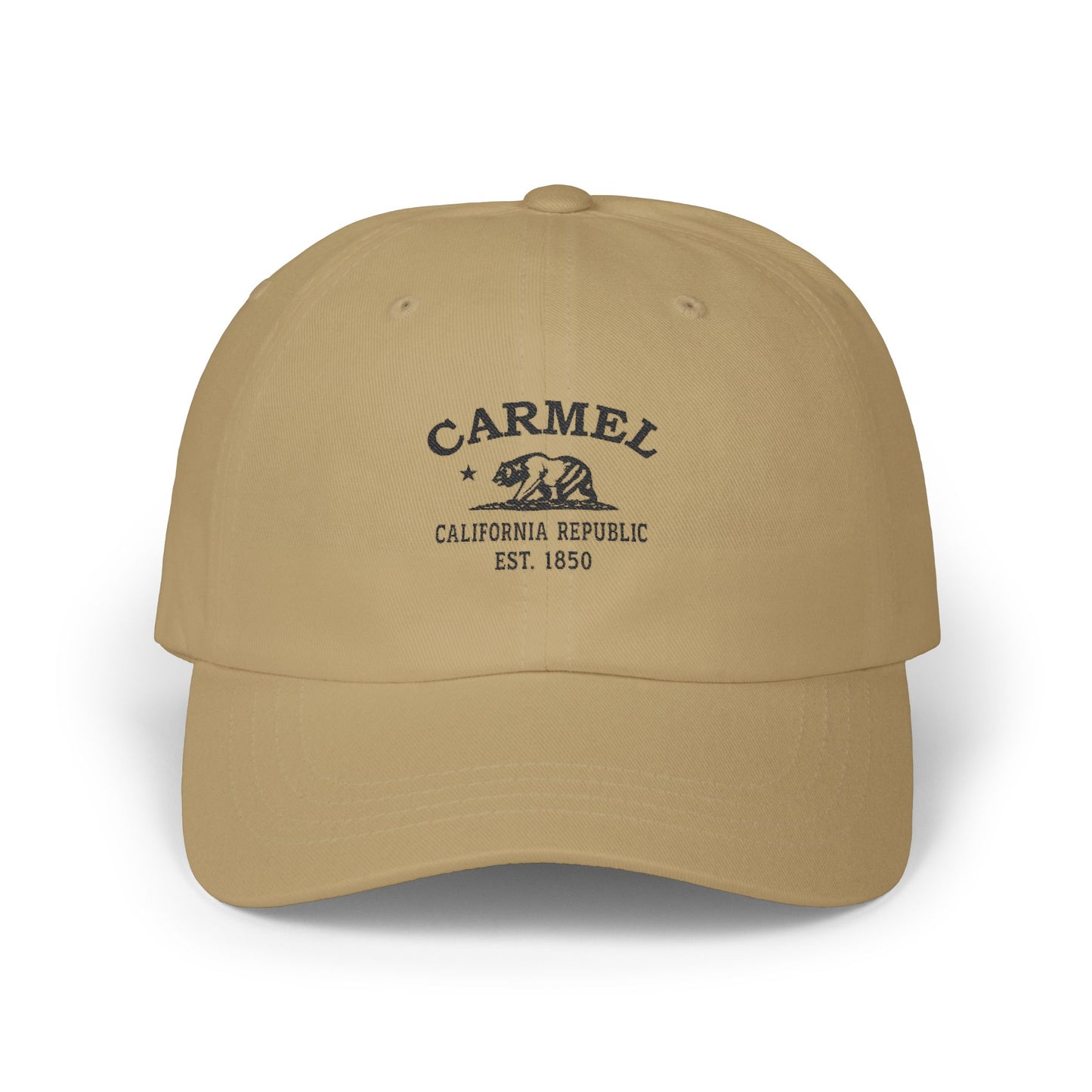
Our Carmel-by-the-Sea retro logo carries the California bear and star, marking statehood in 1850 and the wild, independent character of the coast. Rendered in black-and-white with a vintage, hand-printed feel reminiscent of WPA-era poster art, the emblem pairs the toughness of the bear with the craft sensibility that built the village. On a tee, a cap, or a wall print, it reads as a quiet badge of a singular place — the fairytale coast where artists fled the rubble of 1906 and built something gentler from stone and shingle and salt air.
Why People Visit Carmel-by-the-Sea
- Relax on Carmel Beach, a broad crescent of pale sand backed by wind-flattened Monterey cypress and famous sunset silhouettes.
- Stretch farther south along Carmel River State Beach to where the Carmel River meets the Pacific — a quieter dog-friendly stretch with bird-watching at the lagoon.
- Explore Point Lobos State Natural Reserve, with granite coves, sea lions, otters, and easy trails above turquoise water.
- Find the Comstock storybook cottages — Hansel, Gretel, and the Tuck Box — on a self-guided fairytale walk through the village lanes.
- Tour the Carmel Mission Basilica (Mission San Carlos Borromeo), with its basilica, museum rooms, and gardens set within sandstone and adobe walls.
- Visit Tor House and Hawk Tower at Carmel Point, the hand-built stone home of poet Robinson Jeffers, open for docent-led tours.
- Browse Ocean Avenue's courtyards, galleries, and flower-lined passages, then walk Scenic Road along the cliffs above the surf.
