


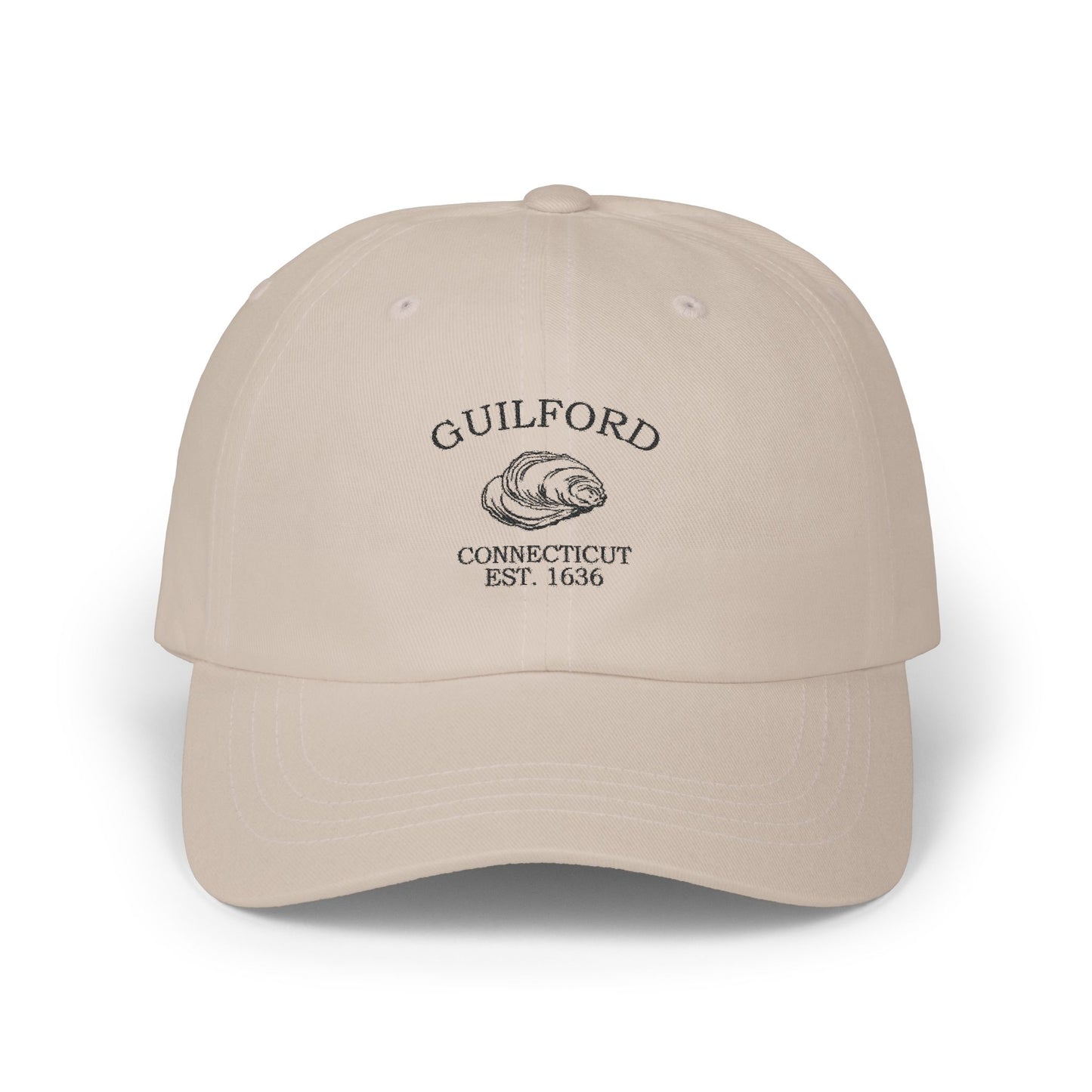
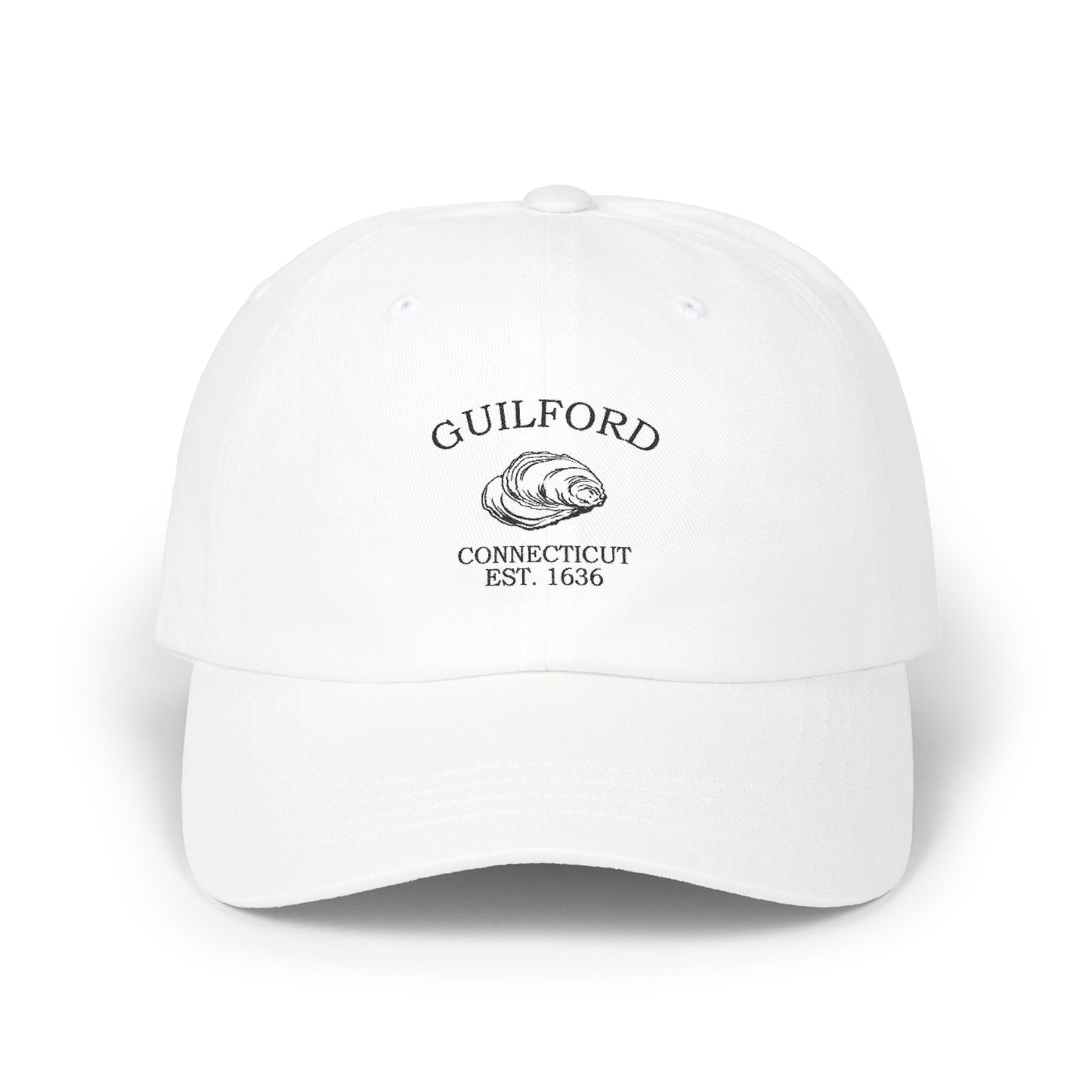
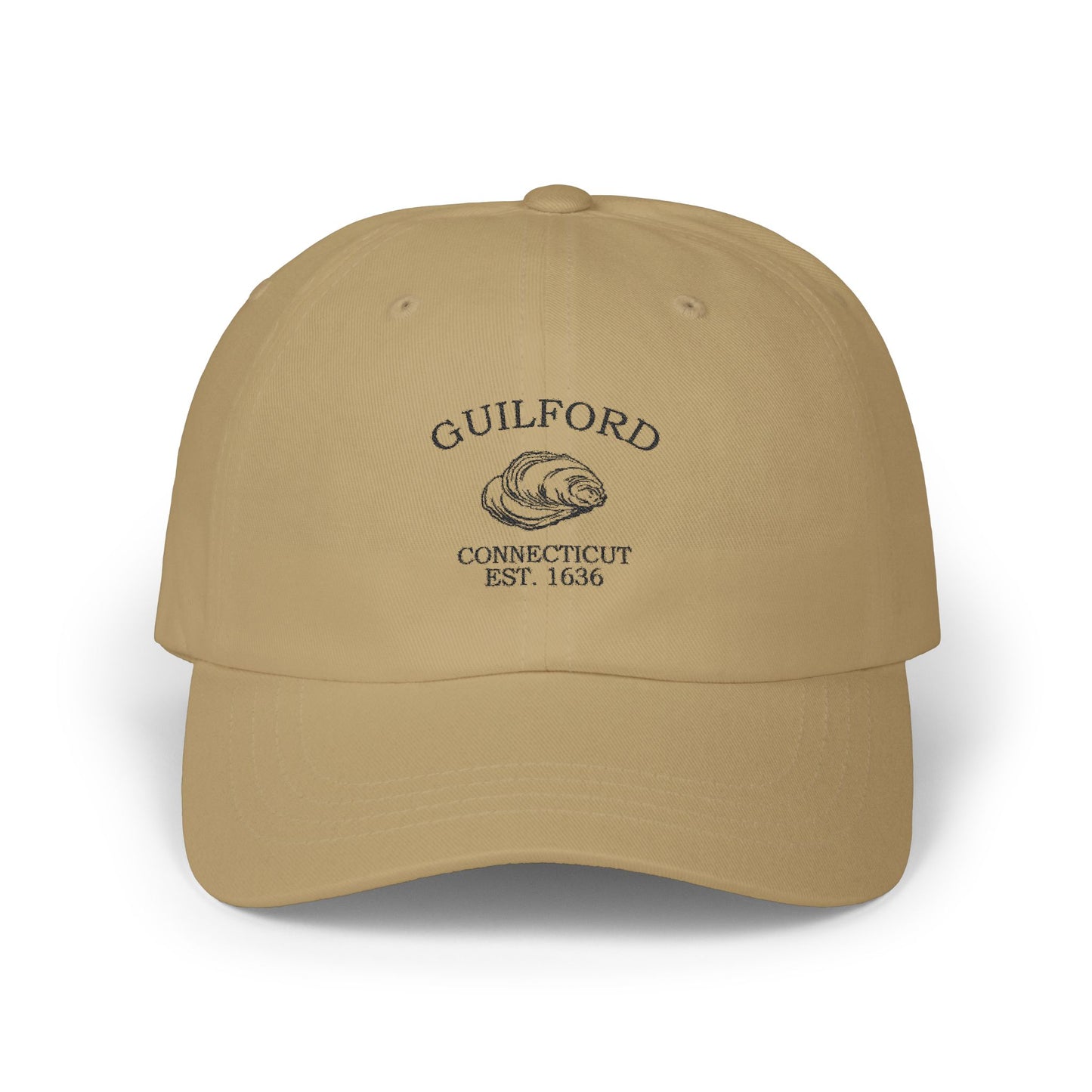
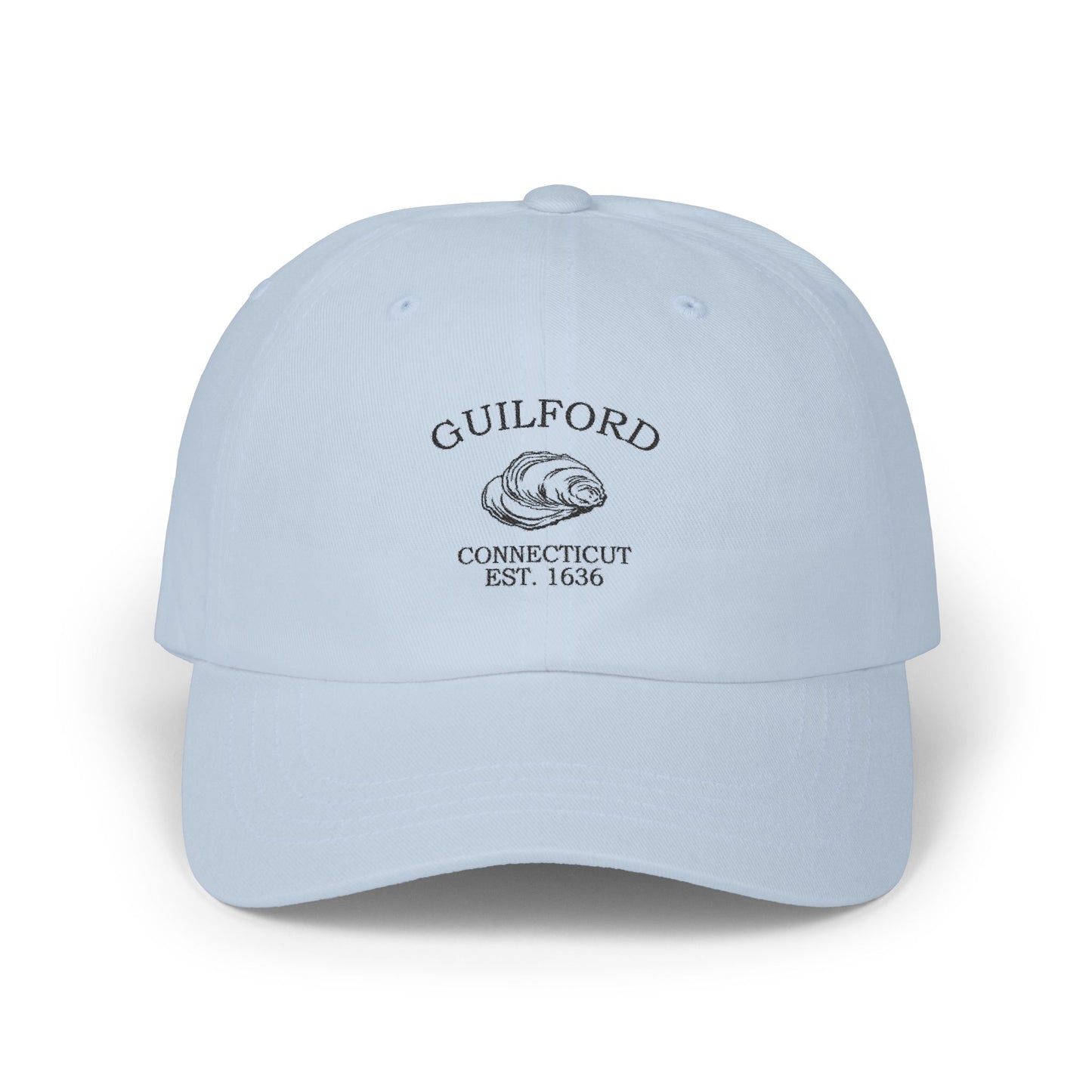
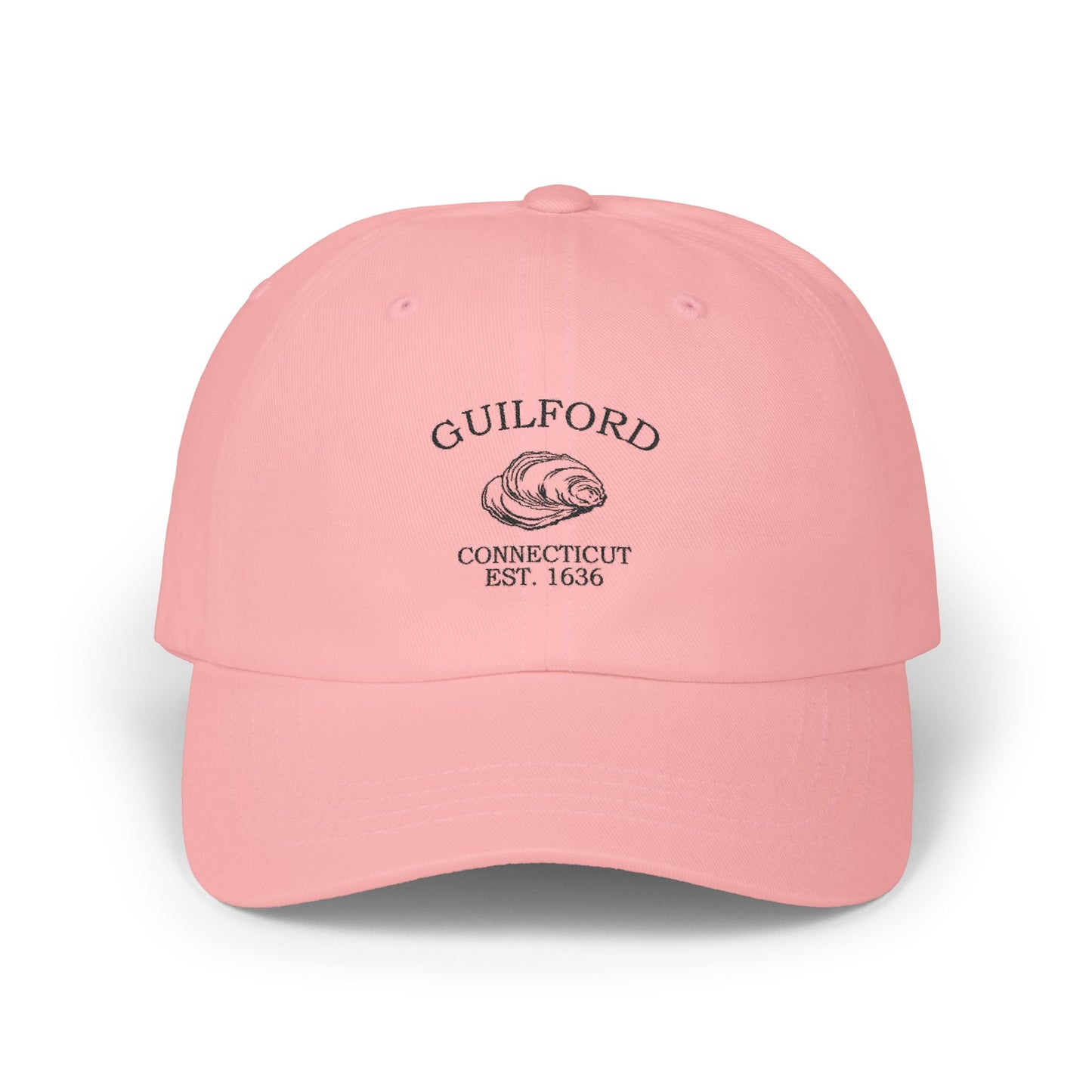
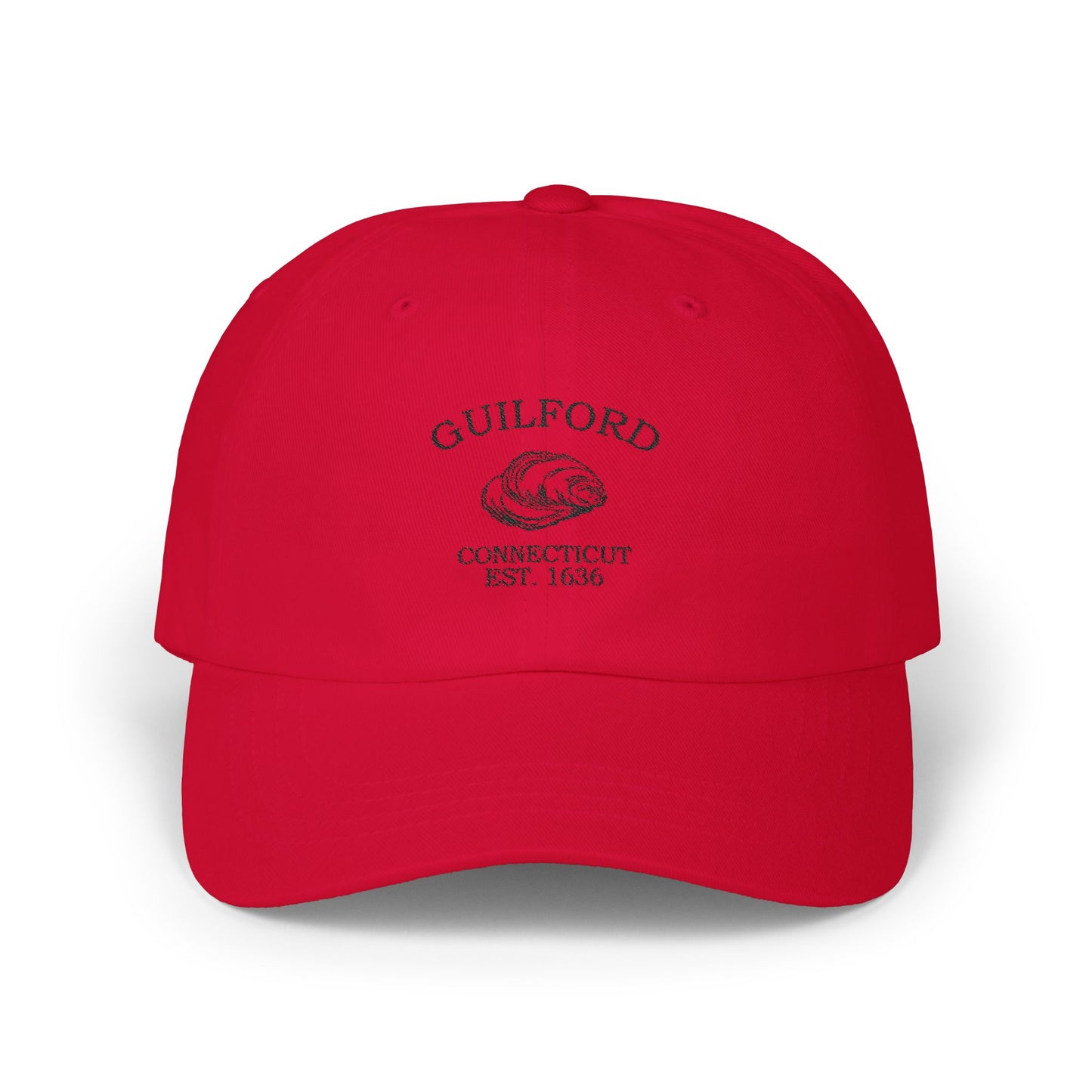
Our Guilford retro logo uses Connecticut's clam shell motif, the brand-wide shellfish emblem of every Merlin Classics CT shoreline town, symbolizing shoreline abundance and resilience. The clam reflects heritage, while "1636" ties the design to the Connecticut Colony's founding era — Guilford itself was settled three years later in 1639, but the colony-wide "1636" date is the brand-pattern anchor across our Connecticut towns. Its black-and-white styling is retro, resembling oyster crate labels and coastal signage. The motif bridges Guilford's dual identity: colonial farming and shoreline town and modern shoreline community. On merchandise it conveys authenticity, resilience, and pride, retro in tone. The clam shell emblem honors Guilford's layered story, making it a vintage symbol of Connecticut shoreline tradition.
What’s with the Stone House? Half a mile south of the Guilford Green stands a house begun in 1639 and finished by the following spring — the oldest house in Connecticut and the oldest stone house in New England. It was built for the town’s founding minister, Reverend Henry Whitfield, and its massive stone walls were meant to work twice: a home, and a fort stout enough to shelter the whole settlement. Before Guilford had a church it held services here; before it had a town hall it held meetings here. In 1899 it opened as the Henry Whitfield State Museum — Connecticut’s first state museum — and it stands today much as the town’s first winter found it: stone, steep-roofed, and permanent.
Why People Visit Guilford Connecticut
- Tour the Henry Whitfield House, the 1639 stone house Reverend Henry Whitfield built the year he founded the town — the oldest stone house in New England, the oldest house in Connecticut, and the first house museum in Connecticut, opened in 1899; operated today as the Henry Whitfield State Museum.
- Walk the Guilford Town Green, the twelve-acre village green laid out by the Twenty-Five Planters in 1639 and still surrounded by the white-clapboard houses of their descendants, with the 1830 Greek Revival First Congregational Church along one edge.
- Tour the Hyland House on Boston Street, the early-eighteenth-century house (long dated by tradition to the 1660s) preserved by the Guilford Keeping Society — one of the finest surviving early New England houses on its original site.
- Tour the Thomas Griswold House, the c.1764 colonial house on the road to Madison, with period furnishings and a working blacksmith shop on the grounds.
- Walk past the Medad Stone Tavern (1803), the Federal-era tavern just north of the green that has been maintained as a museum since the 1960s.
- Look offshore for Faulkner's Light, the 1802 stone tower on Faulkner's Island three miles out in the Sound — the second-oldest active lighthouse in Connecticut, with seasonal Saturday boat tours run by the Faulkner's Light Brigade volunteer group.
- Walk the Westwoods Trails, the forty-mile network of forest trails through ledges, kettle holes, glacial erratics, and beaver wetlands inland from the Sound — the largest preserved hiking area on the central Connecticut shoreline.
- Relax at Jacobs Beach, the small Sound-front town beach with a sandy crescent, picnic groves, and views east to the Madison shoreline.
- Visit Lake Quonnipaug for the inland lake views, the picnic area, and the seasonal swimming and fishing.
- Walk the ledgy granite country out toward the Branford town line — quarry territory in the late nineteenth century, when pink-grey stone cut from these shoreline ledges shipped out to building projects across the country.
- Visit Bishop's Orchards just north of the green for pick-your-own peaches in July and August and apples September through October — a continuous family-run orchard since 1871, five generations operating on the same land.
- Time a visit for the Guilford Fair, the September agricultural fair held on the fairgrounds every year since 1859 — one of the oldest continuous fairs in Connecticut.
- Stop at the Guilford Free Library on Park Street for the local-history room and the genealogy collection, the best public starting point for Guilford colonial research.
