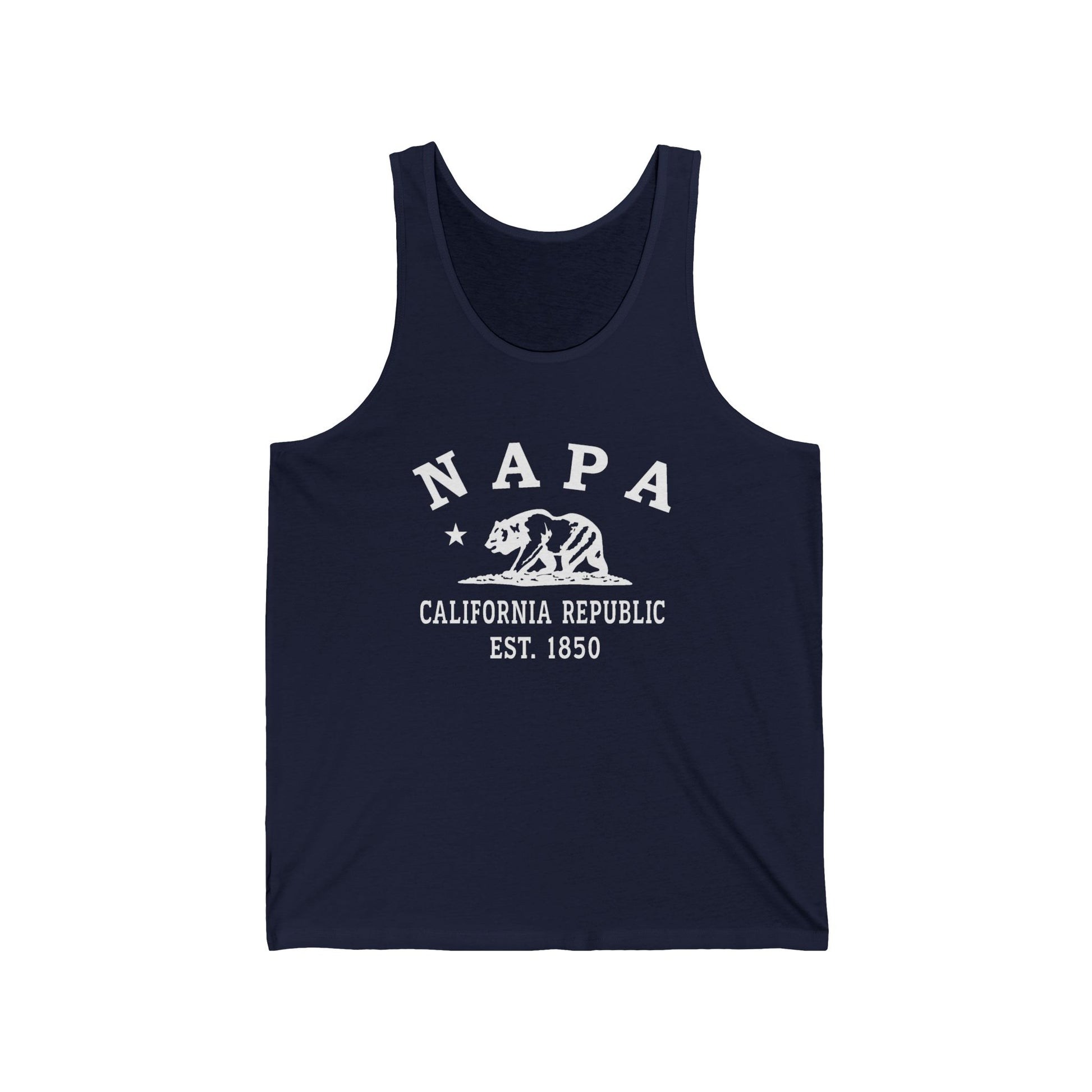
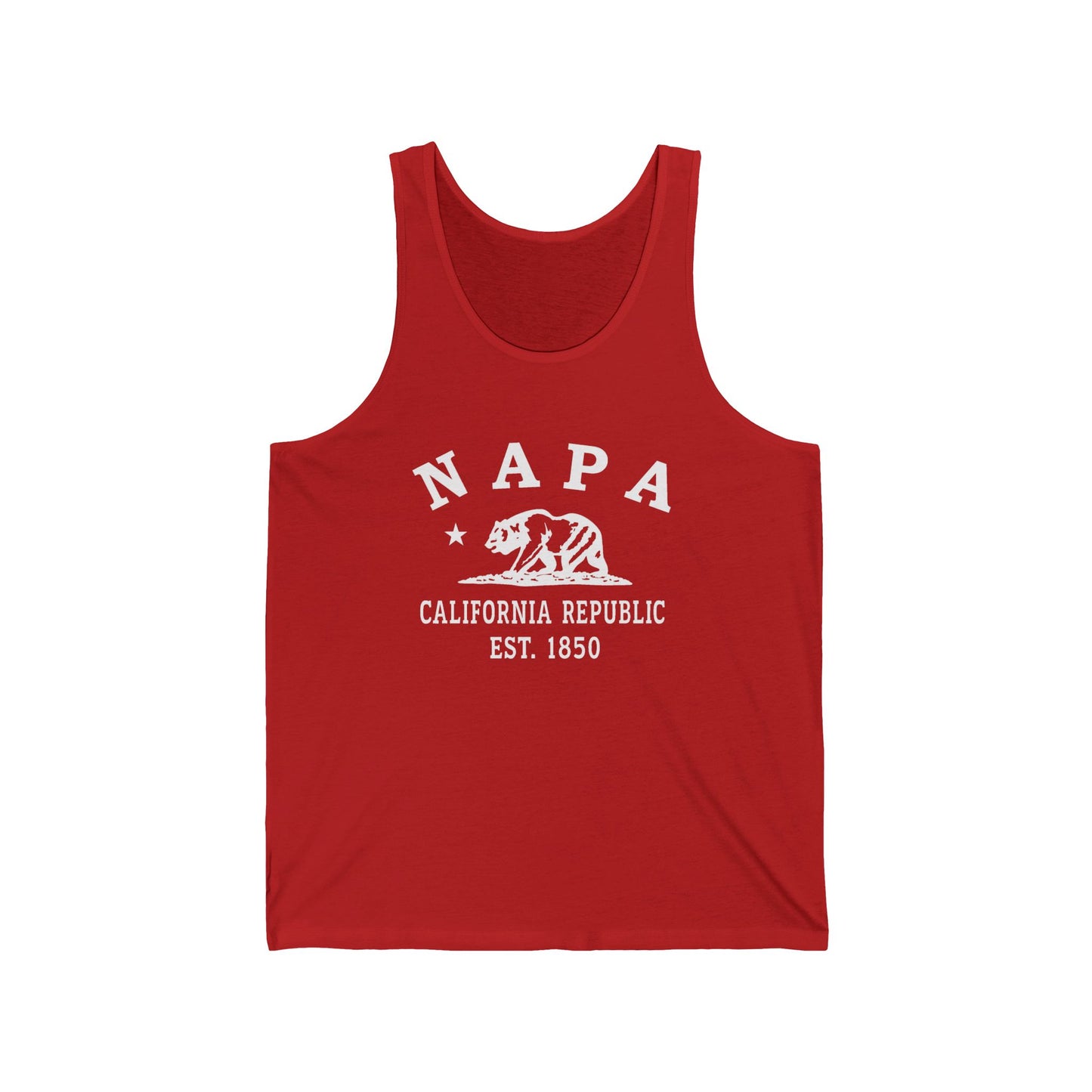
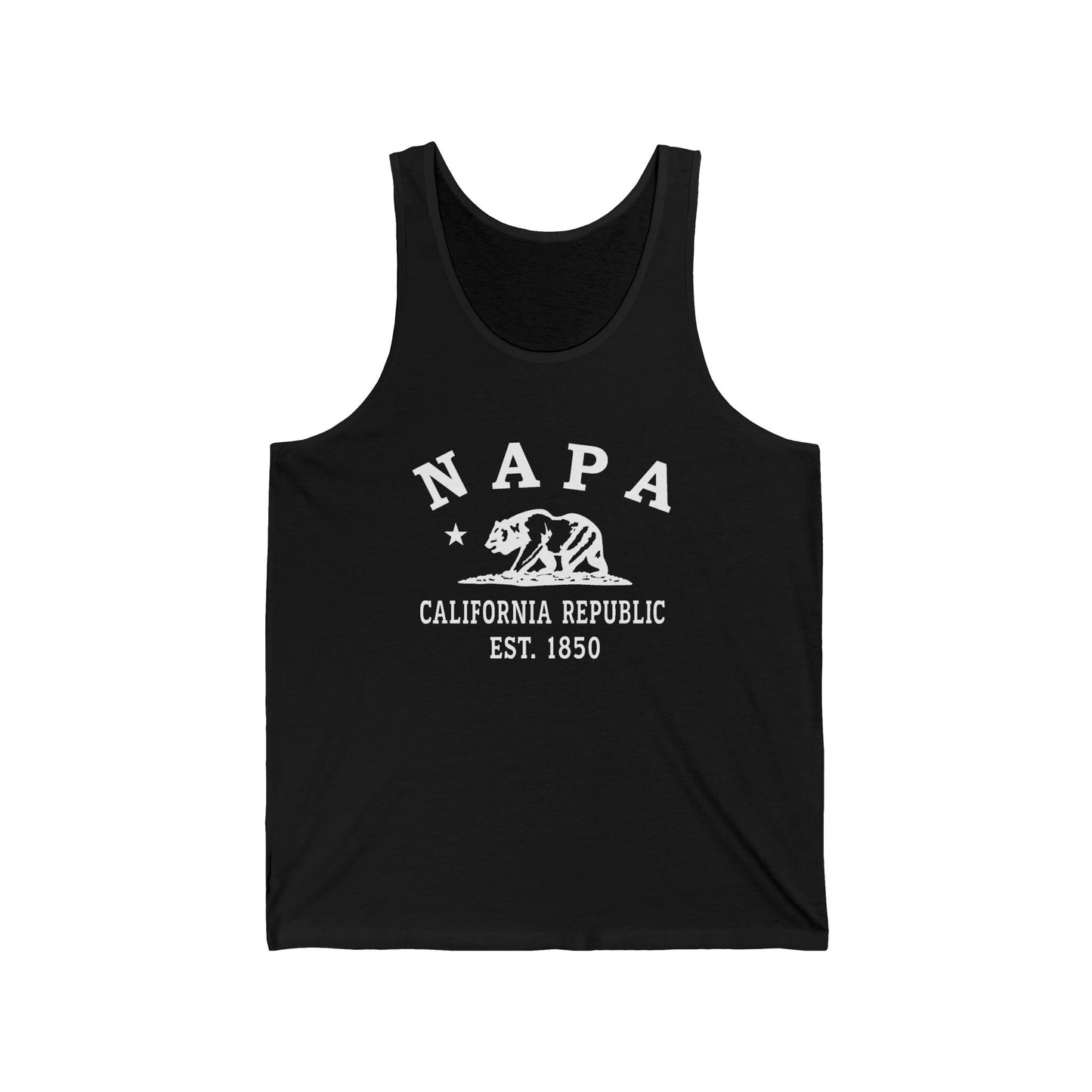
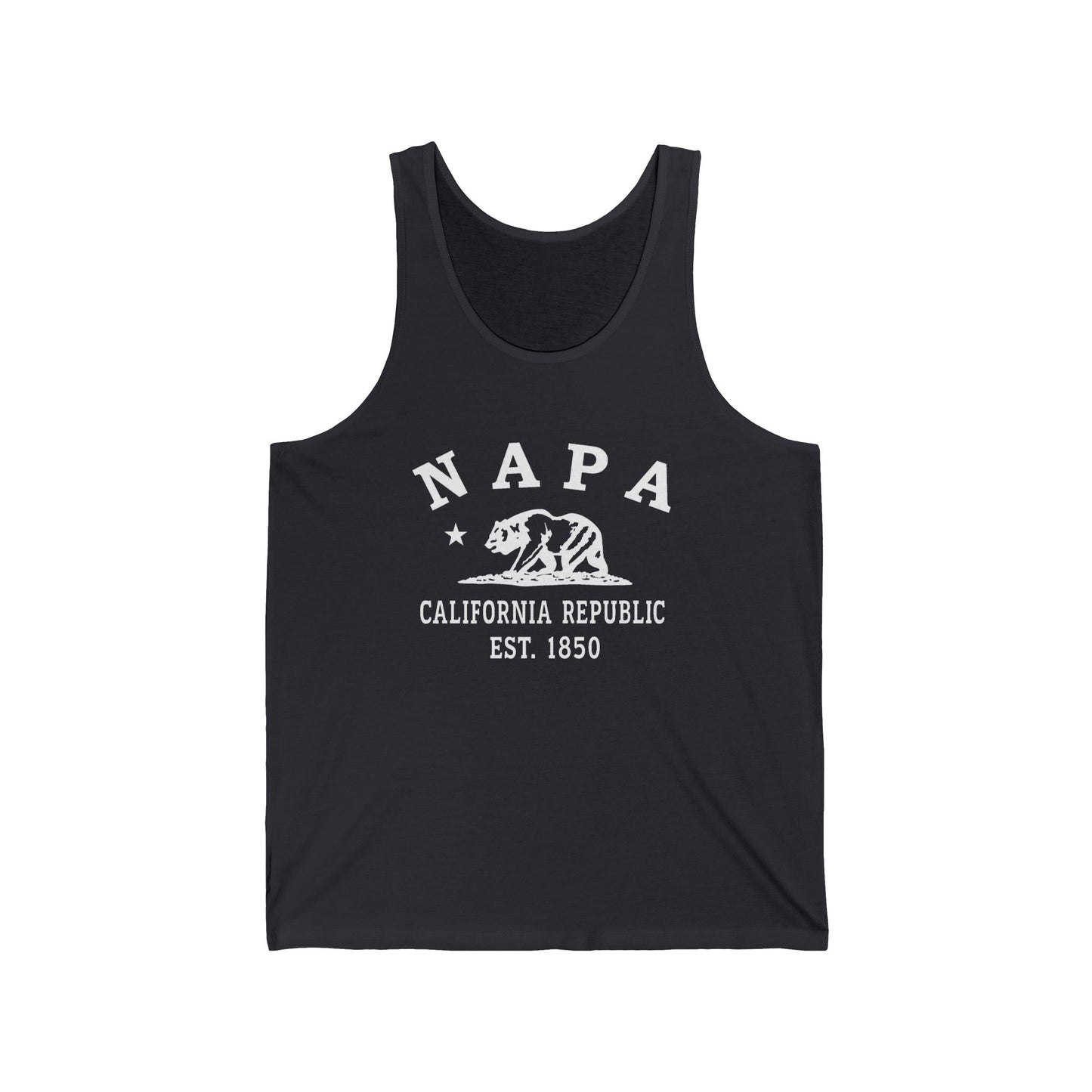
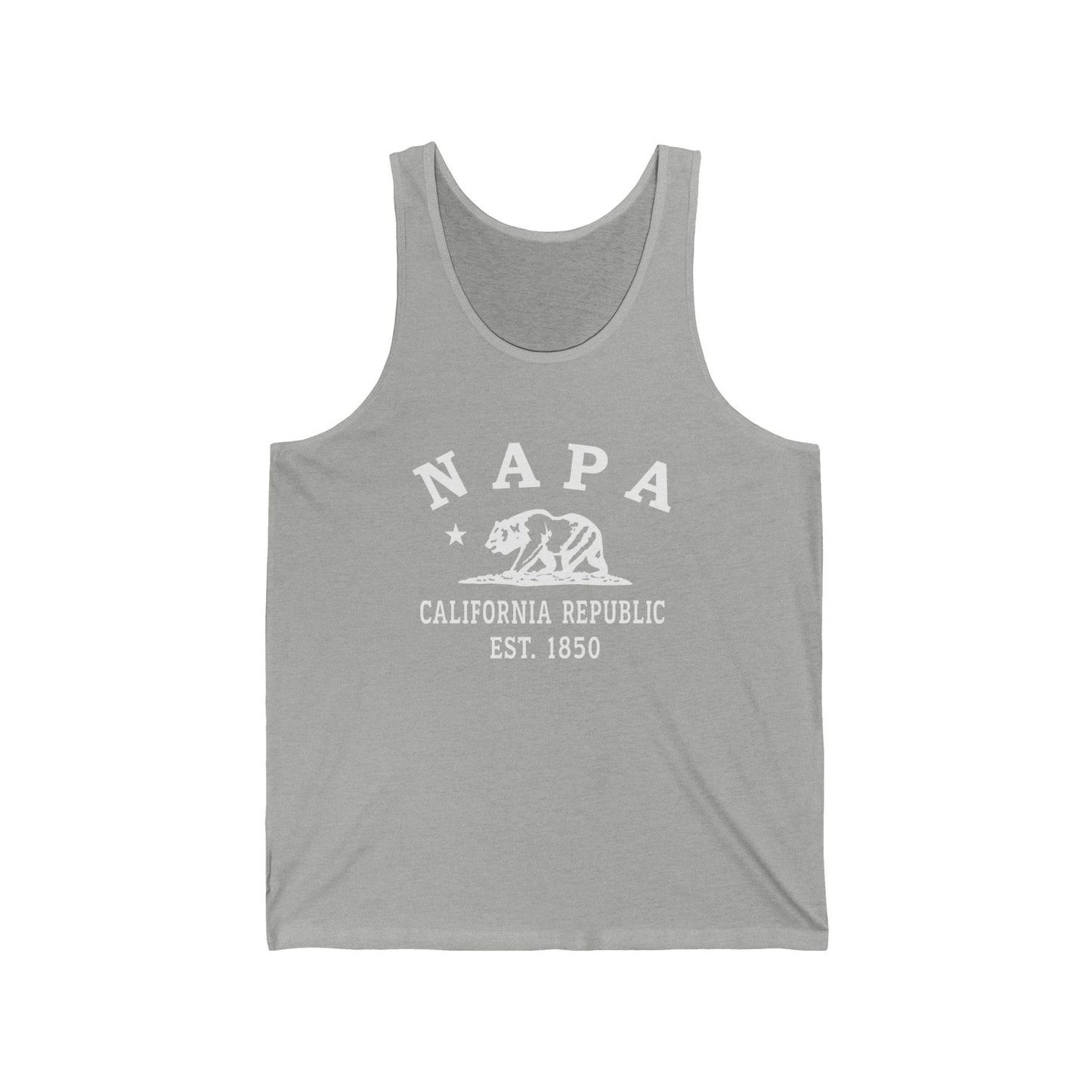
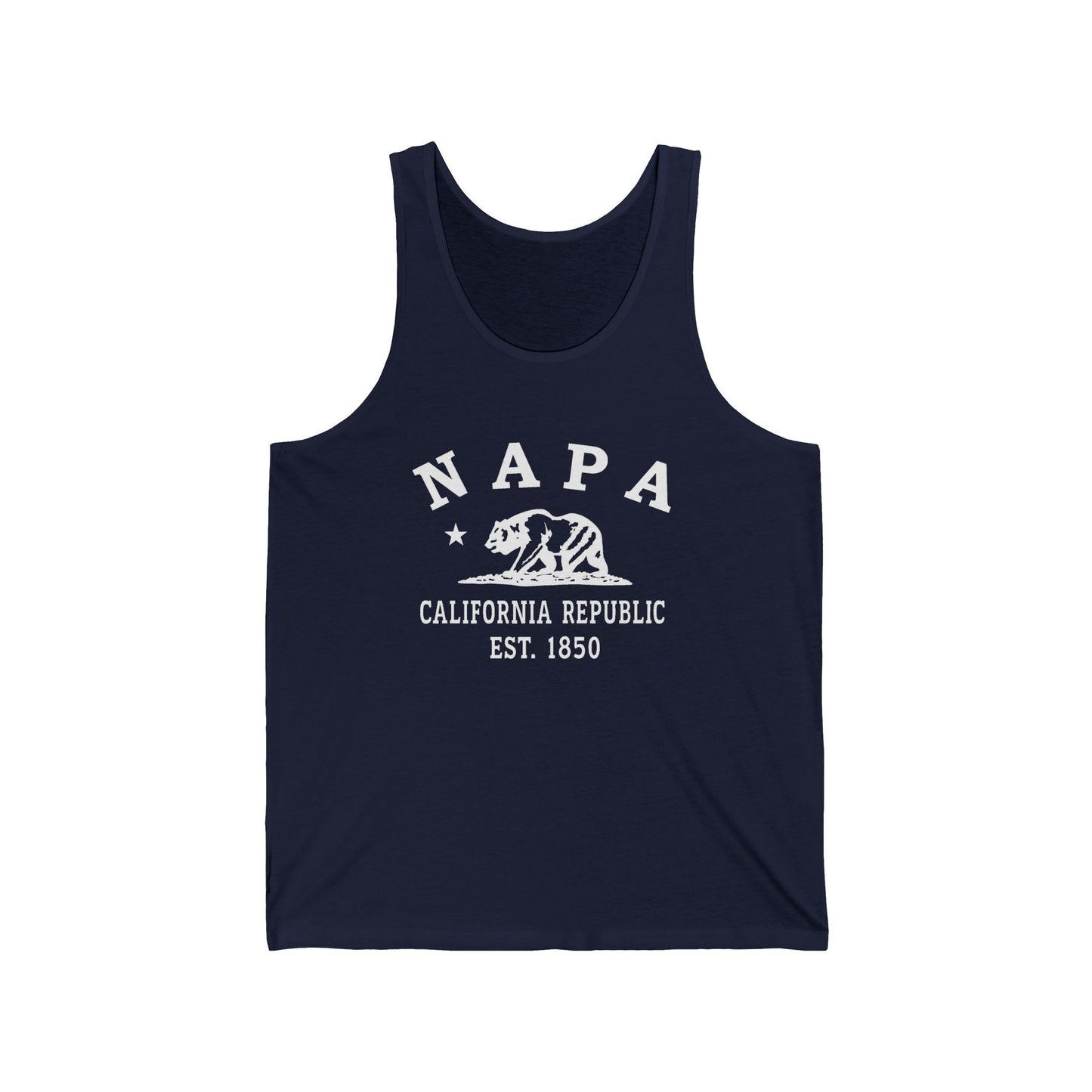
So Napa gathers a Patwin name, a river landing laid out in 1847, the county’s first wine cellar of 1859, vines that outlasted blight and Prohibition alike, and one Paris afternoon in 1976 that rearranged the wine world — and our Napa designs pour all of it into wearable form. Whether Napa is your hometown, your valley, your harvest season, or the place you learned what a morning fog can do to a row of vines, wear the history. Pressing grapes since 1861.
The geography is the label come to life: a valley thirty miles long and one to five wide, the Mayacamas Mountains on the west and the Vaca range on the east, Highway 29 — the old Wine Road — running up the valley floor with the Silverado Trail as its quieter twin on the eastern benchland. Mount St. Helena closes the head of the valley at 4,343 feet, Lake Berryessa fills the high country to the east, and on many mornings a low fog slides up from San Pablo Bay and settles between the vine rows until the sun burns it through.
Why People Visit Napa California
Napa offers a 30-mile valley between two mountain ranges, an 1861 stone winery among California’s oldest still pressing on Highway 29, the modernist estates of the 1966 renaissance, and the legacy of the 1976 Judgment of Paris when the valley's wines beat Bordeaux and Burgundy on neutral ground and rewired the global wine map. Visitors come for the wine, the Mayacamas-and-Vacas geography, the diurnal fog and the long hang time, the historic estates, the Calistoga geysers, Lake Berryessa, Mount St. Helena, and the simple riverfront pleasure of the city of Napa itself. It is the valley that everyone has heard of, and it earns the reputation every harvest.
