


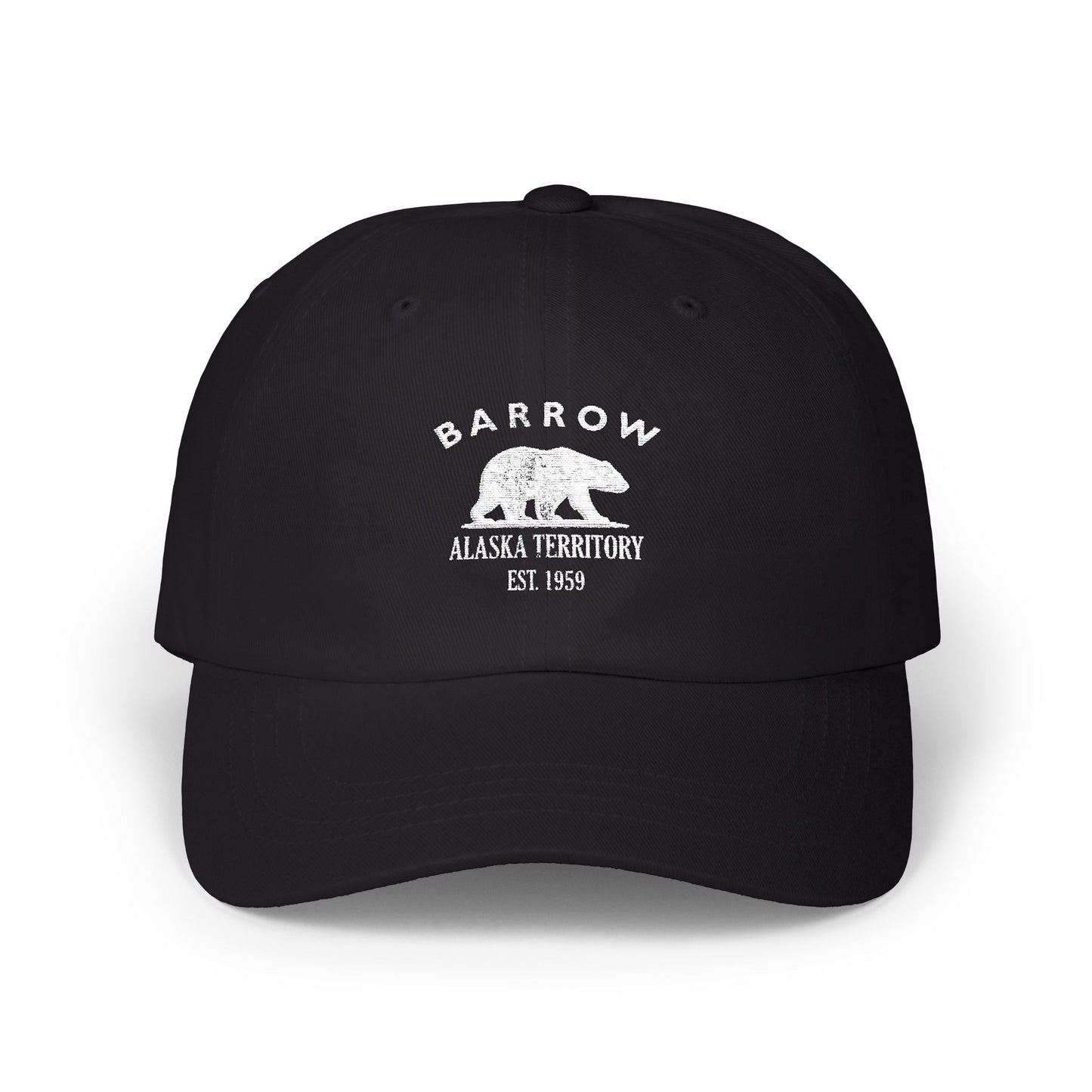
The name that came home. People were living here a thousand years before anyone in Europe knew the coastline existed — the Birnirk mounds on the edge of town date to around 500 CE, and the Iñupiat have hunted the bowhead from this shore, under sanctioned subsistence tradition, ever since. The first written record of the community's own name came in 1853, when Commander Rochfort Maguire of the Royal Navy set it down from Iñupiaq speakers; the British Admiralty, meanwhile, had already fixed "Barrow" to the maps — honoring Sir John Barrow, the English promoter of Arctic exploration, who never came within a thousand miles of the place. An American whaler named Charles Brower arrived in the 1880s, built the Cape Smythe Whaling and Trading Station — still standing in the district that carries his name, Browerville — and the settlement grew around the meeting of two worlds. The City of Barrow incorporated on June 8, 1959, months after Alaska statehood. And then, in October 2016, the community voted — by exactly six votes — to restore its own name: Utqiaġvik, effective that December 1. Ask what it means and you'll hear the story locals tell: a place for gathering wild roots, though an older tradition says the name honors the hunting of snowy owls — either way, a name about what this land gives, restored by the people who have always known it.
The polar night lasts about 65 days — the sun sets in mid-November and rises in late January; the midnight sun then runs about 80 days from May into August.
Why People Visit Barrow Alaska
Barrow offers Arctic culture, geography, and natural-light phenomena that few places on earth can match. Visitors come for the Iñupiat heritage, the tundra and Arctic Ocean horizons, the polar night and midnight sun, and the simple fact of standing in the northernmost city in the United States. It is remote, resilient, and unforgettable. History and everyday community life sit side by side at the top of the continent.
