Skip to product information
1 of 10

Poipu Hawaii Retro Vintage Washed Cap - Charcoal Logo

Poipu Hawaii Retro Vintage Washed Cap - Charcoal Logo

Regular price $32.00 USD
Regular price Sale price $32.00 USD
Sale
Free U.S. Shipping
Color
Size
Quantity


This is our retro Poipu, Hawaii logo, printed in weathered charcoal on a retro vintage washed cap — an unstructured cotton dad hat that looks broken in from the day it arrives. The charcoal carries a faint wavering tone and a light speckle, so the print reads like it has been in the sun as long as the cap has.

One size fits most, so it is an easy gift to get right: no size to guess, only the town. Each cap is made to order. Hand wash cold and air dry, and keep it out of the dryer.

Poʻipū, Hawaiian for crashing waves, is the southernmost tip of Kauaʻi and the driest, sunniest stretch of coast on the island. Ladd & Company established Hawaiʻi’s first successful sugar plantation at nearby Kōloa in 1835, the start of the whole Hawaiian sugar era, and the waves of immigrant workers who followed built Old Kōloa Town.

Seventeen early-1900s buildings still stand on Kōloa Road, the Sueoka Store among them, open since 1918, under the monkeypod planted in 1925. Poʻipū Beach Park, twin sandy crescents where monk seals haul out, has been named the best beach in America. The south shore is the mark on this piece.

The cap is 8.5 oz 100% cotton twill, enzyme washed and heavily brushed for a soft hand, with an unstructured six-panel crown, a mid-profile fit and a curved bill. A self-fabric strapback with a metal slider adjusts the fit and tucks away, and a self-fabric sweatband lines the inside. It is garment dyed with OEKO-TEX certified low-impact dyes, so every cap's color varies slightly — washed here means faded color and a weathered print, not distressed or frayed.


QUICK FACTS — POʻIPŪ HI WASHED COTTON CAP — CHARCOAL LOGO

Town: Poʻipū, Hawaiʻi

Founded: Kōloa plantation 1835

Known for: The crashing waves; Hawaiʻi’s driest and sunniest resort coast; Poʻipū Beach Park; Old Kōloa Town and the 1835 plantation

Art: Poʻipū vintage retro logo, charcoal (printed)

Blank: unstructured six-panel cap, mid profile, curved bill, metal slider

Fabric: 8.5 oz 100% cotton twill, enzyme washed, garment dyed

Care: hand wash cold, air dry

Colors: 10 offered

Sizes: Adjustable

Made to order in the USA


View full details

Wear Local. Feed Local. Stay Classic.

Product FAQs

How does your sizing work?

Every item is made to order, so please check the size chart on this page before you buy. Women's fitted tees run small; size up for a looser fit. Caps are one size with an adjustable strap.

How are items made and when will they arrive?

We make each item to order using premium blanks, embroidery and soft-hand prints. Production takes 2-5 business days (weekends and holidays excluded), then 4-10 days in transit via USPS, UPS or FedEx to U.S. addresses; most orders arrive within 6-15 business days. You'll get a tracking link the moment it ships. Any current shipping offer is shown in the bar at the top of every page and applies automatically at checkout, no code needed.

How do I send a gift?

Enter the recipient's address as the shipping address and your own as the billing address at checkout. Nothing ships with a price; the package includes a plain packing slip. Tracking goes to your email, not theirs. For birthdays and holidays, order two weeks ahead to be safe.

What's the return policy?

Made-to-order items can't be returned or exchanged for size or color, so please use the size chart and photos before ordering. If anything arrives defective, misprinted or damaged, send a photo and your order number within 30 days and we'll replace it or refund you.

How do I care for my item?

Apparel: wash cold, inside out, with like colors; no bleach; tumble dry low or hang dry. Embroidered pieces: iron inside out to protect the stitching. Caps: spot clean. Printed glasses and water bottles: hand wash only, no dishwasher, so the artwork lasts. Mugs and engraved glasses are dishwasher safe. Any item-specific care notes are in the description above.

Who makes this?

Merlin Classics is a small Connecticut brand making original retro designs for the towns people love. Every piece is printed, embroidered or engraved to order in the USA, and the business supports hunger relief in the communities our collections celebrate.

Native Hawaiians lived along this shore for centuries before any mill or resort, drawn by sheltered coves, reef fisheries, and fertile land inland — and the shore kept its royal thread: Prince Jonah Kūhiō Kalanianaʻole, "the People's Prince," was born at Poʻipū in 1871, and his birthplace is marked today at Prince Kūhiō Park in Lāwaʻi. His holiday, March 26, is one of only two U.S. state holidays honoring royalty. Kauaʻi was also the first Hawaiian island Europeans reached — Captain James Cook landed at Waimea, west of here, in 1778 — and the island entered the Hawaiian Kingdom on its own terms, when King Kaumualiʻi ceded it peacefully to Kamehameha in 1810.

The modern resort coast was shaped in large part by a single storm. Hurricane ʻIniki — the strongest hurricane on record to strike Hawaiʻi — crossed Kauaʻi on September 11, 1992, a decade after Hurricane ʻIwa had rehearsed the damage in 1982. The long rebuild gave Poʻipū much of the coast it has today, clustered along the beaches and the golf at Poʻipū Bay. Kauaʻi County's famous rule that no building may rise taller than a coconut palm still holds, which is why the south shore glitters low along the water instead of climbing above it. ʻIniki's other legacy is told in every local family: the storm hit while Jurassic Park was filming on the island, and the crews sheltered alongside residents — then the island rebuilt, as it always has.

Why People Visit Poʻipū

Because it is Hawaiʻi at its sunniest and most easygoing — a warm, protected coast where the turtles share the sand, the blowhole keeps time, and the Garden Isle's plantation past sits a mile inland under a monkeypod tree. Beach by day, Kōloa by golden hour.

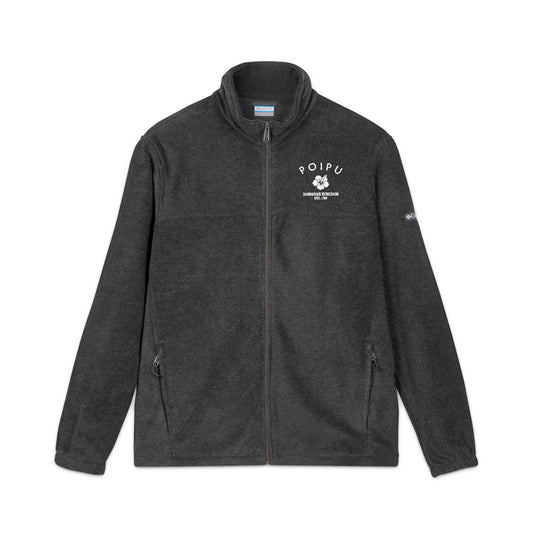
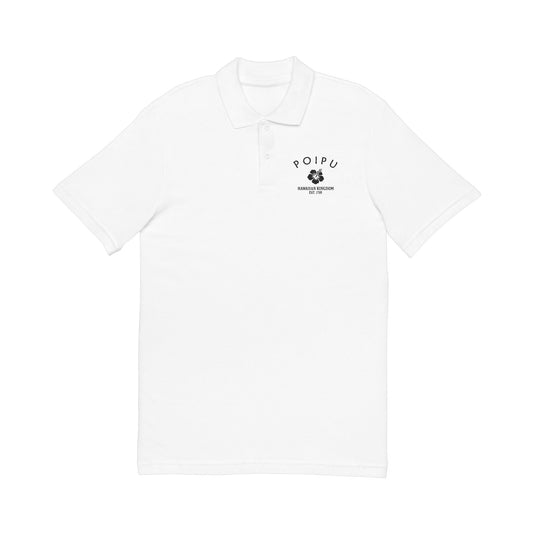
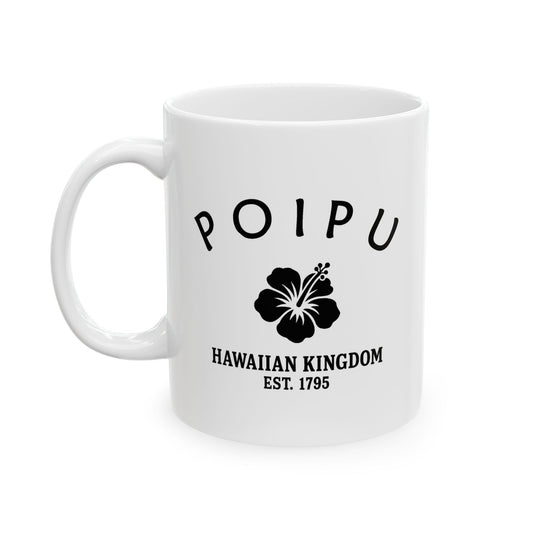
Poipu Hawaii retro logo with Hawaiian hibiscus and Hawaiian Kingdom Est. 1795, Merlin Classics